Why people look for Adalo alternatives
Adalo deserves credit for one thing: it lowers the barrier to laying out a mobile app. The canvas editor is approachable, onboarding is short, and it handles the packaging work to submit an app to the Apple App Store and Google Play. For sketching a mobile MVP or validating an idea, that’s a reasonable start. The trouble shows up the moment the app needs to grow up.
The record limits force upgrades as your data grows
Every Adalo plan caps how many database records you can store. The free tier stops at 200 records, Starter at 10,000, and the $52/month Professional plan at 30,000. Once your collections fill up, the only way forward is a more expensive plan, regardless of whether you use the other features that tier unlocks. You end up paying for capacity, not capability, and the bill climbs as the app succeeds.
Performance degrades as the app scales
Users consistently report page-load latency and slow database queries once an app moves past small datasets or carries a lot of images. The native builds fare worst. One CEO documented his native Android app running roughly ten times slower than the same app delivered as a Progressive Web App on the same device, with months of back-and-forth support yielding no fix. For a tool whose main pitch is mobile, that’s a hard problem to look past.
Desktop web layouts feel like stretched phone screens
Adalo is built mobile-first on a fixed-width screen model. When you publish to the web, the result often looks like a phone app stretched across a desktop monitor. As one executive director put it, app dimensions don’t adapt to the screen, so you build for one size and scale down awkwardly for the rest. For anything customer-facing on desktop, this is a real limitation.
The permissions model is too thin for multi-role apps
Adalo offers basic user roles only. If you want a portal where clients see one thing and staff see another, there’s no centralized role-based access control - you hand-build visibility filters on every screen element, one at a time. That’s tedious to set up and easy to get wrong, which makes Adalo a poor fit for any app where record-level security actually matters.
No AI, and the basics can be a slog
Adalo has no built-in AI generation, no prompt-to-app, and no vibe coding, which is an increasingly conspicuous gap. Meanwhile reviewers describe even routine features as tedious to assemble. One director called out building a forgot-password flow or multiple-image upload as a “long tedious process,” and several note that genuinely useful functionality lives behind paid plugins.
Support and reliability are recurring complaints
The most damaging feedback is operational. Capterra reviewers report support taking days to respond and then pointing them to the help center or to “hire an Adalo expert.” One COO running 300 daily users described receiving five to ten “internal server error” complaints a day, and separately reported around 70% of his database disappearing, which made his apps unusable. When your live app breaking is met with slow, generic support, the platform risk is hard to justify for anything with real customers.

The best Adalo alternatives, by use case
If you need native iOS and Android apps that actually perform
This is the use case Adalo claims but struggles to deliver. It will package and submit your app, but the native performance complaints, especially on Android, mean the apps your users download can feel slow. If a real, performant native app in the stores is the goal, you want a platform engineered for that output.
FlutterFlow
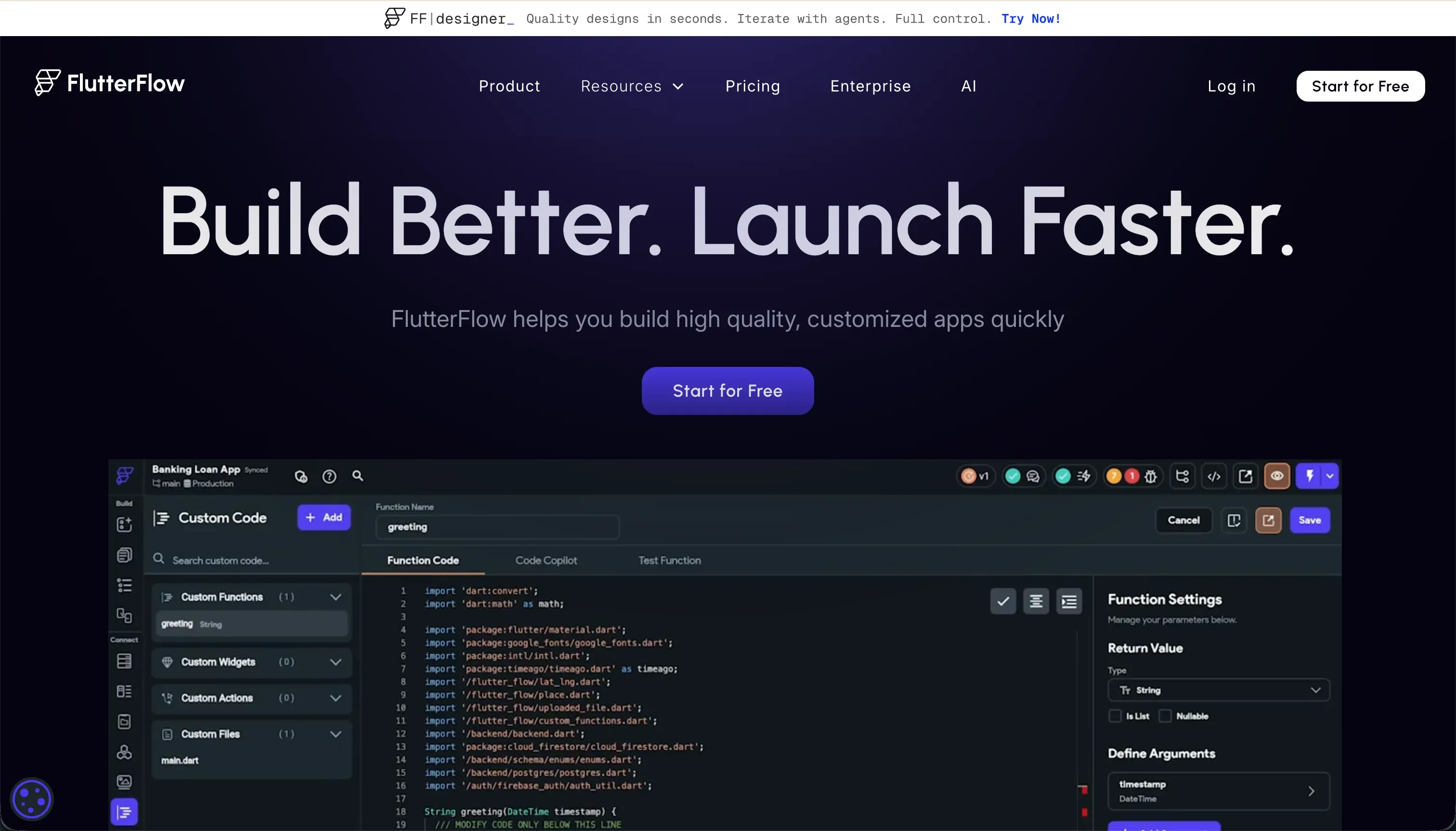
FlutterFlow compiles directly to native Flutter (Dart) apps that deploy to the Google Play Store and Apple App Store with genuine native performance. It’s a visual drag-and-drop canvas sitting over a Flutter widget tree, with AI generation for screens, direct Firebase and Supabase integration, and full code export if you ever want to take the project to a developer. Compared to Adalo, the ceiling is much higher: you get real native output instead of a packaged web view, and you own the code. The honest trade-off is the learning curve. FlutterFlow expects you to understand Flutter’s layout model (constraints, Rows, Columns, Stacks), state management, and database setup, and users describe a love-hate relationship where debugging without clear error messages can be painful. Pro plan at $50/month (billed annually) includes full code export, Git integration, and codeless App Store deployment.
Glide
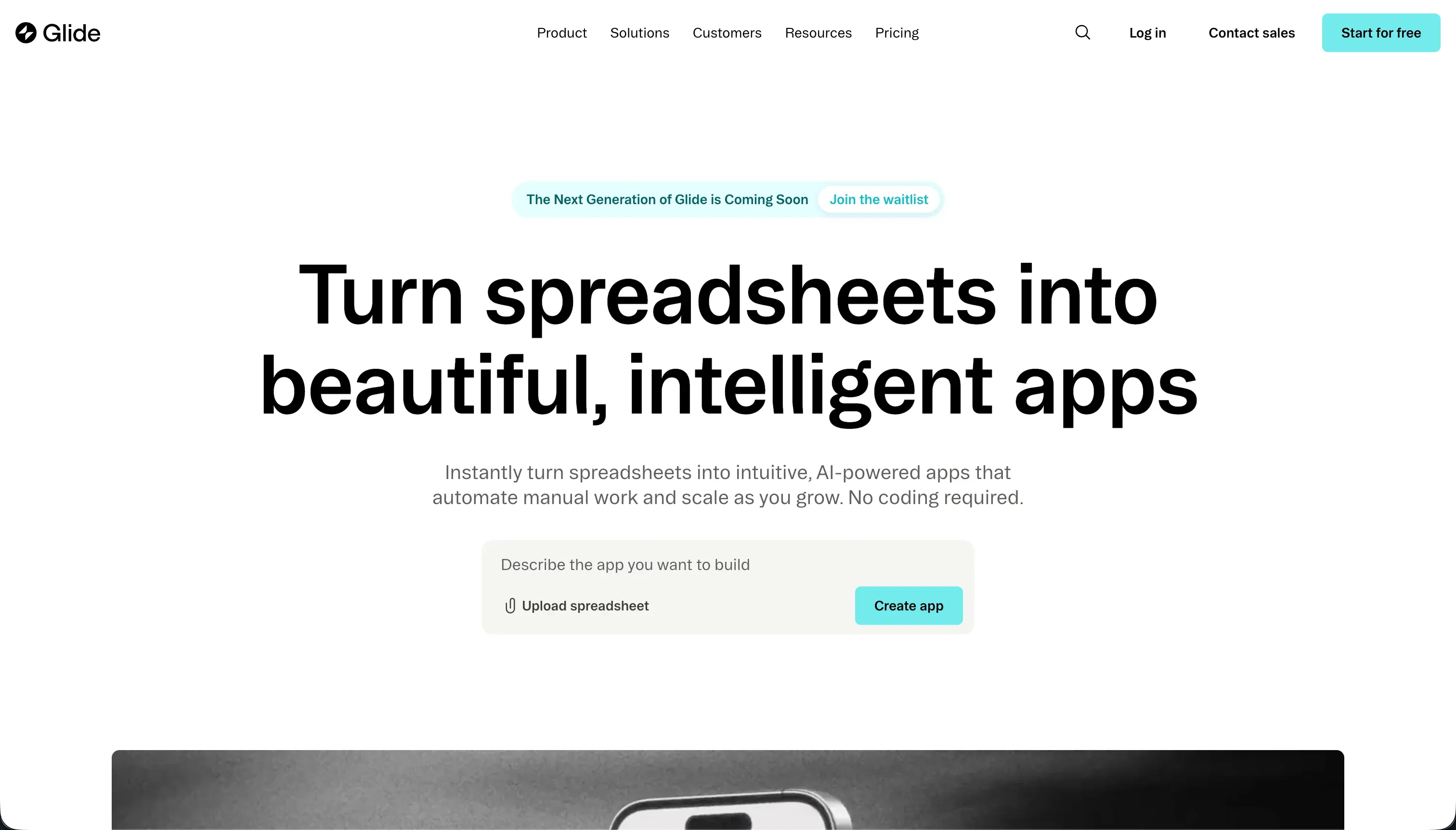
If your app is genuinely simple and you don’t need true native performance, Glide keeps Adalo’s low-friction, mobile-first feel while being faster to set up around your data. It’s strongest when your app is essentially a clean interface over a spreadsheet or table, which covers a large share of the apps people build in Adalo in the first place. It’s not the tool for a graphics-heavy consumer app headed for the App Store charts, but for an internal mobile tool or a straightforward data app, it gets you there with less fuss than Adalo and without the same record-limit anxiety.
If you’re building internal tools your team needs to maintain
Adalo gets stretched into business apps it wasn’t designed for: trackers, simple CRMs, team directories, approval flows. These need to be reliable, updatable by non-developers, and predictable in cost. Adalo’s record limits, thin permissions, and reliability complaints make it a shaky foundation for anything operational.
Softr
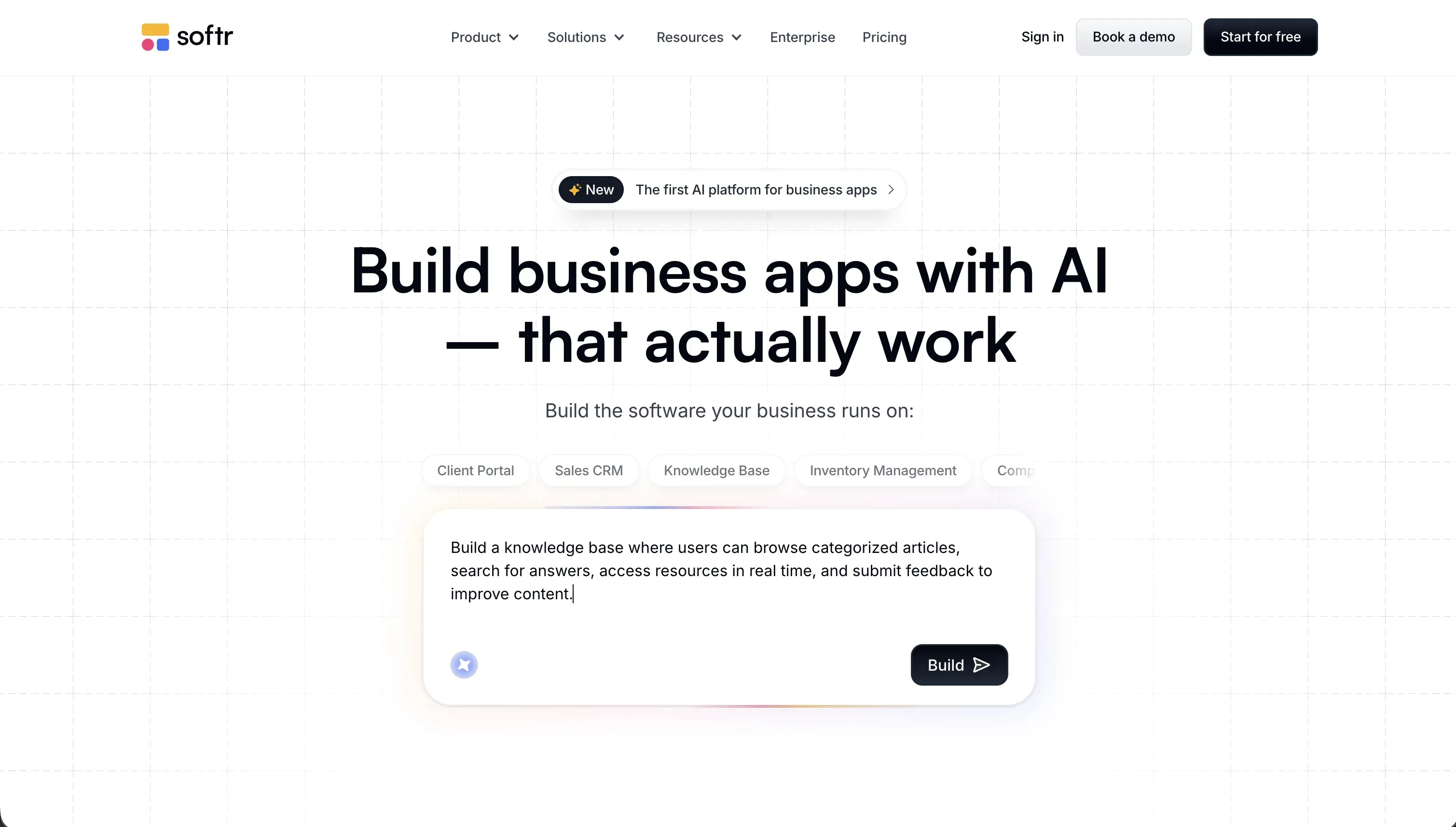
Softr is built specifically for production business apps rather than mobile prototypes. Its AI Co-Builder generates a complete app from a plain-language description - database schema and relationships, pages, UI blocks, user roles, navigation, and permissions - in minutes. The output isn’t generated code you have to maintain; it’s a working no-code app running on Softr’s platform, which your operations, HR, or finance team can update themselves: add a database field, change who sees a record, or adjust a layout, all visually.
For data, Softr leads with its own native relational database, built for speed and higher record ceilings than Adalo’s internal store, with linked records and rollups for real calculations. When you already work in another system, Softr also syncs natively and in real time with Airtable, Google Sheets, HubSpot, Notion, SQL, and more than a dozen other sources - the kind of two-way sync Adalo only manages through clunky workarounds.
How it compares with Adalo on the things that matter for this use case:
Pricing: Softr is flat-rate per plan. Basic at $19/month (5 Team and 5 Client app users, 50,000 records), Pro at $99/month (10 Team users, expandable to 50, plus 50 Client users, expandable to 250, 500,000 records), Business at $329/month (30 Team users, expandable to 100, plus 100 Client users, expandable to 500, 1,000,000 records). Higher record ceilings than Adalo at every step, no per-app or per-publish fees, and unlimited collaborators on every plan. Softr does include monthly AI credits for the Co-Builder and AI features, but the difference from a credit-only tool is that anything the AI builds, you can also configure by hand, so running low on credits never blocks you from maintaining the app.
Permissions: Visual user groups with page-level, block-level, and record-level access, configured by clicking rather than by hand-building a visibility filter on every element the way Adalo requires.
Reliability and scale: Softr’s rendering engine stays fast with thousands of records and concurrent users, and it’s used in production by over 1 million builders, including teams at Netflix, Google, and Stripe. MIT replaced a $100K custom-coded app with a Softr portal serving 2,800+ students, built by one person. THE BOARD consolidated four disconnected tools into a single platform for 270+ members.
The honest trade-off: Softr publishes responsive web apps and PWAs, not native App Store binaries. For a consumer app that has to live in the stores, that’s what FlutterFlow is for.
Retool
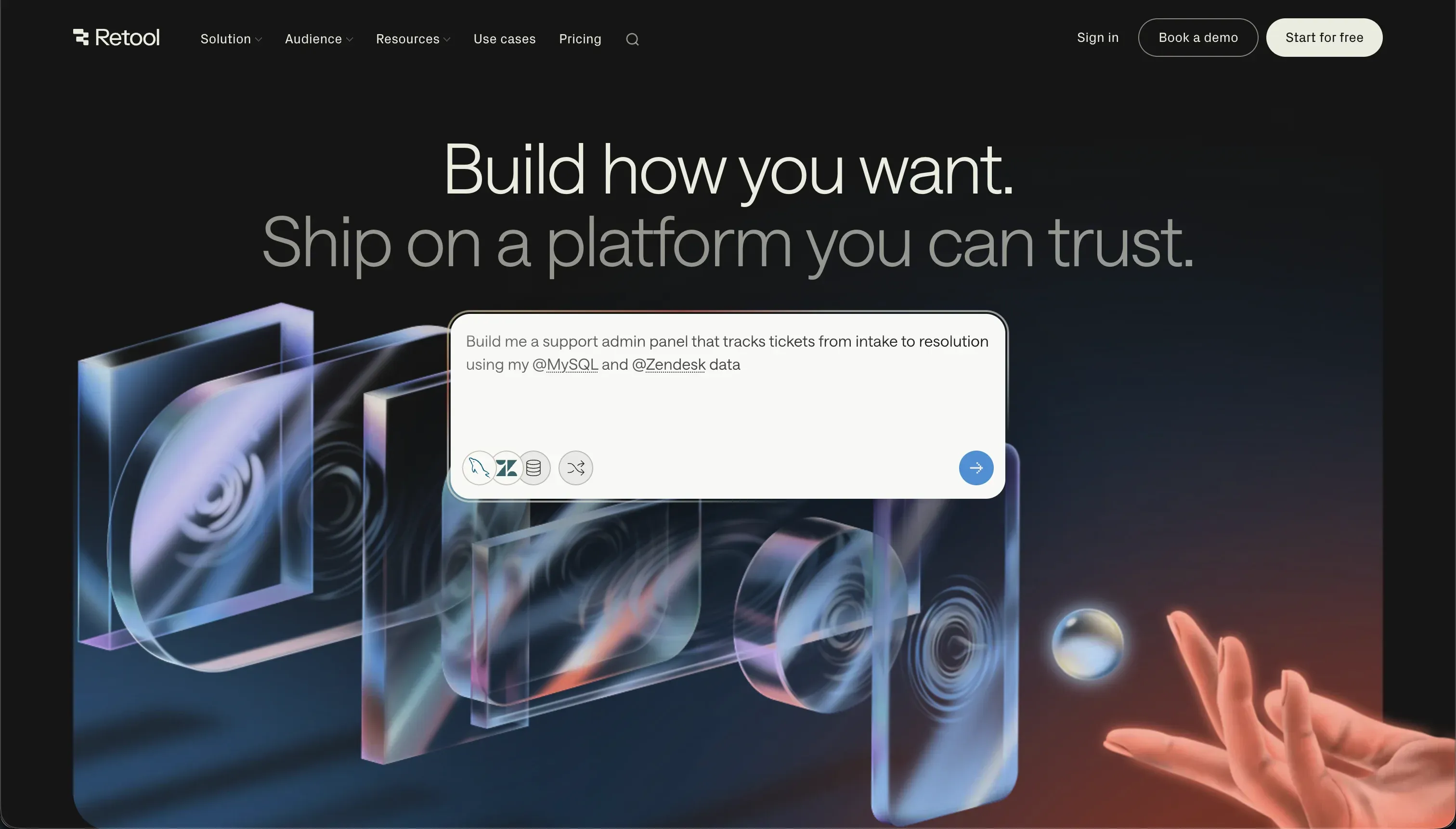
If your team is technical and you already have a database or API, Retool is worth a look. It’s purpose-built for internal dashboards and admin tools, connecting directly to SQL, REST, and GraphQL, with 100+ pre-built components for data-heavy interfaces. It’s a long way from Adalo’s audience: this is not a true no-code tool, and building anything beyond a basic layout means writing SQL and JavaScript. Pricing is seat-based at $10/user/month (Team tier, billed monthly), which adds up fast for larger teams, but for an engineering-adjacent internal tool on top of existing infrastructure, it’s quicker than rebuilding in a visual mobile builder.
If you need client portals or external-facing apps where users log in and see their own data
This is where Adalo’s thin permissions model becomes a liability. Building a portal where each client sees only their records means hand-configuring visibility on every element, with no centralized way to verify it’s correct, exactly the kind of setup that quietly leaks data when one filter is missed.
Softr
Softr handles external-facing apps with a permissions model that’s correct by default and auditable without developer expertise. You define user groups - clients, partners, members, admins - and set what each can access: which pages are visible, which records are returned, which buttons appear. Record-level filtering is point-and-click (“this group sees only records where the Client field matches the logged-in user”), not a per-screen filter you maintain by hand. White-label branding means the portal carries your identity, native auth pages (login, signup, password reset, SSO) are included, and external-user pricing scales without per-seat charges - up to 500 Client users on the Business plan at $329/month. It covers client portals, partner dashboards, member directories, and vendor portals out of the box, the multi-role external apps Adalo’s user model was never built to secure.
If you want AI to build the app from a prompt
Adalo has no AI generation at all, so if the appeal is describing an app and watching it get built, you’re starting from a different category of tool entirely.
Replit
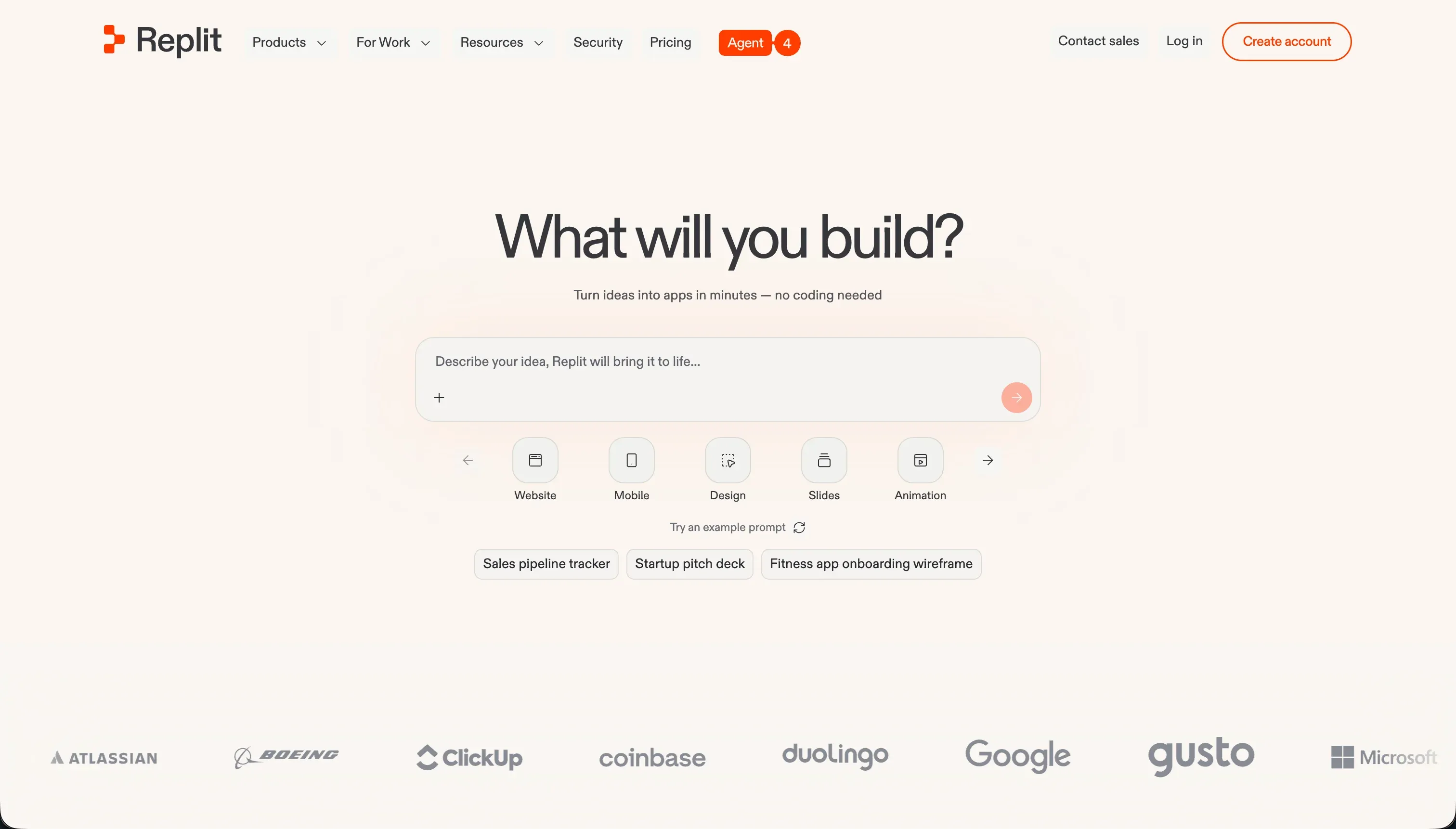
Replit’s Agent generates a working full-stack app from a description, then drops you into a complete cloud development environment where you can edit the code, run a terminal, install packages, and deploy. For someone leaving Adalo because they’ve hit its feature ceiling and want both speed and room to grow, Replit gives you the AI head start without the prototype walls. The trade-off is that the output is real code, so maintaining and securing it past the demo stage assumes some development comfort.
Bolt
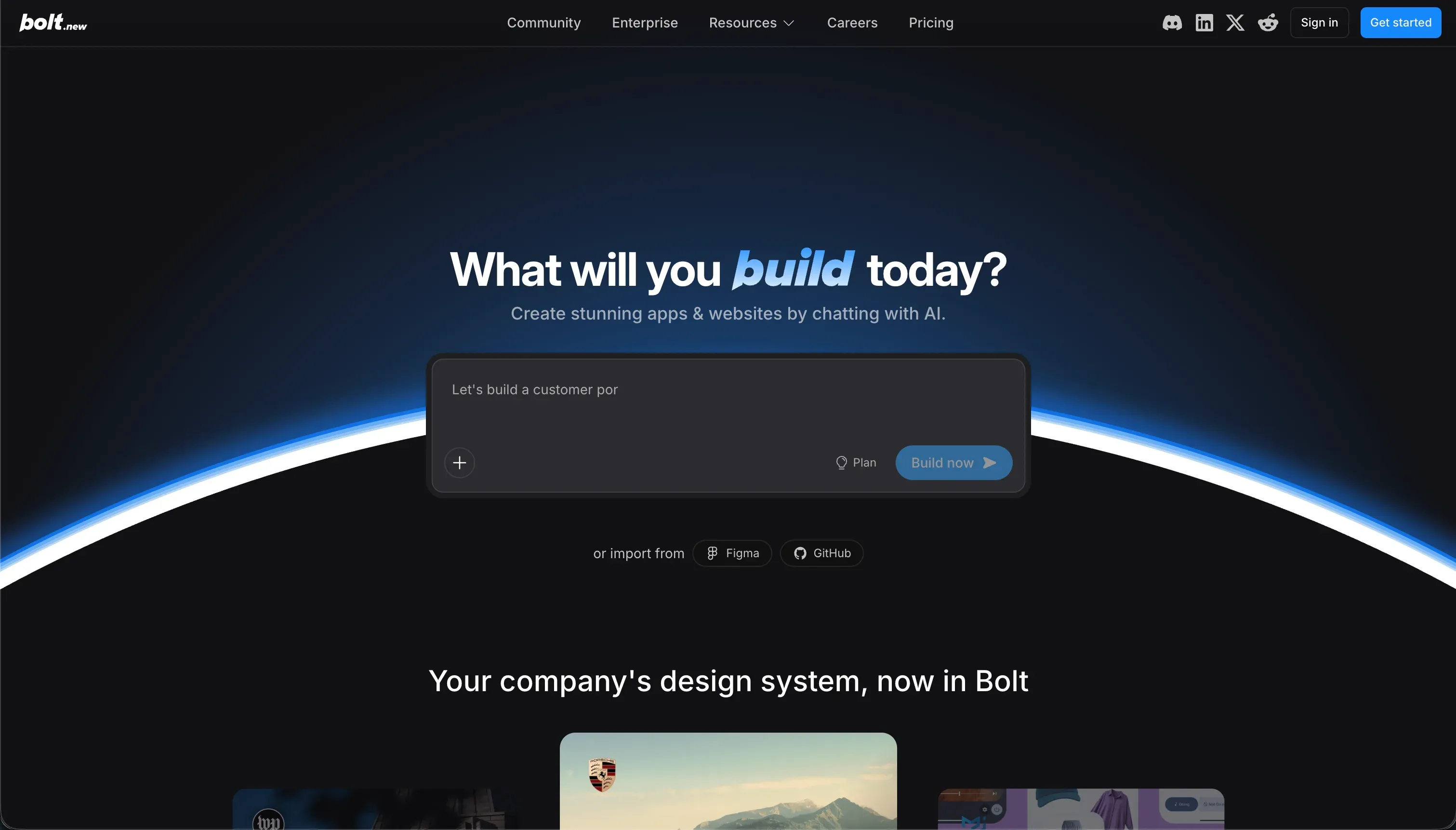
Bolt takes a similar AI-generation route, scaffolding a full app from a prompt inside an in-browser Node.js environment via StackBlitz WebContainers. You get AI speed plus a live editor: install npm packages, run commands, see the preview update as you go. It’s a strong pick if you want the generation speed but also want hands-on control of the stack. Pro is $25/month for 10M tokens. As with Replit, the catch is that you own and maintain generated code, which is a different commitment than Adalo’s fully visual canvas.

Bottom line
Adalo is fine for mocking up a simple mobile app, but its record limits, performance issues, thin permissions, and slow support make it a poor home for anything in production. For real native iOS and Android apps, FlutterFlow is the strongest exit, with Glide the easier choice when the app is genuinely simple. For internal tools and client portals your team can maintain without code, Softr is built for exactly that. And if you want AI to generate the app and a real environment to keep building, Replit or Bolt pick up where Adalo’s missing AI leaves off.
→ Compare Adalo vs Softr in detail - side-by-side on permissions, data, and pricing. → Compare Adalo vs Glide for the simpler mobile-app decision. → Browse all reviewed tools for the full comparison across AI app builders.