What is Replit?
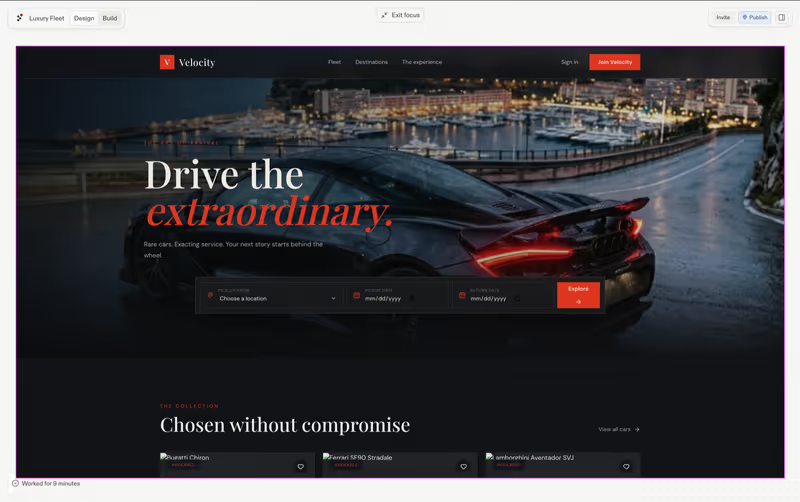
Replit is a cloud-based development environment (IDE) built to allow multiplayer collaborative coding in over 50 programming languages directly inside a browser tab. Initially designed as a learning sandbox and code editor, Replit expanded into the autonomous coding space with the launch of “Replit Agent.”
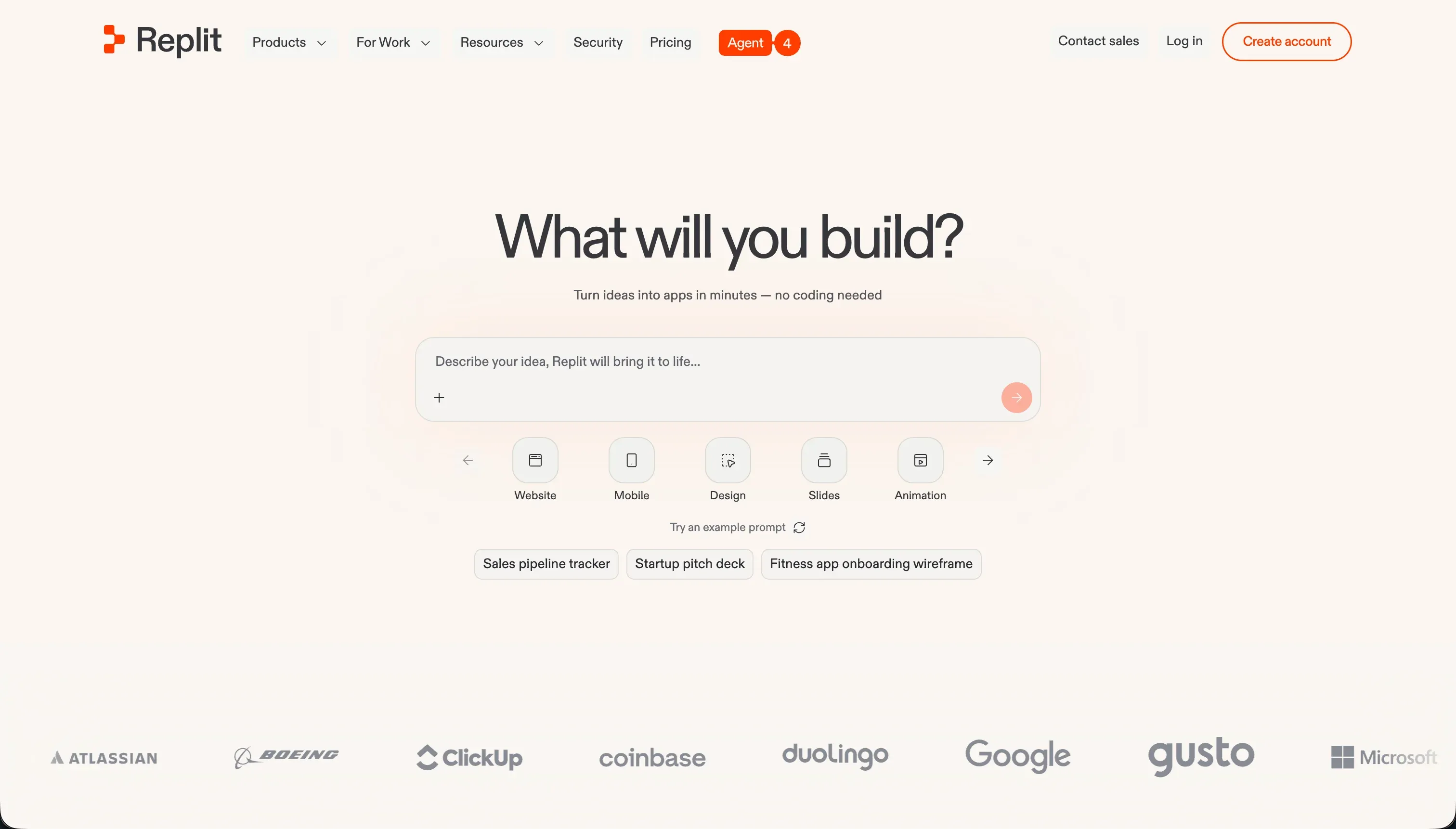 Replit product snapshot
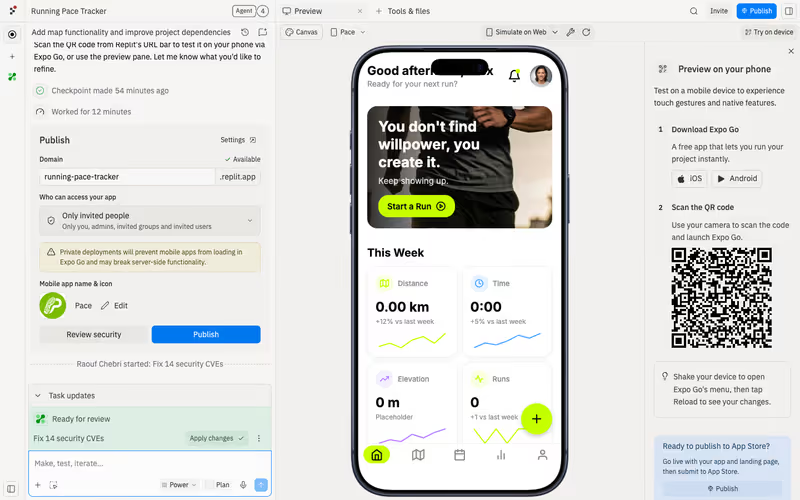
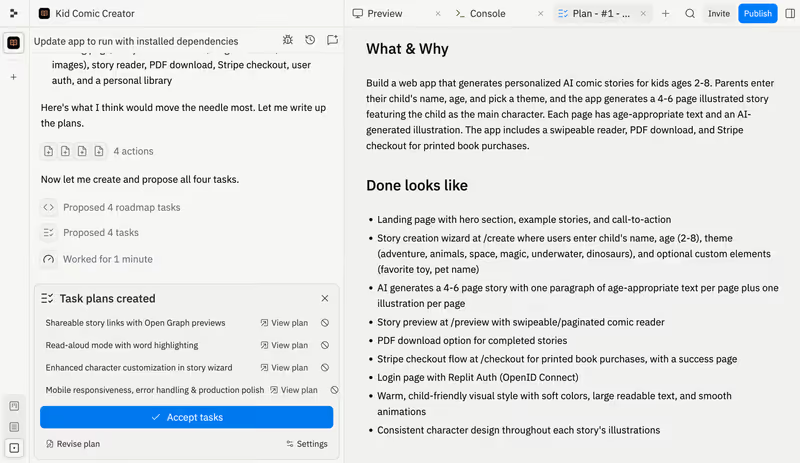
By prompting Replit Agent in plain language, the AI reads your specifications, creates project files, configures a relational PostgreSQL database, installs npm packages, and deploys the application with one click.
What types of applications can you build with Replit?
Replit supports full-stack web and backend configurations, including:
- Custom SaaS Platforms: Build Python Flask, Next.js, or Express web backends.
- API Utilities and Bots: Code automated Slack integrations, email scrapers, or database webhooks.
- Interactive Data Portals: Scaffold charts, dashboard pages, and user logins.
However, because Replit is an engineering-first IDE, keeping an application running securely requires developer knowledge to manage packages, scale virtual containers, and adjust database security variables.
Where Replit genuinely shines
Replit is the premier platform for multiplayer real-time collaboration. Teams can edit source code side-by-side, complete with shared cursors, built-in voice chat, and integrated deployment logs. This makes it an excellent workspace for developers pairing on custom projects.
Replit Agent also features self-correction cycles, running tests autonomously and modifying its own code until compilation bugs are resolved. It supports exporting codebases, so you are never locked into Replit’s hosting.

The engineering overhead & setup complexity
While Replit Agent constructs full-stack applications quickly, transitioning to production introduces operational hurdles:
- Infrastructure Maintenance Debt: You are responsible for managing database migration scripts, handling API package versions, and configuring environment secrets in the Replit console.
- Infinite Agent Loops: If the Agent encounters a complex logic issue, it often loops in circles, telling you it “fixed the bug” while generating new layout errors and draining your query credits.
- Unexpected Database Overages: Because the Agent backs up your database at every checkpoint, these backups consume massive storage space, occasionally generating surprise overage bills.
The pricing gotchas & token/credit model
Replit operates on a credit-based subscription model:
- Dynamic Credit Billing: Agent runs consume credits from your monthly pool ($25/mo on Core, $100/mo on Pro) based on task complexity. Unoptimized tasks or agent debugging runs can consume hundreds of dollars in a single day.
- Restricted Free Tier: The Starter plan restricts users to public projects and limited daily credits, functioning primarily as a sandbox.
- Opaque Billing Consoles: Users express frustration at the lack of transparent, itemized billing dashboards to see where credits were spent, and the inability to easily remove credit cards.
Public Sentiment & Community Consensus
Feedback on developer subreddits and hacker forums reveals consistent concerns:
- Praise for Prototyping Speed: Builders love how quickly they can spin up functional web skeletons without setting up local directories.
- Storage and backup charges: Paid subscribers warn of sudden database charges resulting from automated agent backups.
- Model Throttling Fears: Developers report that Replit caps context parameters during billing runs, leading to model errors that drive up debugging charges.
For business teams looking to build secure B2B portals, internal dashboards, or client hubs, maintaining custom code in a cloud container is expensive and fragile. Every bug means re-prompting the agent - and there’s no guarantee it won’t break something else in the process. If you’re building business systems, Softr is worth a serious look. Softr’s AI Co-Builder generates complete apps from a prompt - database, pages, permissions, and navigation included - using Softr’s own built-in database (with support for 17 external sources like Airtable or Google Sheets if you need them). Because there’s no generated code underneath, you’ll never hit a re-prompting loop when something breaks in production. Built-in auth, user groups, and role-based permissions ship with every app, so operations teams can go live with a client portal or internal tool in hours at a predictable monthly price.

Verdict: Who is it actually for?
Best for: Developers, programming students, and technical builders who want a browser-based collaborative IDE to experiment, learn, and scaffold prototypes with AI assistance.
Not for: Non-technical operators or business managers who need a stable, secure B2B client portal or company database without code maintenance or credit billing surprises.