

Choosing between Lovable and Replit is really choosing between two flavors of AI scaffolding. Lovable is a conversational full-stack app builder aimed at fast React and Supabase generation, while Replit is a cloud IDE with an autonomous agent layered on top. Both can get you from prompt to working app quickly, but they make very different assumptions about how much actual development you are willing to do.
The people seriously comparing these two are usually founders, indie hackers, and product teams trying to buy back time without trapping themselves in a brittle stack. The stakes are not just initial speed, but what happens after the first demo: billing, debugging, deployment weirdness, and whether you can still trust the app a month later. That is where the gap between code generation and code maintenance starts to matter.
Meet the Contenders
What is Lovable?
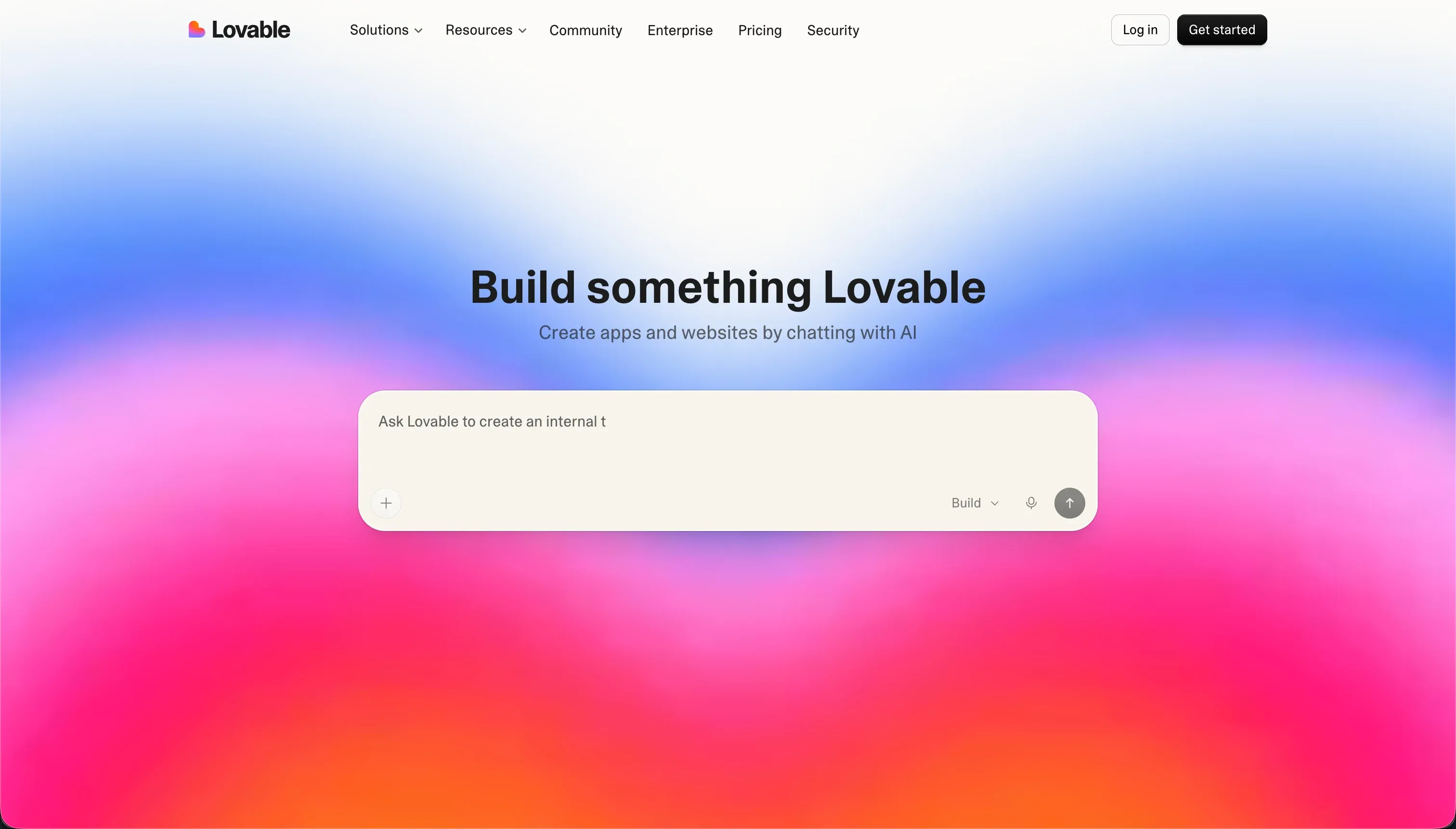
Lovable is an AI-powered full-stack application builder that turns natural-language prompts into React frontends, Node.js backends, and Supabase databases. Its appeal is obvious: type what you want, get a working web app, and keep iterating in chat.
In practice, Lovable works like a vibe-coding loop around a generated codebase. You prompt for a feature, it edits multiple files, can run pre-publish security scans, sync to GitHub, import from Figma, and use Supabase for auth and database setup. That makes it unusually good at the first 70 percent of a startup app, especially when you want branded UI and a quick full-stack scaffold without opening your own editor.
Lovable is genuinely built for founders and builders who care more about shipping a SaaS MVP this week than understanding every layer of the stack on day one. It becomes frustrating for users who need predictable visual control, clean long-term architecture, or rock-solid production behavior, because many reported issues happen in the edit loop rather than the initial generation.
| Spec | Details |
|---|---|
| Primary Stack | React frontend, Node.js backend, Supabase database |
| Interface | Natural-language chat with iterative AI code generation |
| Primary Deployment Target | Lovable Cloud with staging URLs and paid custom domains |
| Key Advantage | Fast prompt-to-app generation with GitHub sync and Figma import |
What is Replit?
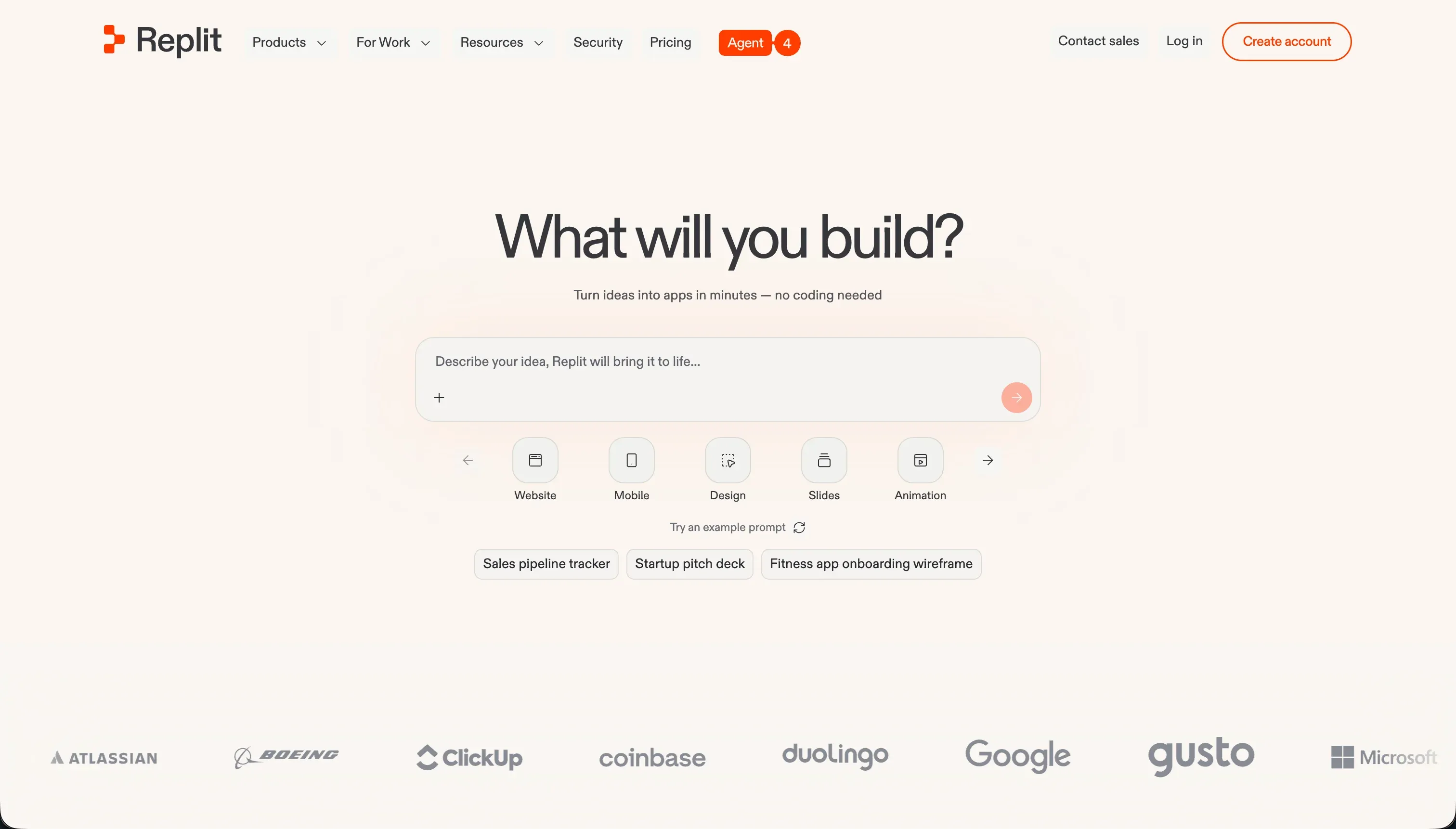
Replit is a browser-based development environment that now wraps AI generation around a full online IDE. Instead of hiding the dev environment, it gives you terminals, package managers, live previews, databases, and an agent that can scaffold and deploy software from prompts.
In practice, Replit Agent writes code, installs dependencies, creates file structures, and tries to self-correct by running reflection loops. You also get Ghostwriter-style autocomplete, multiplayer collaboration, instant deployment, managed databases, custom domains, and support for more than 50 programming languages. That makes it less of a pure app generator and more of a complete cloud workstation with AI attached.
Replit is genuinely built for technical builders, learners, and teams that still want an actual coding environment even when they use AI. It frustrates non-developers and budget-sensitive users when the agent gets stuck, because the platform exposes you to infrastructure, runtime behavior, and effort-priced billing instead of abstracting those concerns away.
| Spec | Details |
|---|---|
| Primary Stack | Multi-language cloud IDE with Agent, Ghostwriter, and managed databases |
| Interface | Browser IDE with terminals, previews, visual editing, and AI agent |
| Primary Deployment Target | Replit-hosted apps with autoscaling and custom domains |
| Key Advantage | Real development environment with AI assistance across coding and deployment |
The Core Difference
The biggest difference is not who can generate code faster. It is whether you want AI to hide the software stack for you, or whether you want AI inside a real software stack you can actively manage.
- Lovable runs as a conversational full-stack generator that tries to collapse frontend, backend, auth, and database work into prompt loops around React and Supabase.
- Replit runs as a genuine browser-based IDE where AI is powerful, but still sits inside a developer environment with terminals, databases, deployment settings, and infrastructure decisions exposed.

Head-to-Head Comparison
We evaluated both platforms across four core categories.
1. Developer Experience & Iteration Speed
Lovable is usually faster out of the gate. If your goal is to go from blank screen to a usable React app with auth and a Supabase-backed data model in one conversation, it feels almost unfairly quick. Figma import, built-in themes, and one-click deployment make it especially strong for startup-style scaffolding.
The problem is that Lovable’s iteration loop is where user trust starts to crack. Community reports repeatedly mention regression issues, vague claims that bugs were fixed when they were not, and credits getting burned in repeated repair attempts. When every meaningful change depends on another prompt, the tool can feel less like a builder and more like a slot machine with a nice UI.
Replit is slower to impress, but more grounded once you are actually building. The agent can scaffold files, install dependencies, and run self-correction loops, yet you are also sitting inside a full workspace with terminals, previews, package management, and the option to intervene manually. That is a better fit if you already think like a developer.
The downside is that Replit’s agent can spiral just as badly, sometimes worse, because its loops are tied to effort-priced billing and runtime behavior. Users have reported circular “fixed it” cycles, wrong workflow summaries, and spending hundreds of dollars in a month or even $350 in a single day. So the experience is more controllable than Lovable, but rarely calmer.
Edge: Lovable for raw first-draft speed, because it gets to a polished full-stack prototype faster than Replit.
2. Code Quality & Portability
Lovable’s biggest selling point is that it generates a standard React and TypeScript codebase instead of trapping you in proprietary visual blocks. GitHub sync is built in, and many buyers like the idea that they can hand the project to real developers later. On paper, that is a strong middle ground between AI generation and eventual ownership.
In practice, the portability story is less clean than the marketing. Some users specifically complain that exported code is messy, hard to scale, or good enough only as a visual reference for a rebuild. Add in reports of backend migrations and concerns about where the real lock-in lives, and Lovable’s code ownership story becomes “partly true” rather than fully reassuring.
Replit also gives you real code, but from a much more developer-native position. Because it is an actual online IDE, you are not just exporting after the fact - you are already working directly in files, with language support that goes far beyond a single React stack. For teams that want to keep coding, that matters.
The tradeoff is that Replit’s code portability does not remove maintenance on its own. You still inherit the usual burden of dependencies, refactors, secrets, deployment configs, and whatever the agent improvised to get the app working. It is more honest than Lovable about that burden, but you absolutely own it once the demo glow wears off.
Edge: Replit, because it treats code as code from the start rather than as something you may need to salvage later.
3. Database & Backend Capabilities
Lovable leans hard on Supabase, which is both its strength and its hidden complexity tax. You get managed PostgreSQL, auth bootstrapping, real-time features, and a clear full-stack story right away. For a founder who already likes the React plus Supabase playbook, that is a very compelling stack shortcut.
But Supabase is not the same as backend simplicity. Lovable still leaves you dealing with row-level security, triggers, and schema behavior that often require deeper understanding than the prompt UI suggests. The tool can create the structure quickly, yet users still report hitting a scale wall when the business logic becomes more custom or relational.
Replit is broader here, not cleaner. It offers managed SQL databases, backups, restoration, migration tools, and the flexibility to work across many languages and frameworks. That means you are not boxed into one obvious backend pattern, and advanced builders can shape the backend more freely than Lovable allows.
The downside is that Replit exposes more of the work. You are still responsible for schemas, database operations, and environment behavior, and some users have reported nasty surprises like checkpoint-driven database charges reaching $1,500 in overages. So Replit wins on capability, but not on safety or simplicity.
Edge: Replit, because it supports a broader and more developer-controlled backend model than Lovable’s Supabase-first lane.
4. Hosting & Deployment Options
Lovable keeps deployment simple. You can push to Lovable Cloud, get staging URLs, and use custom domains on paid plans, which is exactly what a non-technical founder wants during prototype mode. That convenience is part of why the tool feels so good in its first week.
The catch is trust in production behavior. User complaints mention preview-to-production discrepancies, concerns about backend control, and even stories of unwanted backend migration behavior. So while deployment is easy, control over what exactly is happening under the hood feels thinner than many serious builders want.
Replit is better if you actually want hosting tied to a live development environment. One-click deployment, autoscaling, custom domains, and live previews are integrated into the same workspace where you build. For technical users, that tight loop between coding, testing, and shipping is a real advantage.
But that convenience does not erase ops overhead. Replit still leaves you exposed to environment variable mismatches, deployment bugs, and infrastructure maintenance that the agent does not always catch. It is more capable than Lovable’s clean facade, yet also more willing to remind you that deploying code is still deploying code.
Edge: Replit, because its hosting is attached to a fuller development workflow and gives technical teams more operational control.
5. AI Quality & Reliability
Lovable is impressive when the request is clear and close to its happy path. It is particularly good at generating appealing UIs quickly, applying design themes, and making broad app-level changes through conversation. For a founder who wants momentum, that polish matters.
Reliability is where the praise fades. Community feedback repeatedly points to regression loops, rising credit consumption from roughly 1.2 credits to 3 to 4 credits per prompt in some cases, and the agent confidently claiming fixes that did not actually resolve the issue. That combination makes Lovable feel high-talent but low-discipline.
Replit’s agent is more ambitious in what it tries to do. It can write code, run tests, reflect on failures, and keep iterating without needing as much hand-holding for every single file edit. In the best case, that feels closer to an actual AI coding teammate than a prompt-to-UI toy.
In the worst case, it turns into a billable chaos machine. Users describe infinite bug-generation loops, weak context handling, and repeated claims of success while obvious bugs remain. Because pricing is effort-based, poor reliability is not just annoying on Replit - it can become expensive fast.
Edge: neither, but Lovable is slightly more predictable for narrow app generation while Replit is broader and more failure-prone under heavy agent use.
6. Learning Curve & Onboarding
Lovable is easier for beginners to approach because it front-loads the magic and hides the plumbing. A founder can describe an app idea, get a React frontend and Supabase backend, and feel productive without understanding much about the stack. That makes onboarding feel light, especially compared with more developer-centric tools.
The hidden problem is that the learning curve returns later with interest. Once layouts need precise fixes, permissions need auditing, or backend behavior gets strange, the conversational interface stops being enough. Beginners then discover they have adopted a real software stack without fully learning how it works.
Replit has a steeper first hour because it looks and behaves like an IDE. Even with the visual editor and AI agent, you are staring at files, terminals, databases, secrets, and deployment controls. For many non-technical users, that alone is enough friction to slow them down.
But the learning experience is more honest. Replit is strong for people learning software development because it supports over 50 languages and keeps the real system visible instead of pretending the system does not exist. If you actually want to become more capable over time, that matters more than a frictionless first prompt.
Edge: Lovable for absolute beginners, because it hides more complexity upfront than Replit.

Pricing Comparison
Lovable:
- Free - $0 with 5 daily credits, up to 50 per month, and public projects.
- Pro - starts at 25€/mo with 100 monthly credits, private projects, custom domains, and 3 editors.
- Business - starts at 50€/mo with 100 monthly credits, SSO integration, advanced design templates, and data-training opt-out.
- Enterprise - custom pricing and custom messaging limits.
- Pro credit scaling runs from 100 credits at 25€/mo to 10,000 credits at 2,250€/mo.
- Business credit scaling runs from 100 credits at 50€/mo to 10,000 credits at 4,300€/mo.
Replit:
- Starter - $0 with free daily Agent credits, one public published project, and built-in database access.
- Replit Core - $20/mo annually or $25/mo monthly, includes $25.00 monthly credits, up to 5 collaborators, and 2 parallel agents.
- Replit Pro - $95/mo annually or $100/mo monthly, includes $100.00 monthly credits, up to 15 collaborators, 50 viewers, and 10 parallel agents.
- Enterprise - custom pricing with SSO/SAML, advanced privacy, and single-tenant options.
- Replit Pro prepaid credit tiers go from $250 credits for $225/mo to $2,500 credits for $2,050/mo.
Use Case Fit: When to use which?
When to choose Lovable
- Choose Lovable when you want the fastest possible route to a React + Supabase SaaS prototype and care more about speed than architecture hygiene.
- Choose Lovable when design polish and Figma-to-app flow matter more to you than having a full coding environment from day one.
- Choose Lovable when you expect to validate the concept quickly, then hand the project to developers through GitHub sync if it proves traction.
When to choose Replit
- Choose Replit when you want AI help inside a real browser IDE with terminals, package managers, and manual coding control.
- Choose Replit when your team works across multiple languages or frameworks and does not want to be pushed into a React + Supabase default.
- Choose Replit when you are technical enough to manage deployment, secrets, databases, and dependency issues after the agent has done the initial scaffolding.
When neither Lovable nor Replit is the right fit
For internal tools and client portals
This is the category where both Lovable and Replit start to look less clever. Internal tools, CRMs, partner dashboards, and client portals need stable authentication, granular user permissions, and interfaces that a non-developer can safely maintain after launch. Both of these tools can generate something that demos well, but both still hand you generated code and the day-two burden that comes with it.
For that use case, Softr is the better fit. Softr’s AI Co-Builder can generate the app, but it is AI-first rather than AI-only, so you can switch to visual editing for pages, user groups, permissions, workflows, and Softr Databases without burning more prompts. That matters when the app is not a prototype but an operational system your team has to keep alive.
For native mobile apps
Neither Lovable nor Replit is the cleanest answer if the real requirement is App Store and Google Play distribution. Replit does mention mobile app development flows, but these tools are still fundamentally centered on generated code and deployment workflows that assume a technical owner. Lovable is even more web-first.
If native mobile is the actual goal, use FlutterFlow. It is purpose-built for mobile interfaces, app logic, and native deployment paths in a way these two are not. If you only need mobile access without native store packaging, Glide is also a more direct option for lightweight operational apps.
For a professional AI coding workflow in your own stack
If what you really want is not a hosted app builder but stronger AI assistance while staying close to your own repositories and engineering process, both Lovable and Replit can feel like compromised middle grounds. Lovable hides too much behind prompt loops, while Replit still nudges you into its hosted environment and billing model.
In that case, Cursor is the cleaner recommendation. It gives you AI coding assistance in a more conventional developer workflow, which is usually better for teams that already have repos, branches, review practices, and deployment pipelines. You lose some one-click scaffolding convenience, but you gain far more control.

Verdict
Pick Lovable if your main priority is getting a polished web app prototype in front of users fast. It is the more seductive product, the better first demo, and the easier sell for non-developers. The tradeoff is that you are accepting prompt dependence, Supabase complexity hiding in the background, and a real risk that debugging becomes the expensive part.
Pick Replit if you are a technical founder, developer, or product team that wants AI help without giving up the underlying development environment. It is the stronger choice for people who actually want to inspect files, run commands, manage infrastructure, and keep working once the agent gets confused. The tradeoff is straightforward: more control, but also more responsibility and more exposure to billing surprises.
The day-two reality is that neither tool really solves software maintenance for non-technical teams. Both are code-generation products, which means both eventually ask you to think like a developer, even if one delays that moment better than the other. If the real project is a production business app with users, permissions, and workflows, Softr usually ages better because it removes whole classes of maintenance work instead of generating them for you.

Summary Comparison Table
| Criterion | Lovable | Replit |
|---|---|---|
| Build paradigm | Conversational full-stack app generator | Cloud IDE with AI agent |
| Best for | Fast SaaS MVPs and polished prototypes | Technical builders who want AI inside a real dev environment |
| Primary stack | React + Node.js + Supabase | Multi-language, framework-flexible |
| Pricing model | Subscription plus monthly credits | Subscription plus effort-priced credits |
| Code export | GitHub sync with exportable codebase | Direct code access in workspace |
| Maintenance burden | High once prompt loops start breaking things | High because you own real code and infrastructure |
| Learning curve | Lower upfront, higher later | Higher upfront, more honest overall |