What is Lovable?
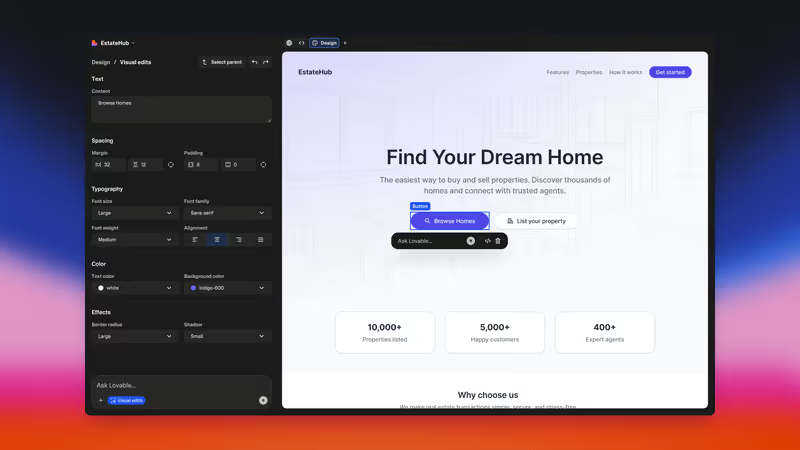
Lovable is an autonomous full-stack AI application builder designed to compile complete React frontends and Node.js backends from plain English instructions. Rather than generating separate visual blocks or proprietary layouts, Lovable operates directly at the code level, generating standard React, TypeScript, and Tailwind CSS codebases that connect directly with Supabase.
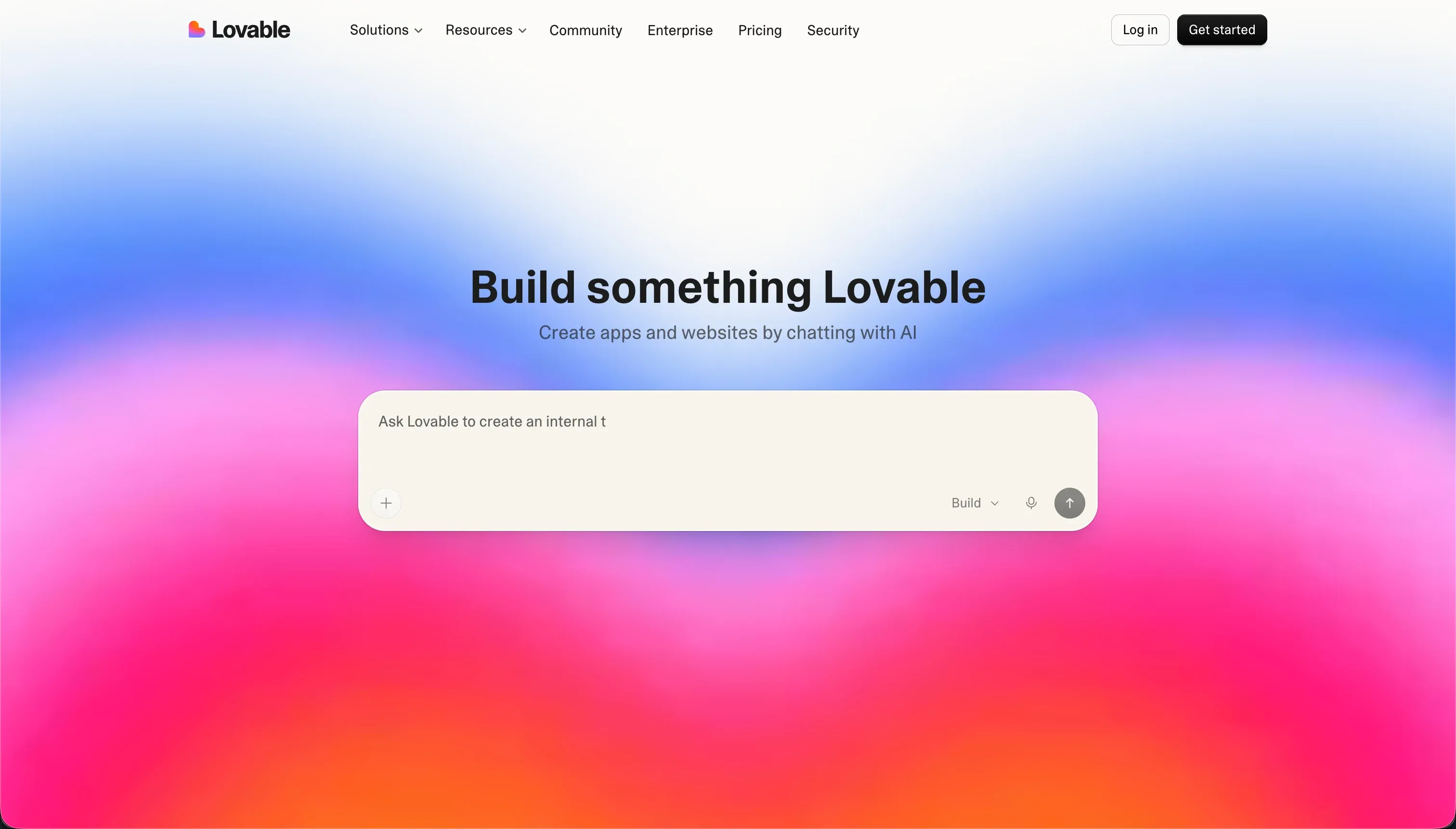 Lovable product snapshot
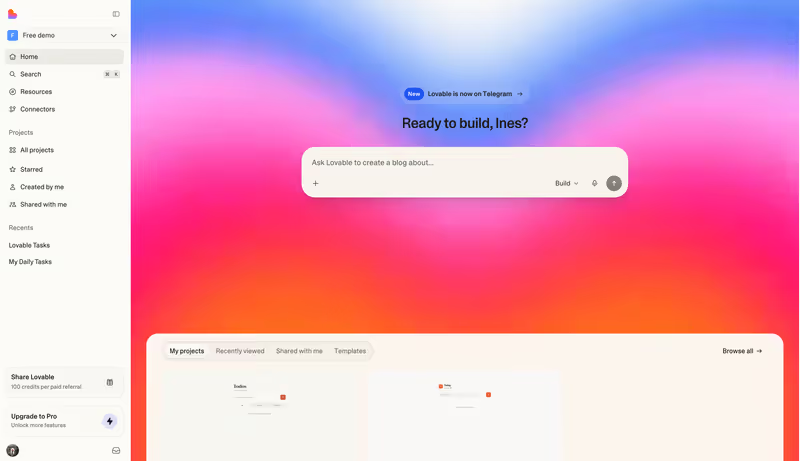
The premise is straightforward: you write a description of your application, and Lovable scaffolds the UI, databases, routing, and third-party APIs. You can then edit and refine the application by chat, using a conversational workflow frequently called “vibe coding.”
What types of applications can you build with Lovable?
Lovable excels at scaffolding interactive SaaS MVPs, dashboard interfaces, and multi-user web portals. It is capable of constructing:
- Interactive SaaS Prototypes: Quickly build client-facing web portals, multi-step signup funnels, and payment checkouts.
- Database-Driven Dashboards: Render charts, filterable tables, and user-profile management interfaces.
- Custom Third-Party API Integrations: Scaffold code scripts that communicate with external tools like Stripe or OpenAI.
However, because Lovable compiles raw React code that must be compiled and run in a cloud container, building business-critical internal systems (like partner portals, CRM views, and internal company databases) requires significant technical configuration to keep data secure.
Where Lovable genuinely shines
The standout benefit of Lovable is code portability. You are never locked into a closed ecosystem; you can synchronize your repository directly with GitHub and edit the files locally inside tools like VS Code or Cursor. This provides a clean exit path if your project outgrows the AI editor’s capacity.
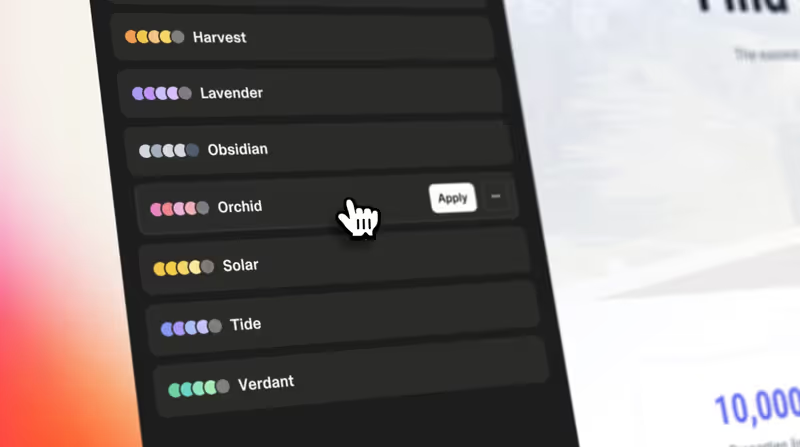
Its deep integration with Supabase also simplifies database bootstrapping. The platform handles user signup authentication, Postgres database setup, and staging deployments automatically. Furthermore, its ability to import design tokens directly from Figma makes it a powerful scaffolding engine for developers looking to skip layout boilerplate.

The engineering overhead & setup complexity
While Lovable constructs the first draft of an application in minutes, maintaining and securing it for production requires engineering knowledge:
- The Row-Level Security (RLS) Trap: Supabase relies on Postgres RLS rules to secure your data. By default, Lovable scaffolds databases with public or weakly protected tables. Hardening these rules to prevent users from accessing each other’s data requires manual, developer-level Postgres SQL configuration.
- The Git Merge Wall: If you modify your Lovable project locally via GitHub, pushing your changes back to the Lovable editor frequently causes code merge conflicts. The AI is often unable to resolve changes made outside its chat environment, forcing you to choose between coding manually or restricting yourself entirely to the prompt window.
- Deployment and Computes: To host your production database outside Lovable Cloud’s staging limitations, you must configure a private Supabase instance, manage database connection strings, and handle database migration scripts yourself.
The pricing gotchas & token/credit model
Lovable’s pricing is built on a credit system that scales according to your project’s complexity:
- Opaque Credit Consumption: Unpaid plans offer 5 daily credits, which are spent almost instantly. While paid tiers start at $25/month for 100 credits, recent system updates have increased prompt costs. Simple prompts that previously cost 1 credit now frequently consume 3-4 credits per action.
- Paying to Debug: If the AI introduces a bug or breaks your layout, you must spend additional credits prompting it to fix the issue. Users report spending half of their monthly credit pool attempting to debug regressions generated by the AI agent.
- Steep Scalability Costs: Scaling your credits is expensive. Moving to a 10,000 monthly credit tier costs $2,250/month on the Pro plan and climbs to $4,300/month on the Business plan. For non-technical teams, this structure can become more expensive than hiring a freelance developer.
History of Security Breaches
In April 2026, details emerged regarding a major security incident on the Lovable platform:
- The BOLA Vulnerability: A Broken Object Level Authorization (BOLA) flaw allowed any user to enumerate and read project files from early public projects created before November 2025.
- Prompts and Data Disclosed: The leak exposed full conversational prompts and chat histories (revealing proprietary logic and roadmaps), hardcoded credentials (including Supabase
SERVICE_ROLEkeys and API tokens), and live customer data from poorly secured connected databases. - The Slow Response Window: The vulnerability remained unpatched for 76 days. Despite researchers submitting detailed bug reports on HackerOne as early as February and March 2026, triage teams closed the reports without escalating them to internal Lovable developers.
- The “Feature” Classification: Lovable’s triage process was delayed because internal documentation initially characterized this visible behavior as an intended legacy “feature” of public visibility. The issue was only patched within two hours after a security researcher went public on social media on April 20, 2026, prompting an apology from the CEO.

Public Sentiment & Community Consensus
Developer discussions across Reddit and Product Hunt reveal a clear trajectory when building with Lovable:
- The 70% Speed Peak: Builders praise Lovable’s speed when generating initial layouts and basic CRUD logic. It is widely considered one of the best tools for spinning up a startup MVP to show investors.
- The “Hotel California” Database Issue: A frequent complaint is Lovable’s tendency to migrate data backends to its own cloud servers without warning, making it difficult for builders to manage their own Postgres databases.
- Regression and Bloat: As a project’s codebase grows, the context window degrades. Lovable frequently begins overwriting files, injecting trackers, or introducing duplicate React hooks that break build compilations.
“Lovable’s support rating out of 10? -3” - Reddit comment
For B2B operations, building customer portals, team dashboards, or company databases on generated code results in heavy technical debt. If you’re building internal systems or client portals, Softr is a more practical fit for business operators. Its AI Co-Builder generates a complete app from a prompt - database, pages, user permissions, and navigation - so there’s no generated code to audit or debug. Auth, user groups, and role-based access control are built in from day one, and Softr Databases gives you a structured data layer that your team can manage directly. You don’t configure RLS policies or debug broken React components; you just build and ship. Plans start at $19/mo, and every AI action can also be done manually, so credits never block you.
Verdict: Who is it actually for?
Best for: Technical founders, solo developers, and product teams who want to rapidly scaffold a React/Supabase MVP, retain code ownership via GitHub sync, and have the skills to maintain the codebase manually.
Not for: Non-technical operators, business owners, or operations managers looking to build secure B2B portals, internal tools, or client dashboards without developer support or scaling credit costs.