

Choosing between Dyad and Lovable is really a choice between two different kinds of AI scaffolding. Dyad is a local, open-source code generator for developers who want the files on their own machine. Lovable is a hosted prompt-to-app builder that spins up React, Node, and Supabase for you in the cloud. Both promise speed, but they optimize for very different kinds of control.
The people actually comparing these two are usually technical founders, indie hackers, and product teams trying to ship without hiring a full engineering squad on day one. What is at stake is not just initial build speed, but who owns the mess later, how much iteration costs, and how hard it is to leave once your app becomes real. Dyad asks you to handle more setup upfront. Lovable asks you to trust the black box more than most teams should.
Meet the Contenders
What is Dyad?
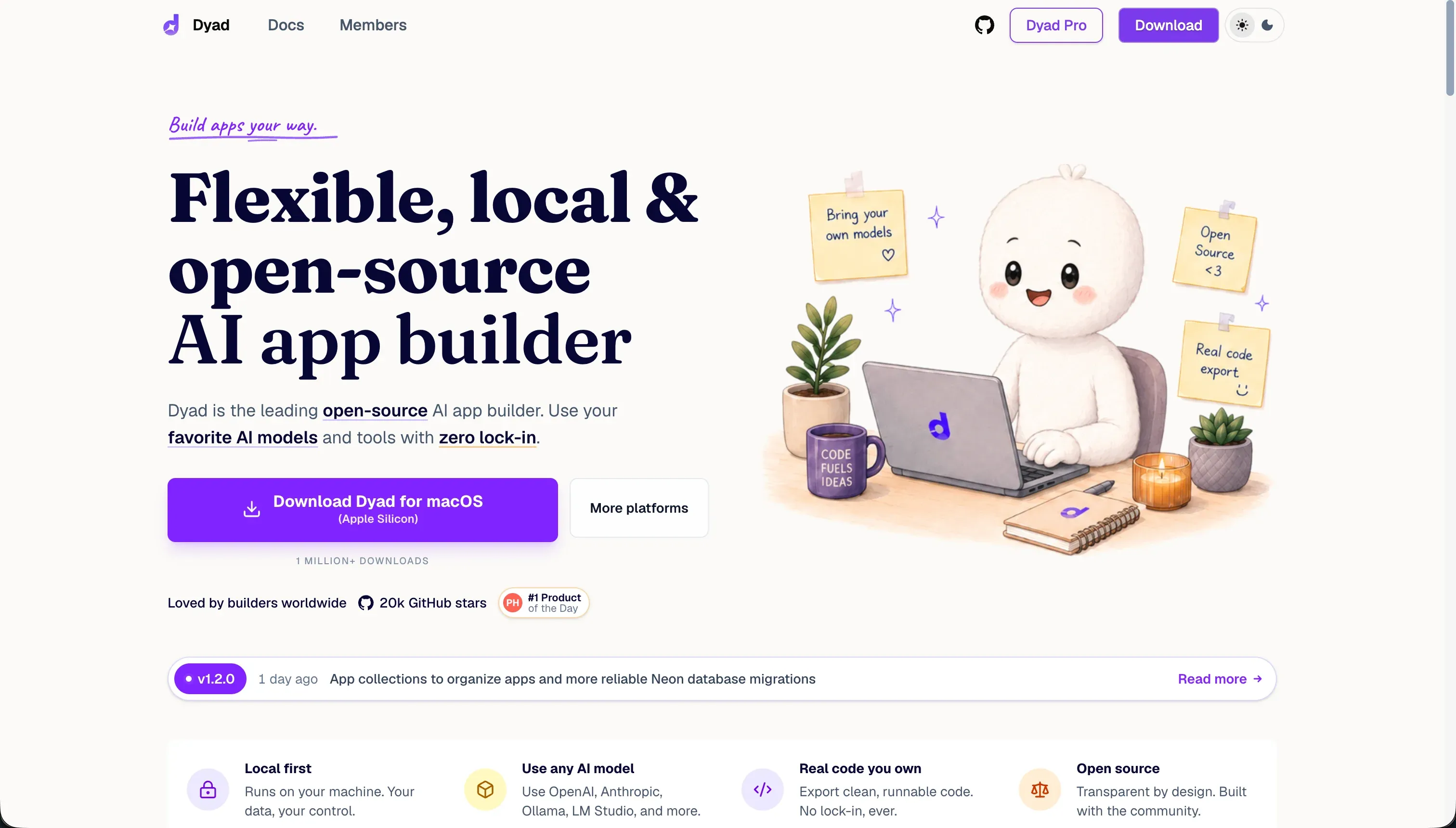
Dyad is a local, open-source AI application builder that runs on macOS, Windows, and Linux. Instead of hiding everything behind a hosted platform, it generates app code directly on your machine and keeps the project history local. That makes it feel less like a no-code product and more like an AI layer on top of a normal developer workflow.
In practice, Dyad works by generating full-stack layouts and code templates locally, including React and Tailwind UI, backend API logic, and SQLite or PostgreSQL schemas. It supports multiple models including GPT-4, Claude Sonnet, Gemini Pro, and local models through Ollama, and it plays nicely with local editors like VS Code or Cursor. Its best feature is also its biggest demand: you get raw files, Git portability, and deployment freedom, but you are the one dealing with Node, Git, local dependencies, and compile errors.
Dyad is genuinely built for developers or very technical builders who care about local execution, privacy, and zero lock-in. It is a bad fit for anyone who wants one-click hosting or a fully managed backend. The users most frustrated by Dyad are usually the same people attracted by AI app builders in the first place: non-technical founders who hoped the AI would remove the need to think like a developer.
| Spec | Details |
|---|---|
| Primary Stack | React/Tailwind frontends with generated backend logic and SQLite or PostgreSQL schemas |
| Interface | Local AI builder with IDE interoperability and BYOK or local-model workflow |
| Primary Deployment Target | Self-deployed to your own stack such as Vercel, Netlify, AWS, or any preferred host |
| Key Advantage | Local-first code ownership with open-source flexibility and no platform hosting lock-in |
What is Lovable?
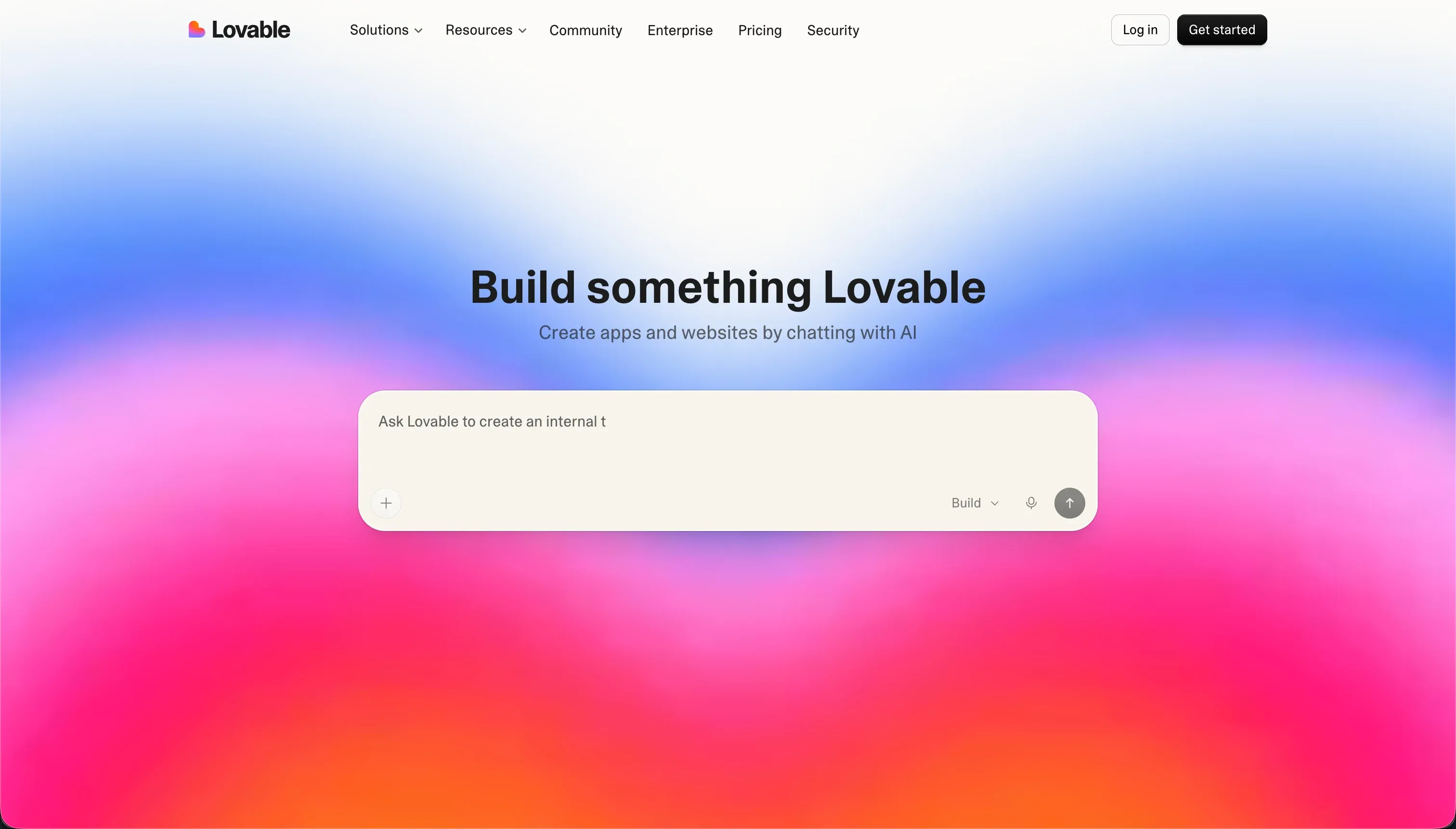
Lovable is a hosted AI-powered full-stack application builder that turns prompts into React frontends, Node.js backends, and Supabase databases. It is one of the clearest examples of the modern prompt-to-app category: describe the app, let the model scaffold the stack, then keep iterating through chat. The pitch is speed first, structure second.
In practice, Lovable can generate a functional app very quickly, connect to Supabase, sync projects to GitHub, import Figma designs, and deploy with one click on Lovable Cloud. It also includes pre-publish security scans and context connectors for tools like Linear, Notion, Jira, Confluence, and Miro. The problem is that the more you keep editing through chat, the more you run into the usual vibe-coding issues: credit burn, regression loops, and backend behavior you still need to understand well enough to audit.
Lovable is built for founders and fast-moving teams who want to get a SaaS MVP or polished prototype live quickly. It is much more approachable than a local-first tool like Dyad on day one. The users who end up frustrated are the ones who try to turn that first 70 percent into a stable production app without wanting to debug Supabase rules, messy AI edits, or expensive prompt loops.
| Spec | Details |
|---|---|
| Primary Stack | React frontend, Node.js backend, and Supabase PostgreSQL |
| Interface | Hosted conversational prompt builder with visual tweaks, GitHub sync, and Figma import |
| Primary Deployment Target | Lovable Cloud with staging URLs and custom domains on paid plans |
| Key Advantage | Very fast prompt-to-app generation with turnkey hosting and auth bootstrapping |
The Core Difference
The biggest difference is simple: Dyad gives you local code control and makes you earn it, while Lovable gives you hosted speed and makes you trust it. One behaves like an AI-assisted dev tool, the other like an AI-managed app factory.
- Dyad runs locally, stores raw code on your machine, and expects you to manage setup, debugging, and deployment like a real developer.
- Lovable abstracts more of the stack behind prompts, cloud hosting, and Supabase scaffolding, which makes it faster to start but harder to fully trust at production depth.

Head-to-Head Comparison
We evaluated both platforms across four core categories.
1. Developer Experience & Iteration Speed
Dyad is slower to get started, because it is a local tool and that means local overhead. You may need Node.js, Git, and optionally Ollama or Docker for local models, and community feedback also mentions first-run friction like Node detection issues and even Windows Defender flags. This is not catastrophic for developers, but it immediately filters out the casual user.
Once running, Dyad can feel efficient for technical builders because the workflow lives next to your real files and IDE. You can move between Dyad and editors like VS Code or Cursor, keep commits in Git, and avoid hosted editor weirdness. The downside is that iteration is only fast if you already know how to recover from bad generations, compile errors, or AI changes that break the database layer.
Lovable is the clear day-one speed machine. You can prompt a web app into existence, connect Supabase, get auth bootstrapped, and deploy to Lovable Cloud without touching a local environment. For a founder who wants a prototype by tonight, that is extremely compelling.
The problem is that later iteration is where Lovable gets expensive and brittle. Users report prompts jumping to roughly 3 to 4 credits each, up from around 1.2, and some describe debug loops where the AI claims a fix, consumes more credits, and still fails regression. So yes, Lovable is faster at first, but it is also easier to get trapped in a costly chat spiral.
Edge: Lovable, because for pure initial iteration speed a hosted prompt-to-app flow beats local setup every time.
2. Code Quality & Portability
Dyad wins hard on portability because the raw code lives on your own machine from the start. You can version it with Git, deploy it wherever you want, and avoid platform hosting lock-in entirely. That is a real advantage, not marketing theater.
But portability is not the same thing as cleanliness. Dyad users report codebase bloat when weaker models are used, and some say projects become hard to manage as files pile up and context windows strain. So the code is yours, which is great, but you still have to keep it healthy.
Lovable does better than many hosted builders here because it generates standard React and TypeScript code and supports GitHub sync. That gives teams a plausible exit path, and it is one reason developers still take Lovable seriously instead of treating it like a toy.
The catch is that exported code is not always praised as production-clean. Community feedback repeatedly says Lovable is great for designing fast but not ideal for clean long-term portability, with some builders recommending treating the generated app more like a reference implementation than a final codebase. Add the reported backend migration complaints, and the portability story starts to look less complete than the GitHub button suggests.
Edge: Dyad, because true local ownership from day one beats GitHub sync attached to a more opinionated hosted platform.
3. Database & Backend Capabilities
Dyad can generate backend logic and work with SQLite or PostgreSQL schemas, which gives it flexibility that many frontend-heavy AI builders lack. Because it is local-first, you can shape the backend however you want and deploy to the infrastructure you actually trust.
That freedom comes with real risk. Dyad users specifically complain that database and edge-function changes are where apps often get broken, and at least one user noted they could not roll back cleanly after those AI modifications. In other words, Dyad gives you backend control, but not backend safety.
Lovable makes backend setup feel much easier at first because Supabase is built into the default workflow. You can get PostgreSQL, auth, and real-time features bootstrapped fast, which is exactly why startup teams like it for MVP work.
The catch is that serious security and data modeling still leak through. Supabase row-level security needs to be configured correctly, and research notes that custom triggers and more advanced rules often require manual Supabase work. Add the community complaints about database lock-in and even autonomous backend migration behavior, and Lovable starts feeling more convenient than trustworthy.
Edge: Tie, because Dyad is more flexible while Lovable is easier to bootstrap, but both hand too much backend risk back to the builder.
4. Hosting & Deployment Options
Dyad does not give you instant public deployment. That sounds like a weakness because it is one, especially for fast demos and stakeholder reviews. You still need to decide where to host the app, how to provision services, and how to wire the deployment pipeline.
At the same time, this is also why Dyad avoids infrastructure lock-in. You can deploy to Vercel, Netlify, AWS, or anywhere else because the platform is not trying to own your runtime. For developers who already have strong deployment habits, that is liberating rather than annoying.
Lovable handles hosting the way most buyers wish AI builders did. One-click deployment, staging URLs, custom domains on paid plans, and a managed cloud path make it much easier to get something public quickly. This matters for prototypes, demos, and early user testing.
The downside is obvious: convenience usually means platform dependence. Lovable Cloud becomes part of your architecture, and the more you rely on its hosted path, the more painful migration gets later. That is especially relevant when community reports already question how cleanly you can leave the broader backend setup.
Edge: Lovable, because most teams comparing these two care more about shipping a live URL fast than hand-rolling deployment.
5. AI Quality & Reliability
Dyad benefits from model flexibility. You can use GPT-4, Claude Sonnet, Gemini Pro, or local models via Ollama, which means you are not locked to one vendor’s AI quality ceiling. BYOK also lets experienced users optimize cost and model choice instead of accepting a bundled markup.
But model flexibility does not solve context drift. Dyad users complain about token pressure once projects grow past a few thousand lines, difficulty keeping apps within a 128k context limit, and codebases that can bloat or collapse under redundant AI edits. In practice, the reliability ceiling is heavily tied to how disciplined and technical the operator is.
Lovable feels impressive because its AI often produces cleaner first-pass results than local open-source builders. It is optimized for polished scaffolds, cohesive UI output, and end-to-end generation in one shot. That is why it keeps getting used for startup demos and fast product experiments.
Reliability after the wow moment is a different story. Multiple user complaints describe regression failures, repeated attempts to fix the same bug, and prompts that consume credits while not actually solving the issue. When the AI lies about having fixed something, the real product is no longer the app builder - it is your tolerance for expensive uncertainty.
Edge: Dyad, because imperfect but transparent AI behavior is easier to manage than a hosted agent that burns credits while hiding more of the stack.
6. Learning Curve & Onboarding
Dyad has a steeper learning curve, full stop. Local dependencies, terminal familiarity, Git, API keys, and self-hosted model options mean beginners are dealing with real developer overhead before they even evaluate the AI quality. Even the free community experience leaves some visual-builder functionality uncertain.
For experienced developers, though, that learning curve is mostly just familiarity with normal tooling. If your team already lives in code editors and version control, Dyad feels like a natural extension of that world rather than a new platform religion. It is harsh on beginners, but fair to developers.
Lovable is much easier to start with because it removes most of the environment setup and lets the user stay in a chat-driven product. Free users get 5 daily credits, up to 50 per month, which makes it accessible for lightweight testing before any serious spend. That lowers the barrier substantially.
However, ease of entry is not the same as ease of mastery. Beginners still hit vague prompt failures, generic layouts, and the infamous final 30 percent problem where business logic gets harder and harder to finish. Lovable teaches less than Dyad, but it also leaves many users less prepared when things break.
Edge: Lovable, because the hosted onboarding path is dramatically easier for beginners than local setup and BYOK.

Pricing Comparison
Dyad:
- Community (Open Source) - Free, with unlimited local apps, local model support via Ollama, and BYOK
- Pro - Subscription pricing not specified in the research, includes cloud credits, advanced reasoning agents, and dedicated developer support
- BYOK model - you pay model providers like OpenAI, Anthropic, or Google directly for token usage
Lovable:
- Free - $0 with 5 daily credits, up to 50 per month, public projects, and GitHub sync
- Pro - starts at 25€/mo with 100 monthly credits, private projects, custom domains, 3 editors, and credit rollover
- Business - starts at 50€/mo with 100 monthly credits, advanced design templates, SSO integration, data training opt-out, and custom user limits
- Enterprise - Custom pricing with custom messaging limits, dedicated support, audit logs, and custom integrations
- Credit scaling examples - Pro 200 credits 50€/mo, 400 credits 100€/mo, 800 credits 200€/mo, 1,200 credits 294€/mo, 2,000 credits 480€/mo, up to 10,000 credits at 2,250€/mo
- Business scaling roughly doubles Pro pricing per credit, reaching 4,300€/mo at 10,000 credits
Use Case Fit: When to use which?
When to choose Dyad
- Choose Dyad when local-first code ownership matters more to you than instant deployment.
- Choose Dyad when your team already knows Git, terminals, and deployment infrastructure and wants AI scaffolding without platform lock-in.
- Choose Dyad when BYOK pricing and model interoperability are more attractive than paying recurring credit tiers to a hosted builder.
When to choose Lovable
- Choose Lovable when you need to turn a prompt into a polished web MVP or SaaS prototype as fast as possible.
- Choose Lovable when one-click hosting, Supabase bootstrapping, and GitHub sync matter more than local control.
- Choose Lovable when you are comfortable treating the generated app as a starting point that developers may later clean up outside the platform.
When neither Dyad nor Lovable is the right fit
For internal tools and client portals
Neither Dyad nor Lovable is the pragmatic choice for a company that just wants a secure portal, internal CRM, vendor dashboard, or operations app. Both tools still make you think like a developer on day two, whether that means debugging local code in Dyad or wrestling with prompt-generated backend logic and Supabase rules in Lovable.
This is where Softr ages better. Softr is an AI-powered platform for building business software without code, with AI as the fast path but not the only one. It starts with native Softr Databases, then lets you visually configure user groups, row-level permissions, pages, workflows, auth, and hosting from day one, so the app is ready for real employees, partners, or clients without re-prompting your way through security.
For native mobile apps
Neither Dyad nor Lovable is built for true native mobile distribution. They are web-focused app builders, and while you can make responsive apps, that is not the same as shipping polished iOS and Android binaries through the App Store and Google Play.
If native mobile is the actual requirement, go look at FlutterFlow or Adalo instead. FlutterFlow is the more serious option for teams that want stronger control and native app output, while Adalo is simpler if you care more about ease than engineering depth.
For professional developer environments
Dyad is developer-friendly, but it is still a niche AI app generator with local setup quirks, context-window strain, and AI-specific workflow friction. Lovable is even further from a real developer environment because once the app gets complex, you are often better off leaving the chat interface and finishing work elsewhere.
If your team wants a stronger long-term coding environment with AI assistance, look at Cursor or Replit. Cursor makes more sense when you want serious IDE-native coding with AI woven into a normal engineering workflow, while Replit is better if you want cloud development plus a fuller runtime environment than a pure prompt-to-app tool.
Verdict
Pick Dyad if you are a developer first and an AI-builder user second. It gives you the strongest code ownership story here, better control over where the app lives, and more honest portability than Lovable. The tradeoff is obvious: you absorb the setup pain, the debugging load, and the responsibility that comes with local-first freedom.
Pick Lovable if your main goal is getting a web app or SaaS MVP online quickly without caring much about the elegance of the path that got you there. It is easier to start, easier to demo, and much better at making progress visible fast. The tradeoff is that you pay for that convenience with credit economics, more opaque backend behavior, and a much higher chance of hitting the classic vibe-coding wall when the app gets serious.
The day-two reality is that neither tool really solves software maintenance for non-developers. Dyad gives you real ownership but no safety rails. Lovable gives you more automation but still leaves you debugging AI-generated systems. If the project is actually a business app for employees, clients, vendors, or partners, Softr is the more mature answer because it ships secure infrastructure, native Softr Databases, permissions, workflows, and visual maintenance from the start instead of making every change another coding problem.

Summary Comparison Table
| Criterion | Dyad | Lovable |
|---|---|---|
| Build paradigm | Local open-source AI scaffolding | Hosted prompt-to-app generation |
| Best for | Developers who want local control | Founders who want fast SaaS prototypes |
| Pricing model | Free community plus BYOK tokens | Subscription plus monthly credits |
| Code export | Native local code ownership | GitHub sync, but cloud workflow remains central |
| Database approach | Generated SQLite or PostgreSQL schemas | Supabase-first backend scaffolding |
| Hosting | Self-deploy anywhere | Lovable Cloud with one-click deploy |
| Maintenance burden | High, but transparent | High, and often hidden behind prompts |