
Why people look for Lovable alternatives
Lovable has a genuinely impressive first-hour experience. The prompt-to-working-React-app pipeline is fast, the generated code is clean, and GitHub sync works from day one. The issues compound over time.
Credit consumption is unpredictable and accelerating
Lovable’s Pro plan starts at €25/month for 100 credits. Each “significant AI action” consumes a credit - but the definition of significant has expanded. Users on Reddit report credit consumption increasing roughly 10x over the course of their subscription: prompts that cost 0.5–1 credits now cost 3–4. A debug loop - where you prompt to fix a bug, the fix introduces another bug, and you prompt again - can drain 20–30 credits in an hour. Reaching the credit ceiling mid-project means either waiting for the next billing cycle or buying additional credits at the same €0.25/credit rate. At 400 credits, you’re paying €100/month on Pro. At 10,000 credits, €2,250/month.
Generated code needs a developer to maintain
Lovable outputs real React and TypeScript - that’s a legitimate strength if you have development skills or plan to hand the codebase to engineers. It’s a liability if you don’t. Every subsequent change - a new field, a layout adjustment, a business logic update - requires either re-prompting (and spending credits) or editing TypeScript directly. Non-technical founders typically hit this wall within the first month of using a production app.
Supabase security is entirely your problem
Lovable’s backend runs on Supabase, with Row Level Security (RLS) policies generated by the AI. The problem is that AI-generated RLS is not reliably correct, and incorrect RLS means one user can see another user’s data. Auditing this requires direct Supabase knowledge most Lovable users don’t have. Community posts describe apps where RLS was either incorrectly configured or missing entirely - discovered after going live with real users.
Vulnerability response delays and prompt leaks
Lovable has faced significant user concern regarding platform-level security and response times. In April 2026, details emerged about a Broken Object Level Authorization (BOLA) vulnerability that exposed legacy projects created before November 2025. The flaw leaked users’ proprietary source code, hardcoded API credentials, live customer databases, and full AI prompt/chat histories. Furthermore, the vulnerability remained unpatched for 76 days, with initial bug disclosures closed without escalation because internal guidelines classified the visibility of other users’ code and prompts as a legacy “feature” of public visibility. The delay highlighted critical breakdowns in their bug disclosure pipeline, creating significant frustration for teams looking for enterprise-grade security.
Database portability is worse than it looks
The code exports to GitHub cleanly. The database is more complicated. Some users have reported that Lovable autonomously migrated their private Supabase backend to Lovable Cloud without explicit consent - a move that adds Lovable Cloud compute charges on top of the subscription (billed based on visits and data transfers). Once on Lovable Cloud, the full billing picture is subscription + AI credits + cloud compute.
The final 30% is consistently the hardest part
Community reviews on G2 and Product Hunt converge on a pattern: Lovable handles the first 70% of a build well, then struggles with complex business logic, multi-role auth flows, and integration edge cases. The community recommendation is to export to a local IDE to finish - which assumes development skills many users don’t have. Debug loops on the remaining 30% are where credit costs compound fastest.

The best Lovable alternatives, by use case
If you want to ship a consumer or SaaS app and own the codebase
Lovable’s core strength is going from idea to a full React + Supabase stack in hours. If the economics or maintenance model don’t work, two alternatives target the same audience:
Bolt
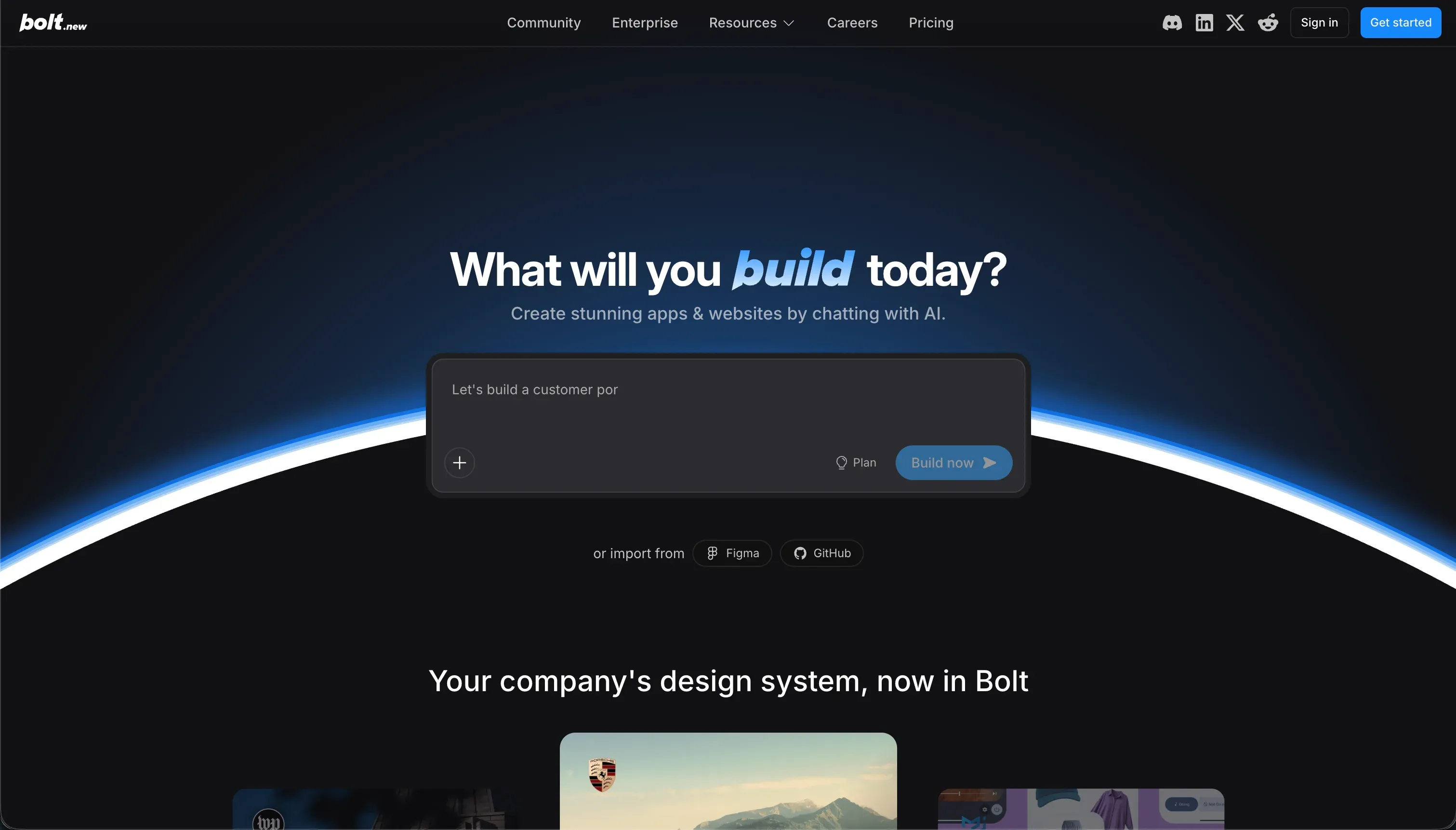
Bolt is the closest direct alternative for this use case. It generates React/Vite apps via AI, but runs a full Node.js development environment in-browser via StackBlitz WebContainers - you can install npm packages, run terminal commands, edit files directly, and see a live preview update. For builders who want AI scaffolding but also want hands-on control over the stack, Bolt’s environment is significantly more flexible than Lovable’s editor. Pricing: Pro at $25/month for 10M tokens. Tokens don’t map directly to Lovable’s credits, but the volume covers substantially more iteration cycles at the same price. Code exports to GitHub, and you can continue in VS Code or Cursor immediately.
v0
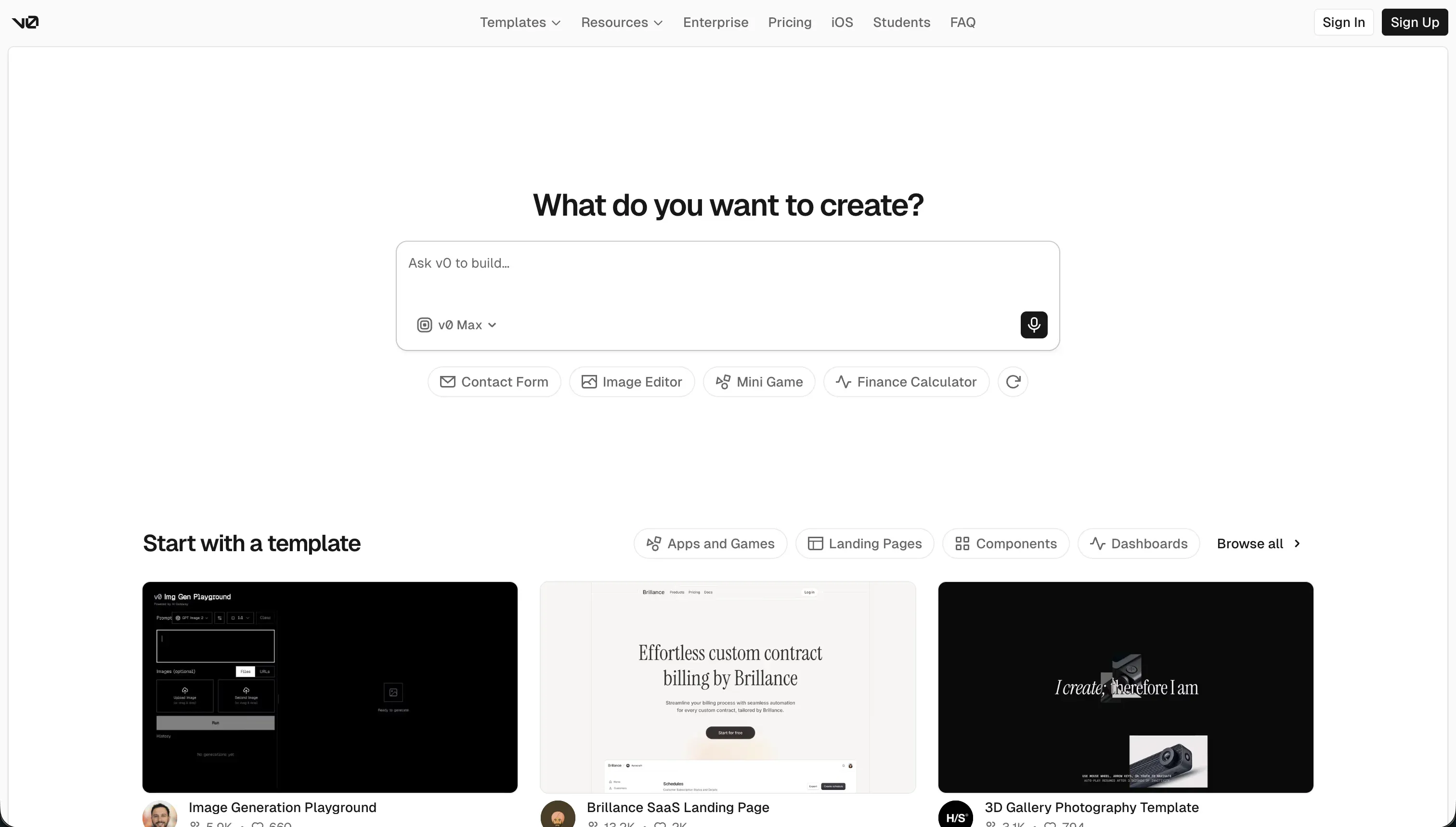
v0 by Vercel narrows the scope to frontend only - it generates React components built on shadcn/ui and Tailwind CSS from prompts and design uploads. It doesn’t generate a backend or database, but the output integrates directly into Next.js projects and deploys to Vercel in one click. The code is clean and production-grade for frontend work. Good if you need AI for the UI layer and want to own the backend yourself. Note: v0’s pricing moved to usage-based credits in 2025, and users report burning through credits fast - some finishing $20 of credits in a single day. Verify the pricing model before committing.
If you’re building internal tools your team needs to maintain without developers
Lovable generates code - which is a liability the moment a non-technical person needs to make a change post-launch. Every update requires re-prompting (spending credits) or editing TypeScript. For operations, HR, finance, or sales teams, this creates a permanent dependency on either the AI or a developer for what should be routine maintenance.
Softr
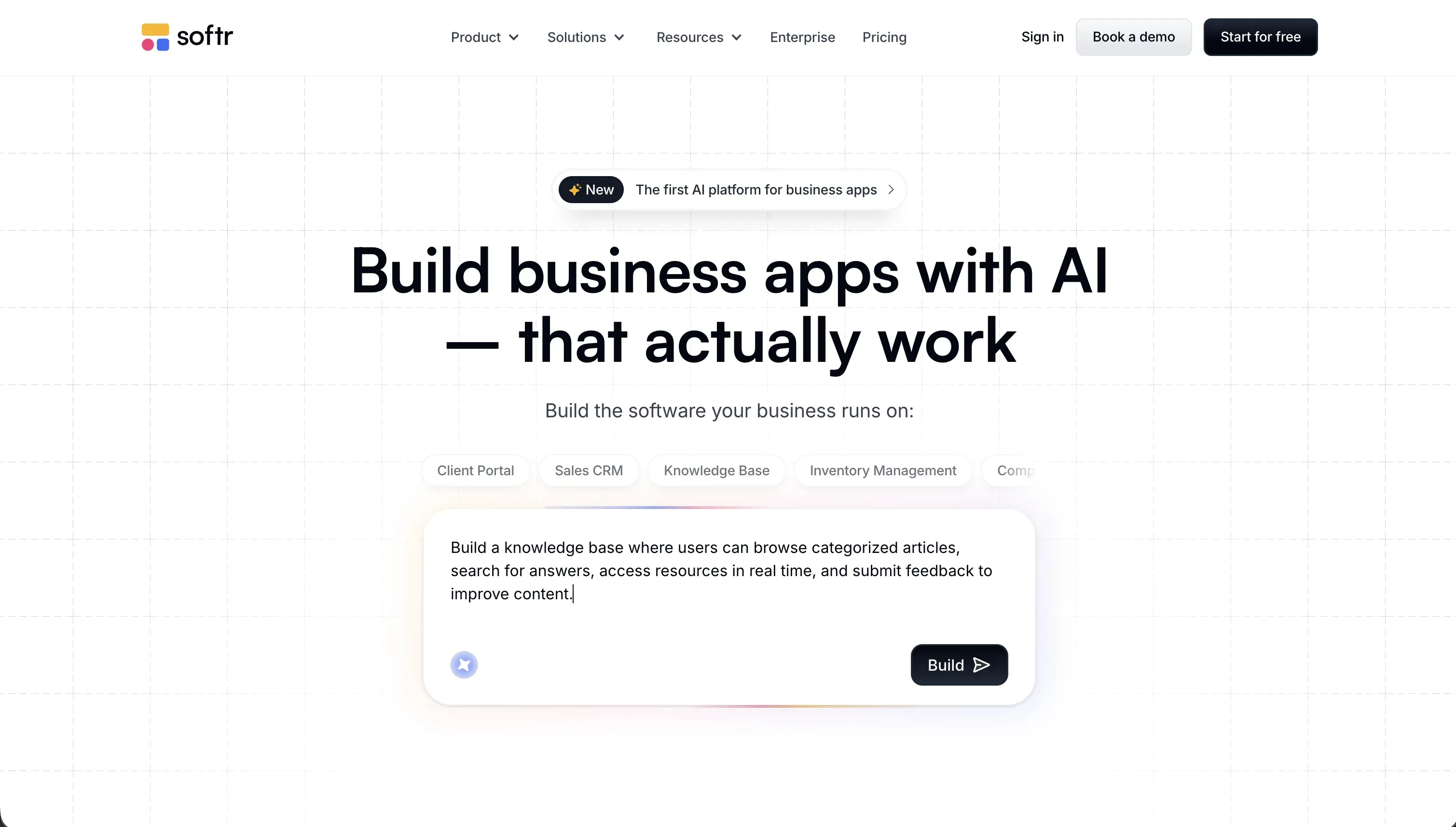
Softr solves this at the architecture level. Its AI Co-Builder generates the full app - database tables and relationships, pages, UI blocks, user roles, navigation, and permissions - from a plain-language description. But unlike Lovable, the output is a no-code app running on Softr’s tested platform infrastructure, not generated code. No TypeScript to audit. No Supabase RLS to configure manually. No debug loops. The app is production-ready and secure from day one.
The practical difference: your ops manager needs to add a new field to a tracker, or change which team members can see certain records. In Softr, they open the editor and do it in 30 seconds - visually, without touching code or prompting AI. In Lovable, that’s a re-prompt that costs credits and risks introducing regressions in other parts of the app.
Softr is purpose-built for the most common internal tool use cases: project trackers, employee directories, HR portals, inventory apps, approval workflows, CRMs, and dashboards. Over 1 million builders use it, including teams at Netflix, Google, Stripe, and UPS. MIT replaced a $100K custom-coded app with a Softr-built portal serving 2,800+ students, built by one person in three months.
Pricing is flat-rate: free tier (5 app users, 5,000 records), Basic at $19/month (5 Team + 5 Client users, 50,000 records), Pro at $99/month (10 Team, up to 50, + 50 Client, up to 250 users, 500,000 records). No per-seat pricing. Softr does include AI credits (used by the Co-Builder, the Vibe Coding block, and AI features in databases and workflows), but crucially, AI is one option - not the only one. You can build and edit everything visually at any time. So unlike Lovable, you’re never blocked when credits run low.
If you need to validate an MVP or prototype quickly
If the goal is a working demo, investor prototype, or quick idea validation - not a long-term production system - Lovable is still reasonable. Two alternatives worth knowing:
same.dev
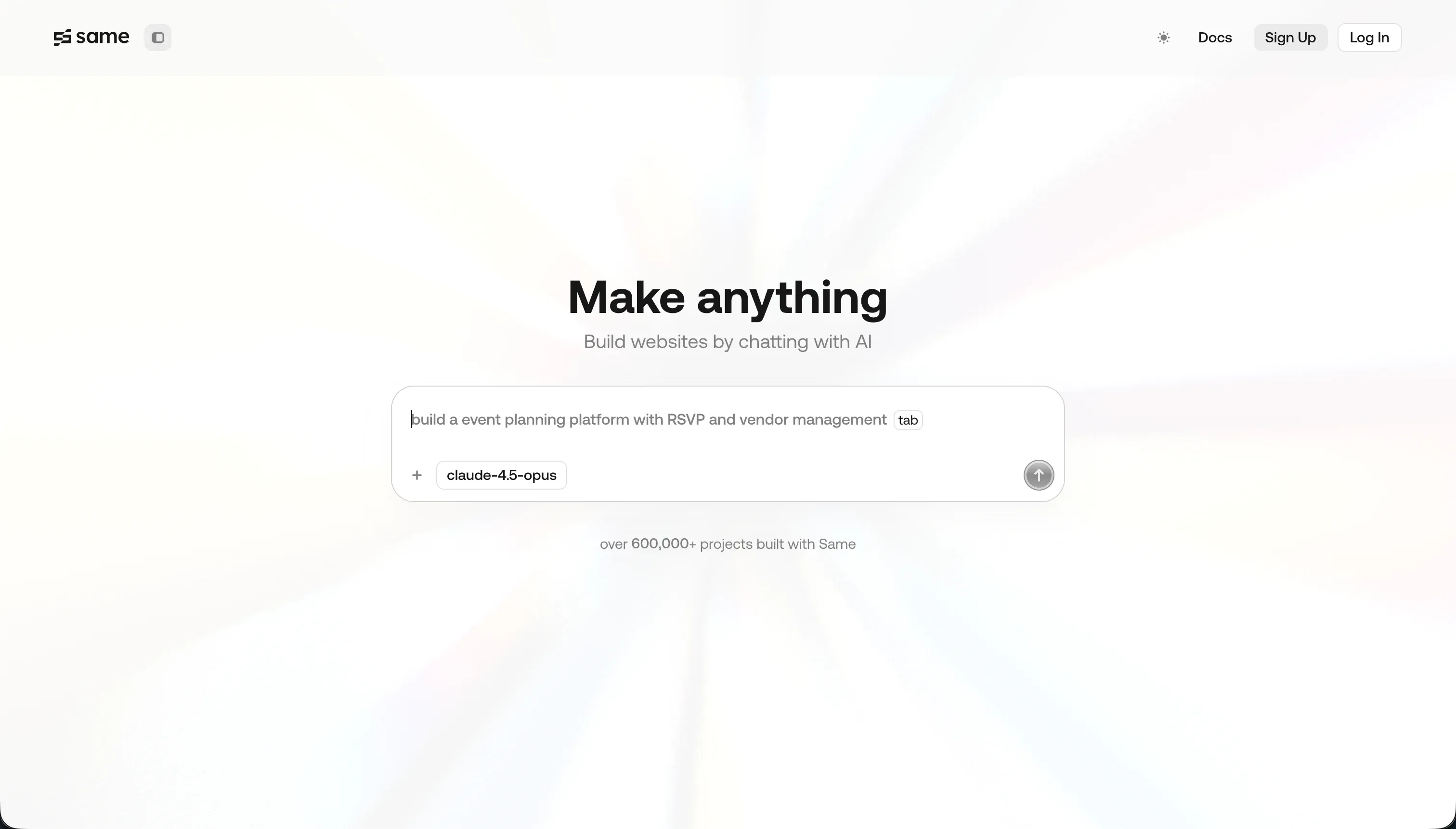
same.dev is an AI-native browser IDE that can clone an existing app’s UI from a URL and generate new apps from prompts. Useful for rapidly adapting a reference design or UI pattern without building from scratch.
Base44
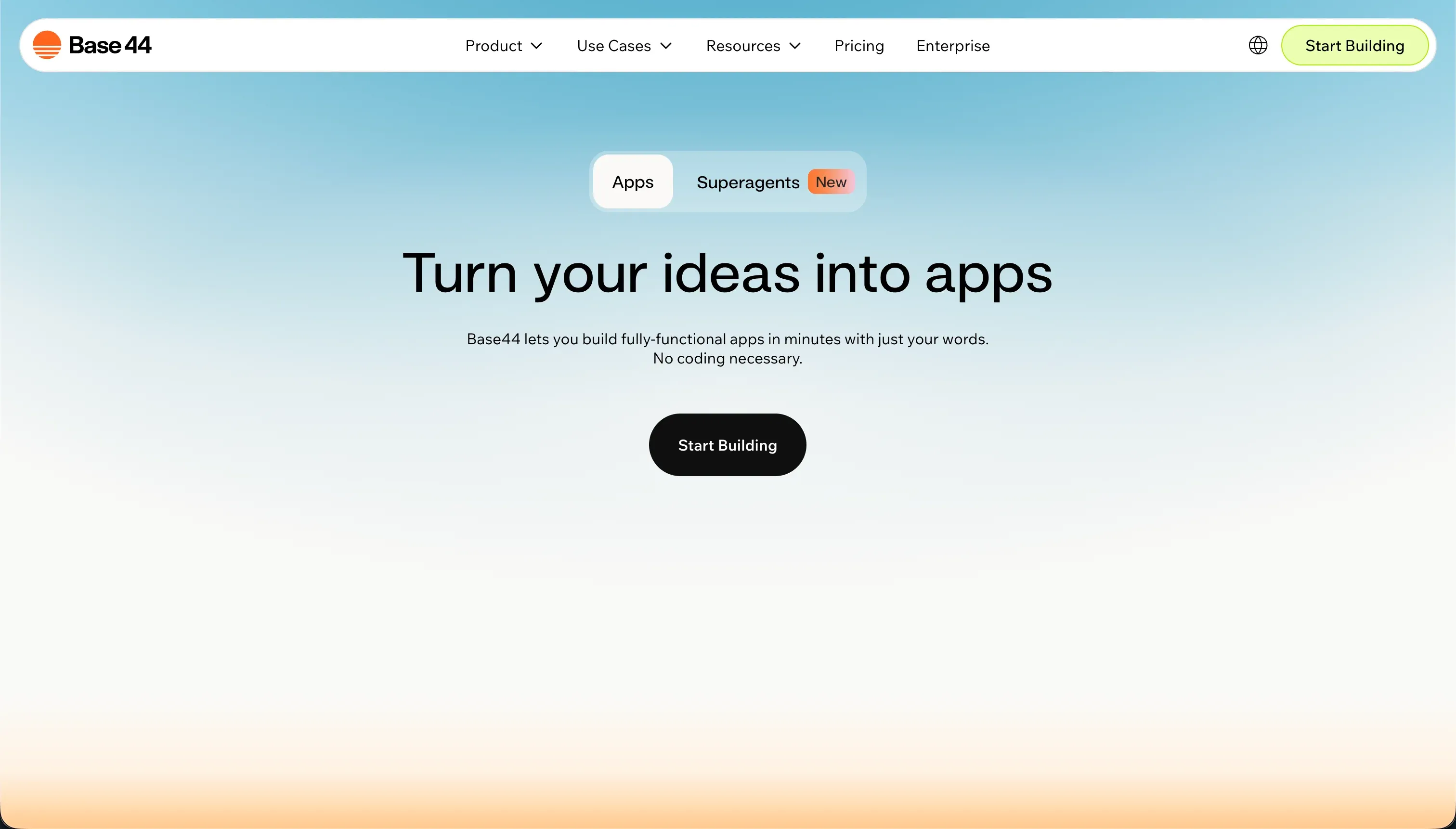
Base44 focuses on speed-to-working-app with a simpler pricing structure than Lovable. Less mature as a platform, but worth evaluating for quick validation projects where Lovable’s credit economics feel too risky.
For MVPs that need to become real products: be deliberate about whether you want to own generated code (Lovable, Bolt) or build on a no-code foundation you can maintain (Softr). The right answer depends entirely on whether your team has the development skills to maintain what gets generated.
If you need client portals or external-facing apps where different users see different data
Lovable is built around a single Supabase backend with AI-generated RLS. Getting external users with different data access levels working correctly - clients who see only their records, partners who see only their tier, admins who see everything - requires correctly configuring multiple RLS policies that the AI doesn’t always get right. A misconfigured policy is a silent data exposure: Lovable won’t warn you, and your users won’t know until something leaks.
Softr
Softr handles multi-user access with a visual permissions model that’s correct by default. You define user groups (clients, partners, employees, admins) and assign - visually - which pages, blocks, database records, and action buttons each group can access. Record-level filtering means a client logs in and sees only their projects, invoices, and communications. A partner logs in and sees only what they’re entitled to. This is configured in a point-and-click interface, not by prompting an AI and hoping the security logic holds.
Softr also supports white-label branding - the portal reflects your brand, not Softr’s - and ships with native auth pages (login, signup, password reset, SSO) without requiring any custom code. For agencies managing client deliverables, professional services firms with partner dashboards, or any team sharing data securely with people outside the organization, this is where Softr’s approach pays off most clearly relative to Lovable.
If you want a proper developer environment with AI assistance alongside coding
Lovable keeps you in a prompt-and-preview loop. If you’re a developer who wants AI to accelerate coding rather than replace it, and you want to stay in control of the architecture:
Cursor
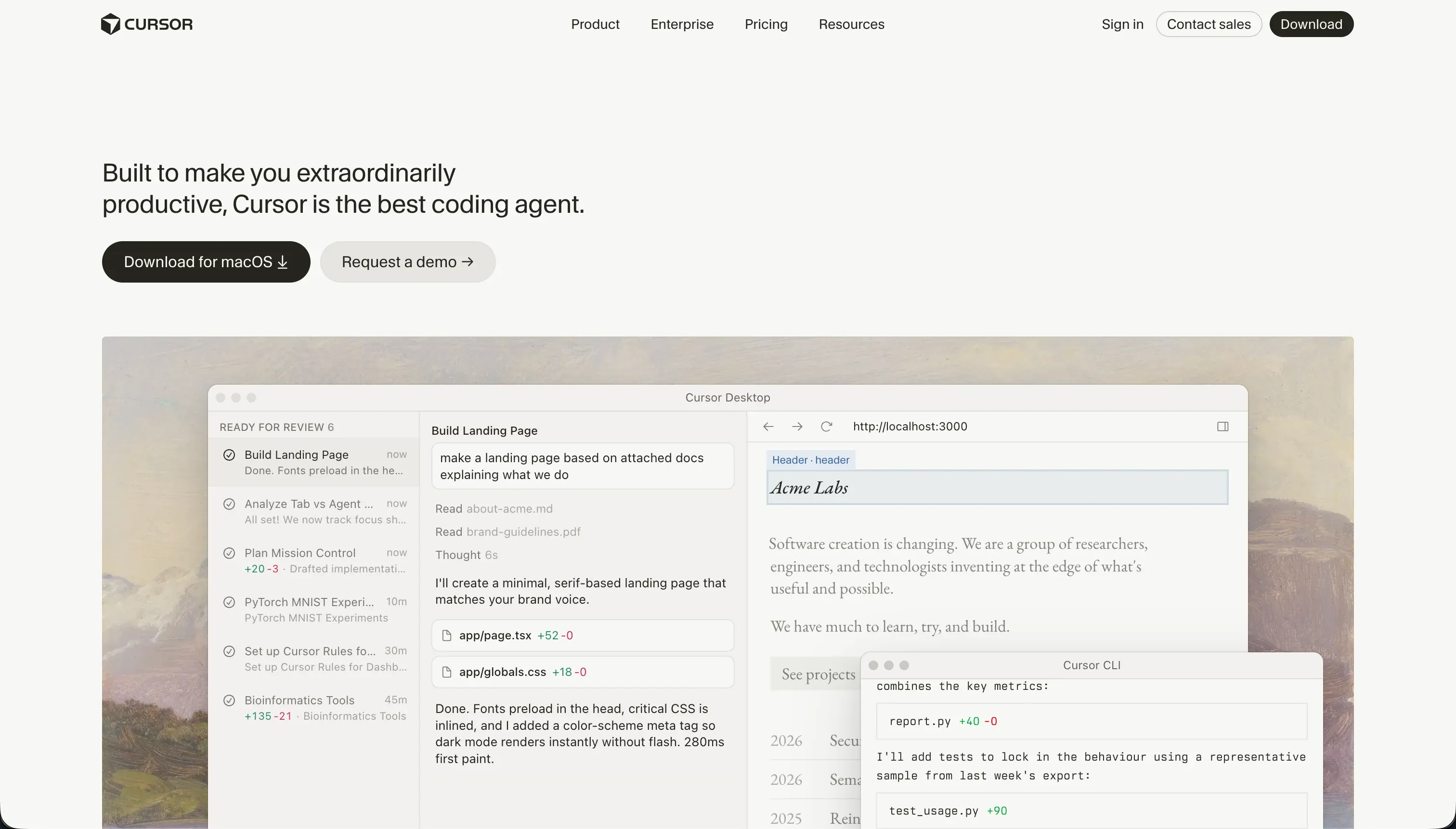
Cursor is the strongest option here - a full IDE (fork of VS Code) with AI deeply integrated across the development workflow: context-aware code completion, multi-file edits from a single instruction, codebase-wide chat that understands your entire project, and automated refactoring. Cursor doesn’t generate a full stack from one prompt - it accelerates a developer who’s already directing the architecture. For engineers who want to move faster without handing control to AI, Cursor is the most mature tool in this space.
Replit
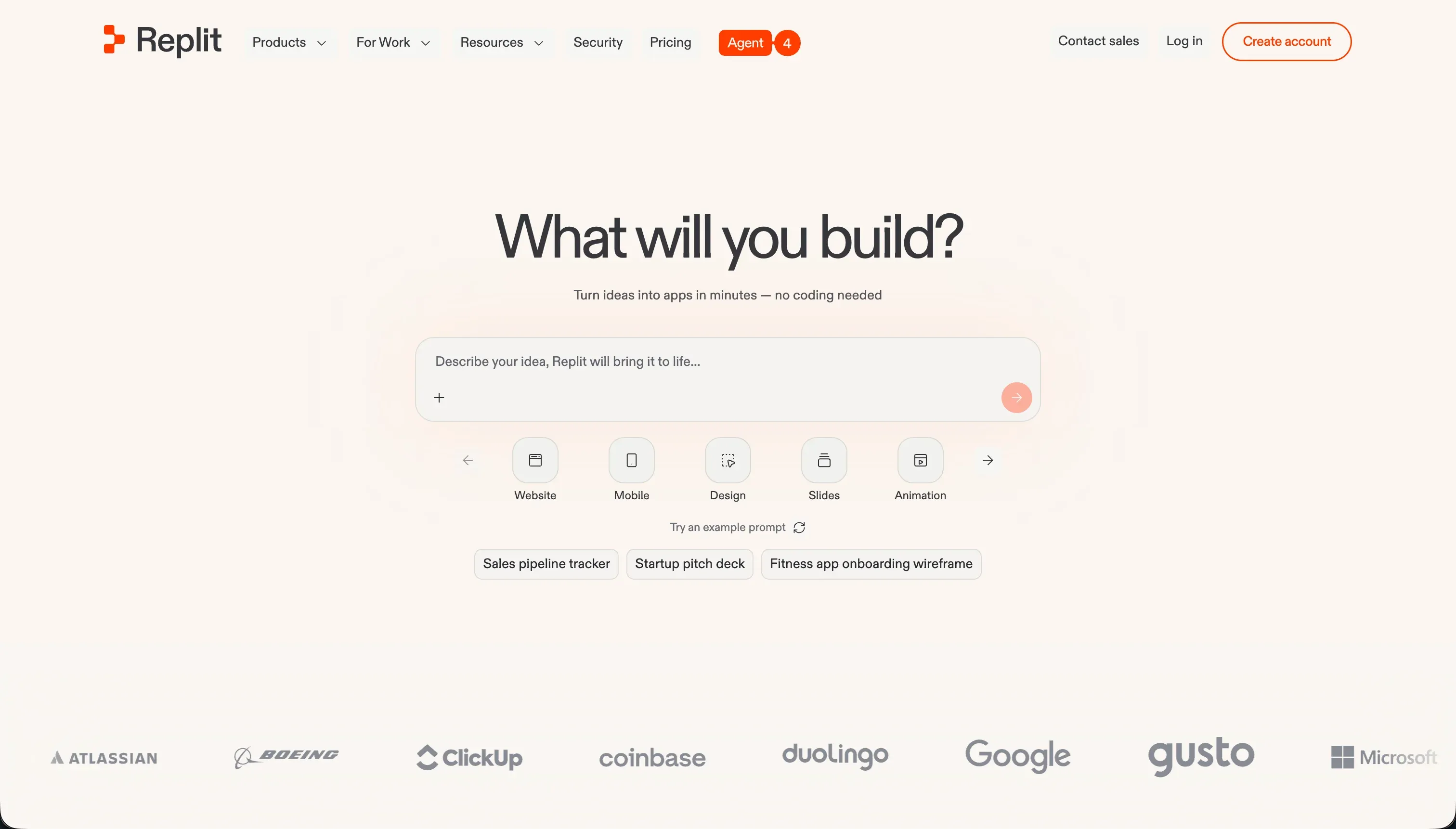
Replit sits between Lovable and Cursor on the spectrum. It’s a collaborative cloud IDE with AI generation built in - you can go from prompt to deployed app - but you also have a full development environment with real terminal access, package management, and live collaboration. Better fit than Lovable if you want to code alongside the AI generation rather than only prompting.

Bottom line
Lovable is the right choice for technical founders who need a real codebase fast and have the development skills to maintain and secure what gets generated. If you’re building for a non-technical team, need predictable pricing, or are going straight to a client-facing or team-facing production app, Lovable’s architecture creates more problems than it solves.
For internal tools and operations teams: Softr - AI builds the app, your team maintains it visually, flat-rate pricing. For consumer or SaaS apps where you want to own the code: Bolt for the best development environment, or stay with Lovable if GitHub sync is the priority. For frontend UI generation only: v0. For senior developers who want AI acceleration inside a real IDE: Cursor.
→ Browse all reviewed tools to compare by use case, pricing, and technical requirements.
