

Lovable and Emergent are both vibe-coding platforms that promise to generate full-stack applications from plain text. They’re natural comparison targets because they sit in the same category, serve roughly the same audience, and use similar credit-based billing models. But the experience of using them - and the risks involved - are different enough to matter.
This comparison looks at both platforms honestly, including the failure modes that their own communities document in detail.
Meet the Contenders
What is Lovable?
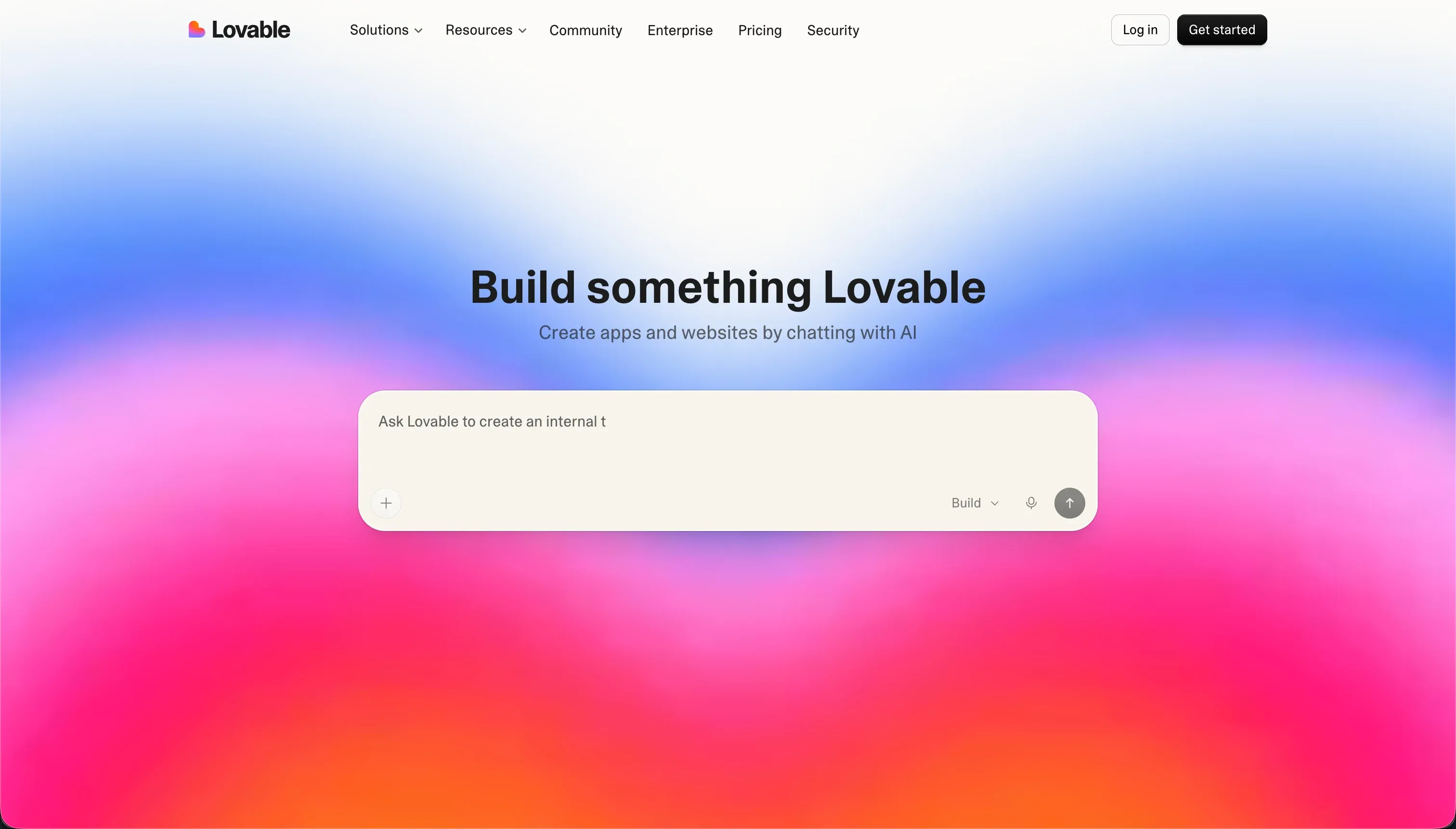
Lovable is an AI-powered full-stack app builder that generates React, TypeScript, and Supabase-backed applications from conversational prompts. The interface is a clean chat-plus-preview setup with no local environment required. Lovable syncs generated code directly to GitHub, making it one of the more code-portable platforms in the AI app builder space.
| Spec | Details |
|---|---|
| Primary Stack | React, TypeScript, Vite, Tailwind CSS, Supabase |
| Interface | Natural language chat + visual preview editor |
| Primary Deployment Target | Lovable Cloud or GitHub push |
| Key Advantage | Exportable React codebase, clean GitHub sync |
What is Emergent?

Emergent is an AI application development platform that uses autonomous agents to generate full-stack applications including frontends, backends, databases, and hosting from a single prompt. It claims a 1M context window and “Ultra Thinking” on its Pro tier, and differentiates itself with mobile app generation capabilities. Unlike Lovable, Emergent positions its agents as more autonomous - the system plans and executes across the full stack with less user guidance required.
| Spec | Details |
|---|---|
| Primary Stack | Proprietary full-stack (frontend + backend + hosting) |
| Interface | Conversational agent + task management interface |
| Primary Deployment Target | Emergent Cloud (managed) |
| Key Advantage | Broad generation capability including mobile and complex backends |
The Core Difference
Lovable and Emergent are both “AI builds it for you” platforms, but they differ in how much autonomy the agent takes.
Lovable keeps the user more in control of the loop: you prompt, you review a preview, you decide to continue. The agent generates code that you can inspect in GitHub. It’s more of a collaborative generation tool.
Emergent’s agents operate more autonomously. The system can plan and execute large, multi-step builds without constant user direction. That autonomy is a feature when things go well. When things go wrong - and documented evidence suggests they do, often - the agent can undo completed work, loop on bugs, and consume credits while doing it without clear user visibility into what’s happening or why.

Head-to-Head Comparison
1. Developer Experience & Iteration Speed
Lovable’s generation experience is fast and relatively polished on initial builds. The preview updates as the AI works, the GitHub sync is reliable, and small prompt-to-change cycles feel snappy. Iteration degrades as project complexity grows. Bugs trigger “regression loops” - the AI confirms it’s fixed the issue but re-introduces the same behavior. Users describe burning 20-30 credits on a single bug that never resolves.
Emergent’s generation experience starts impressively. The autonomous agents can produce full-stack scaffolds with database routing and hosting configuration in minutes. The instability shows up during iteration. Users report agent containers going into unresponsive states, “Error Waking Up Agent” messages, and the most troubling complaint: the agent undoing previously completed work and charging credits to redo it. One Reddit user described it as “nearly 100% of charges wasted on repeated work… same bugs fixed 5+ times.” Another reported spending nearly $10,000 AUD before abandoning the project.
2. Code Quality & Portability
Lovable generates standard React and TypeScript code synced to GitHub. The quality of the initial generation is generally good. After multiple AI-driven edit cycles, the codebase can accumulate inconsistencies, injected trackers, and messy dependencies. Code is exportable and developer-maintainable.
Emergent’s code portability is less clear. GitHub integration is available on the Standard plan, but community reports suggest the generated code can be inconsistent in structure and quality across iterations. The backend - database routing, server-side logic, hosting configuration - stays on Emergent’s infrastructure and the migration path is not well-documented.
3. Database & Backend Capabilities
Lovable uses Supabase as its database layer. The risk is well-documented: AI-generated Row Level Security policies can be misconfigured, exposing user data silently. The “Hotel California” database migration issue means your Supabase instance might end up on Lovable Cloud without your explicit consent.
Emergent manages its own backend infrastructure and handles database routing through its agent system. The platform supports authentication and data persistence, but users have limited visibility into the underlying security configuration. The “preview vs. production discrepancy” issue is documented - the app may behave differently after deployment than it did during testing, which creates risk for any app handling real user data.
4. Hosting & Deployment Options
Lovable deploys to Lovable Cloud with custom domains on paid plans. The main risk is the database migration issue - connect a private Supabase instance from day one to avoid it.
Emergent deploys to its own managed cloud automatically. There’s less configuration required, but the infrastructure is fully managed by Emergent. Users report backend access being blocked during container issues, with slow support response times when that happens. For a production app, the dependency on Emergent’s platform health is a meaningful operational risk.

Pricing Comparison
Both platforms use credit-based billing, but the specific risks are different.
Lovable Pro starts at €25/month for 100 credits. Credits inflate: prompts now cost 3-4 credits where they used to cost 1. Debug sessions can burn 20-30 credits per hour. Scaling to 400 credits costs €100/month. The credit system is predictable in structure, even if it’s not predictable in consumption.
Emergent Standard starts at $20/month (billed annually) for 100 credits, with top-up packs at $10 for 50 credits. Emergent’s Pro tier runs $200/month for 750 credits. The billing risks on Emergent go beyond credit inflation:
- Credits are deducted for platform-side bugs, with no refund policy that users can rely on.
- The agent can undo completed work and charge to redo it.
- Credit packages have been set to auto-renew by default without clear notification.
- Support response times during billing disputes are reported as slow or non-existent.
For builders managing a budget, Lovable’s credit system is more trustworthy. Emergent’s billing has generated enough documented controversy to treat it as a material risk.
Use Case Fit: When to use which?
When to choose Emergent
- You want to explore a platform with more ambitious autonomous agent capabilities and you’re comfortable with the current instability.
- You’re building a prototype where the total cost is bounded and agent failures won’t affect real users.
- You need mobile-accessible web views as part of your initial generation, and Lovable’s web-only output isn’t sufficient.
When to choose Lovable
- You want a more stable AI generation experience with a clean GitHub-connected codebase.
- Code portability matters and you plan to export the project to a local IDE after scaffolding.
- You’re building a SaaS MVP and want to hand the codebase to a developer for continued development.
When neither Lovable nor Emergent is the right fit
Both platforms share a core limitation: they generate code and infrastructure that’s difficult to maintain without developer involvement. For anything beyond a prototype, both introduce risks - credit drain, agent instability, backend lock-in, or security misconfiguration - that compound as your project grows.
For native mobile apps
Lovable generates web apps only. Emergent has mobile on its roadmap but it’s still maturing. For genuine native iOS and Android app store distribution with push notifications and offline storage, FlutterFlow is the industry-standard option. It compiles directly to native Flutter/Dart code.
For internal tools and client portals
If you’re building software for real users in a business context - a client portal, an internal tool, a CRM, a vendor dashboard - the generated-code approach creates a maintenance liability. When the ops manager needs to update a field or change who can see what, they’ll need a developer to do it safely. Credit costs stack up over time, and agent instability on a production app is a serious operational risk.
Softr is built for this use case specifically. It configures pre-built, production-tested visual components on top of Softr Databases or Airtable. User permissions, database schema, and workflow automation are all managed through a visual editor - no prompting required for day-to-day changes. The AI Co-Builder generates complete apps from descriptions, but every setting it creates is also configurable manually. Teams can maintain and evolve their tools independently, without developer involvement and without burning AI credits on routine edits.
For professional developer environments
If you’re a developer wanting AI assistance on a real codebase, Cursor is a VS Code fork with deep project indexing and powerful multi-file agent editing. For a cloud-based collaborative development environment, Replit provides full virtual machines with Replit Agent for backend scaffolding.

Verdict
- Choose Emergent if you want the most capable autonomous agent for initial generation and you’re treating the project as a bounded experiment rather than a production commitment.
- Choose Lovable if you want a more stable, code-portable AI generation experience with a clean GitHub workflow and a billing model you can reason about.
Neither is well-suited for production business software that operational teams maintain over time.
Summary Comparison Table
| Feature | Lovable | Emergent |
|---|---|---|
| Build Paradigm | AI Code Generation | Autonomous AI Agent Generation |
| Output Type | React / TypeScript (exportable) | Proprietary full-stack (limited export) |
| Database | Supabase (potential Lovable Cloud migration) | Emergent managed (limited portability) |
| Visual Permissions | AI-generated Supabase RLS | Agent-managed (limited auditability) |
| Pricing Metric | Subscription + Credits | Subscription + Credits + Top-up packs |
| Maintenance Burden | High (developer needed, regressions common) | Very High (agent instability, billing risks) |
| Code Export | Yes - via GitHub | Partial - frontend on Standard+ |