
Why people look for Emergent alternatives
Emergent.sh gained traction by letting non-technical founders prompt full-stack web and mobile apps into existence. But as projects grow in complexity, the financial reality of their credit model becomes a massive bottleneck for active developers.
Extremely heavy financial drain
Emergent’s pricing is built around a credit model where every modification is handled by an edit agent. Users report that asking the AI to change even two lines of code triggers this agent, which consumes credits rapidly. Some builders have reported spending thousands of dollars on credits just trying to run basic iteration cycles, with one developer documenting nearly $10,000 AUD in expenses due to constant edit agent triggers.
Deducting credits for platform bugs
A major point of frustration in the developer community is that Emergent charges users credits to fix bugs. Even when the error is introduced by Emergent’s own system or is a clear platform-level bug, the user’s credits are consumed to debug and fix it, with no option for credit refills or support accountability.
AI undoing completed work
Because the platform relies entirely on AI agents to write and modify files, it is prone to regression bugs. Users frequently complain that the AI will undo previously completed and paid-for work while attempting to implement a new feature, forcing them to spend more credits to restore the application’s basic functionality.
Scale breakdown on large repositories
As codebases grow, Emergent’s AI agents struggle to maintain context. Large repositories often lead to slower generation times, higher failure rates, and messy code generation that makes the application difficult to scale or maintain.
Preview versus production discrepancies
While the in-editor previews are smooth, users report that the production deployment environment behaves differently. Features that work perfectly in the preview window can break once pushed live, requiring additional debugging steps that cost more credits.

The best Emergent alternatives, by use case
If you want to generate full-stack React MVPs with AI
For builders who want the speed of prompt-to-app generation but want to avoid the high costs and unpredictable billing of edit agents.
Bolt
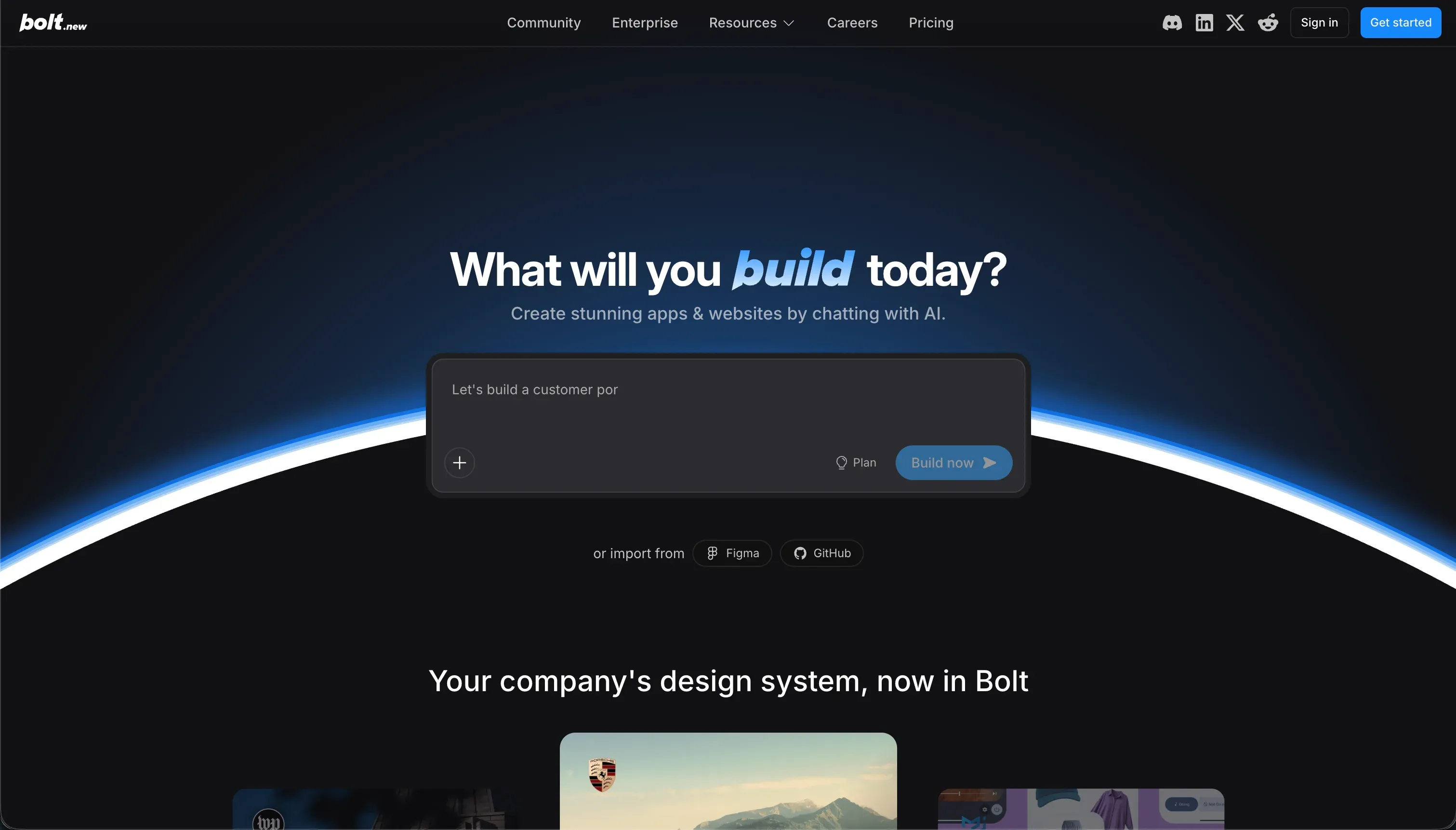
Bolt is a direct alternative for generating full-stack React applications. It runs a complete development environment directly in your browser using StackBlitz WebContainers, allowing you to install npm packages, manage database connections, and run terminal commands. Unlike Emergent, which often gets stuck in credit-draining compilation loops, Bolt handles package dependencies and errors in a transparent environment.
Pricing: Pro plan is $25/month for 10M tokens, which provides a significantly larger iteration volume than Emergent’s tier-based credit models.
v0

v0 by Vercel excels at generating clean React user interfaces built on shadcn/ui and Tailwind CSS. While it does not manage your database natively, it generates production-ready code that integrates directly into Next.js. This makes it an ideal alternative to Emergent if you want clean code output and prefer to manage your own database layer.
Pricing: Free tier includes basic credits. Pro plan starts at $20/month for increased usage.
If you’re building internal tools your team needs to maintain
If you were using Emergent to build internal business utilities, tracking apps, or administrative tools, maintaining generated React code is an unnecessary burden.
Softr
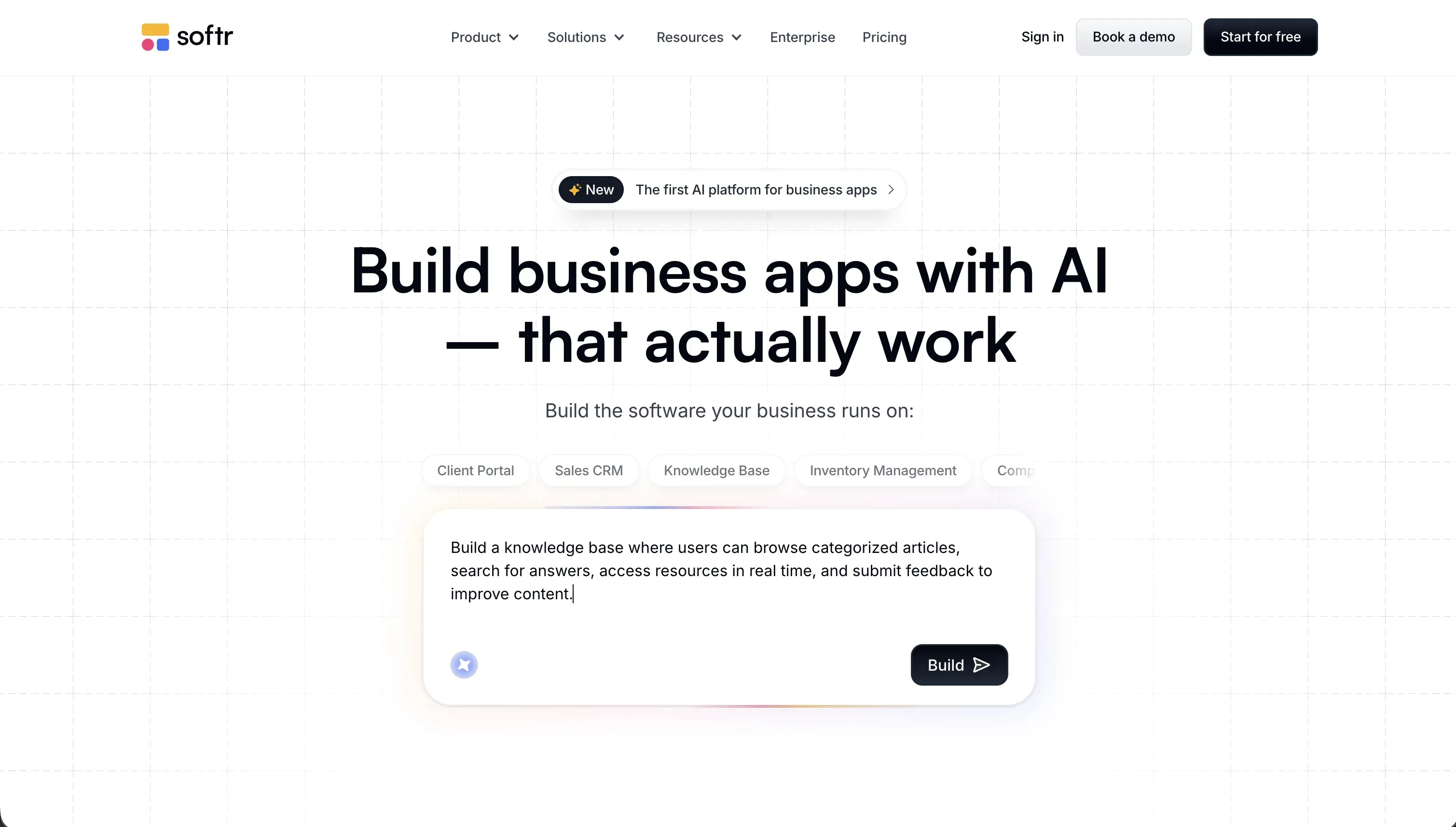
Softr is built specifically for internal business applications. Its AI Co-Builder generates a complete app - database tables, pages, layouts, user roles, and permissions - from a single plain-language prompt. But unlike Emergent, the output is a stable no-code application running on Softr’s tested platform, not raw React code. Your team can update the app visually: add a database field, modify a page layout, or adjust access rules - without touching code or wasting AI tokens.
The comparison against Emergent for business tools:
- Pricing: Softr uses flat-rate plans. Basic is $19/month (5 team and 5 client users, 50k records), Pro is $99/month (10 team and 50 client users, 500k records), and Business is $329/month (30 team and 100 client users, 1M records). There are no usage-based token charges for running the app, and you can edit layouts visually at any time.
- Data Source: Softr connects natively to Softr Databases, Airtable, Google Sheets, and SQL databases. Emergent was limited to its managed SQLite database.
- Maintenance: Non-technical team members can maintain Softr apps directly. Emergent required a developer to fix backend routes and frontend React scripts.
If you want a visual builder with headless database connection
For developers who want a clear separation between frontend design and backend database infrastructure.
WeWeb
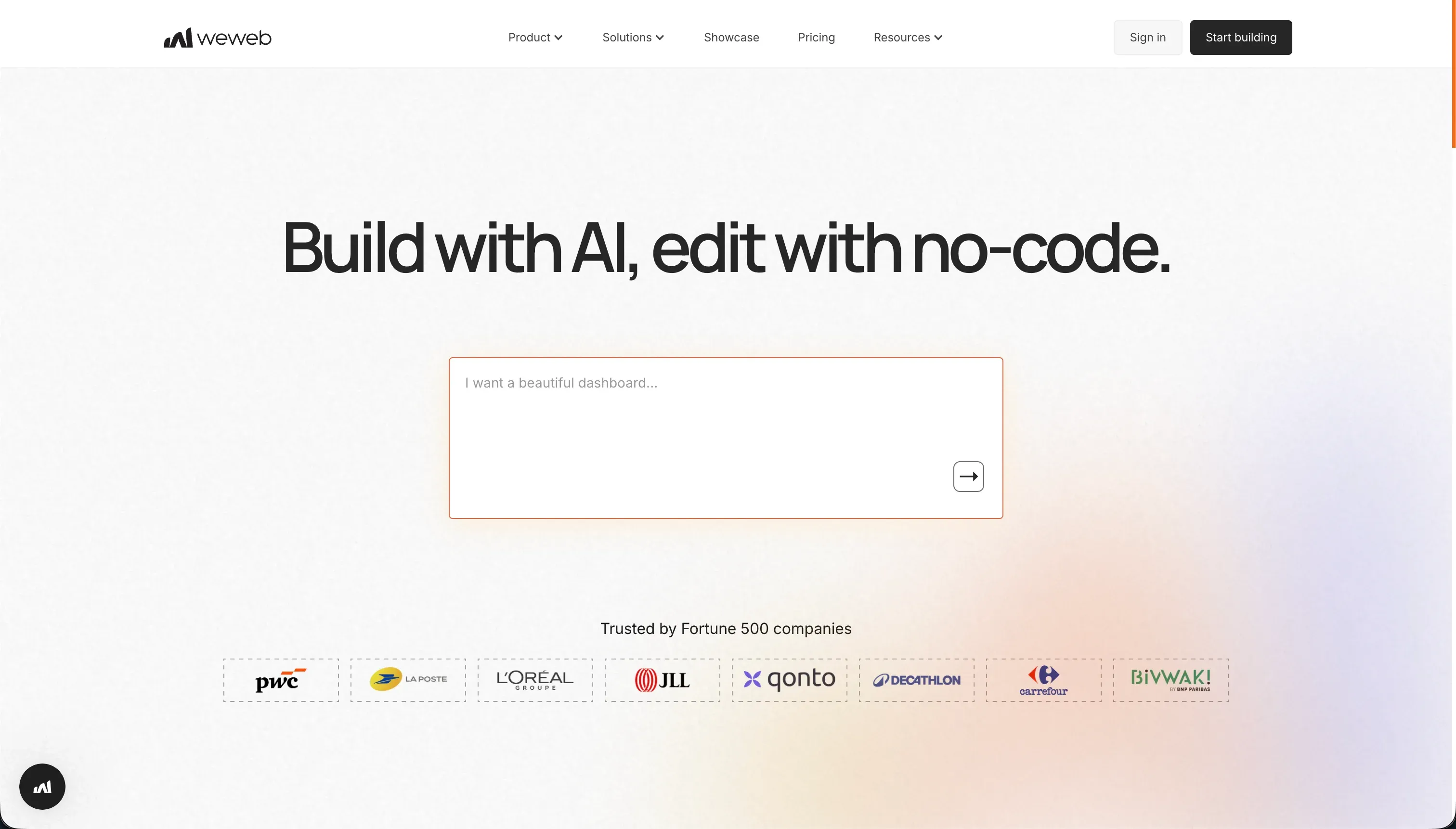
WeWeb is a no-code frontend builder that connects to your own backend, such as Supabase, Xano, or a custom REST API. You get complete visual control over the UI, but your data lives in infrastructure you own. This is a much more stable environment than Emergent for production apps, as you are not locked into a proprietary hosting platform.
Pricing: Free design plan available. Paid plans start at $39/month (billed annually) for custom domains and publishing.
Retool

Retool is an excellent choice if you have a database or API already running in production and need a clean UI layer on top of it. Retool connects directly to SQL databases, REST APIs, and GraphQL endpoints, and provides a library of pre-built UI components optimized for data operations.
Pricing: Free tier is available for up to 5 users. Paid plans start at $10/user/month (billed monthly).
If you need client portals or external-facing apps
When sharing data with clients, security and access levels are critical. You cannot rely on AI-generated scripts to secure sensitive client data.
Softr
Softr provides a secure, visual user permissions model out of the box. You define user groups (like Clients, Partners, and Admins) and configure exactly what pages, blocks, and records they can view. If a client logs in, they only see their own files and invoices. This is set up in a visual interface, not by writing custom React auth logic. Softr also includes built-in login, signup, password reset, and SSO pages, and supports custom domains so you can white-label the app under your own brand.
If you want to own your code and edit in a local developer environment
If you are a developer who wants AI assistance without losing control of your codebase, using a local editor is a much safer approach than working inside a web-based sandbox.
Cursor
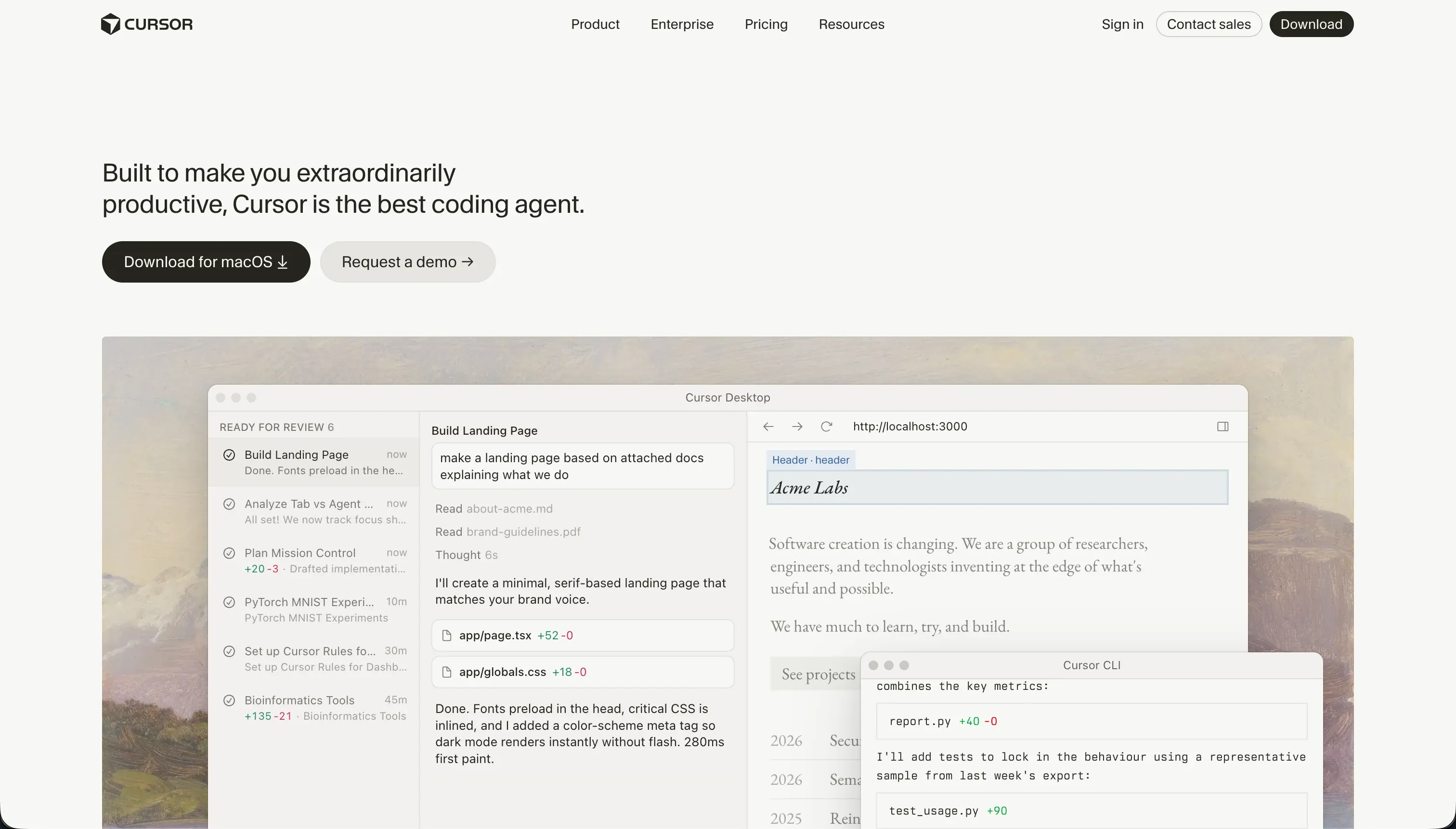
Cursor is a fork of VS Code with AI deeply integrated. It reads your entire project directory, allowing you to ask questions, refactor code, and generate files with complete context. Instead of relying on a web-based sandbox that can discard your work, Cursor lets you run AI prompts directly on your local machine. This allows you to use Git version control and revert any buggy AI iterations instantly.
Pricing: Free tier includes basic queries. Pro plan is $20/month for unlimited completions and high-speed models.
Replit
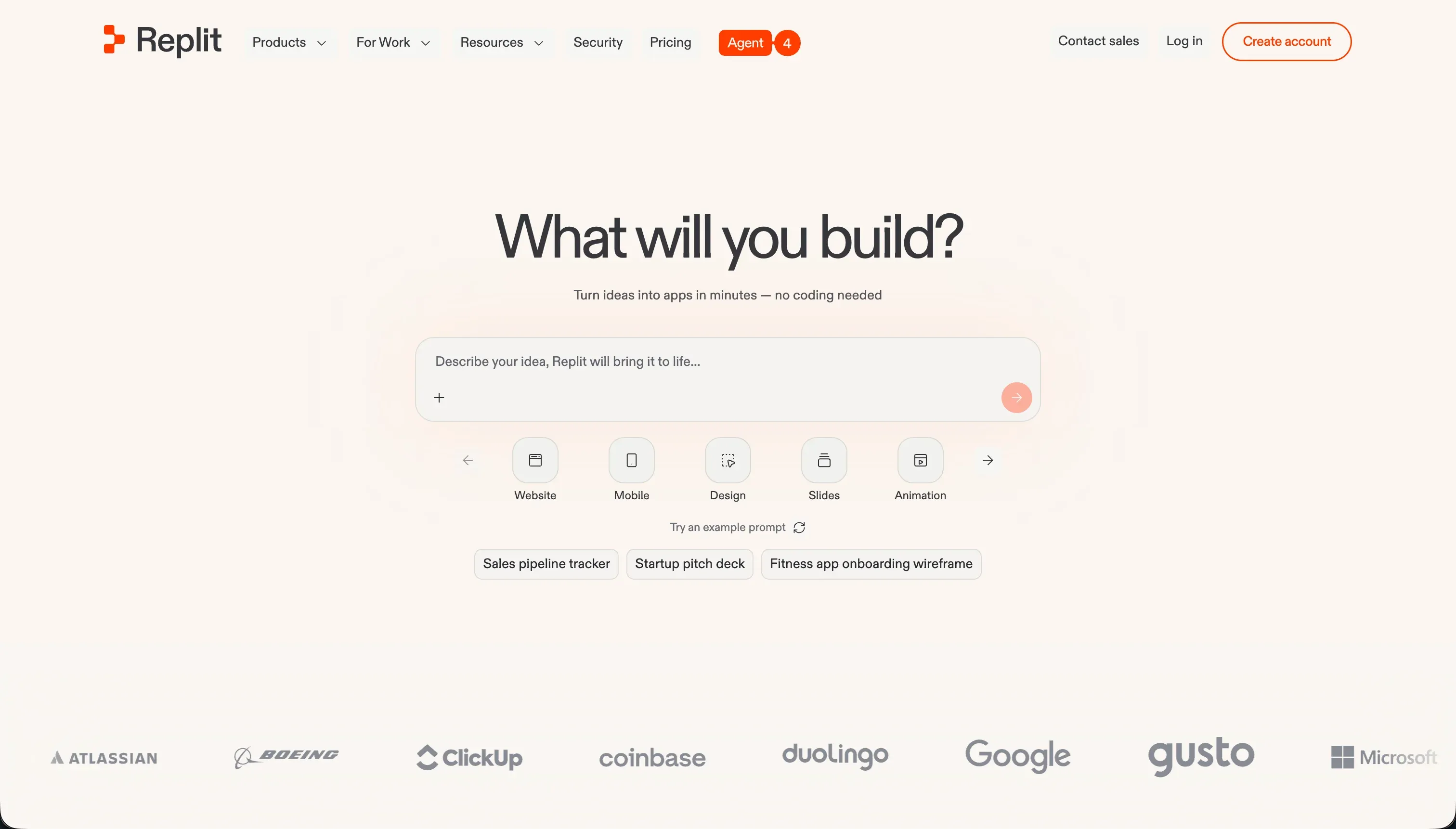
Replit is a collaborative cloud IDE with built-in AI agents. You can prompt Replit to generate code, install packages, and deploy your project with one click. Unlike Emergent, Replit provides full terminal access and supports backend languages, making it a complete cloud-based development environment.
Pricing: Core tier is $15/month, while advanced developer features and dedicated compute scale on higher plans.

Bottom line
Emergent.sh is a fast way to generate early prototypes, but the credit drain from its edit agents makes it expensive for production apps. For B2B portals and internal software, Softr offers a secure and predictable alternative. For full-stack developers looking to manage code directly, Cursor is the best choice.