

If you’re choosing between Replit and Base44, you’re comparing two very different philosophies about what “AI app building” actually means. Replit is a full cloud development environment - a real IDE with a terminal, managed databases, and a powerful AI agent running inside it. Base44 is the opposite: a prompt-first builder that abstracts everything away in exchange for a faster starting experience.
The gap between them shows up clearly on day two, when your app needs new features, has a bug in production, or needs to scale beyond a demo.
Meet the Contenders
What is Replit?
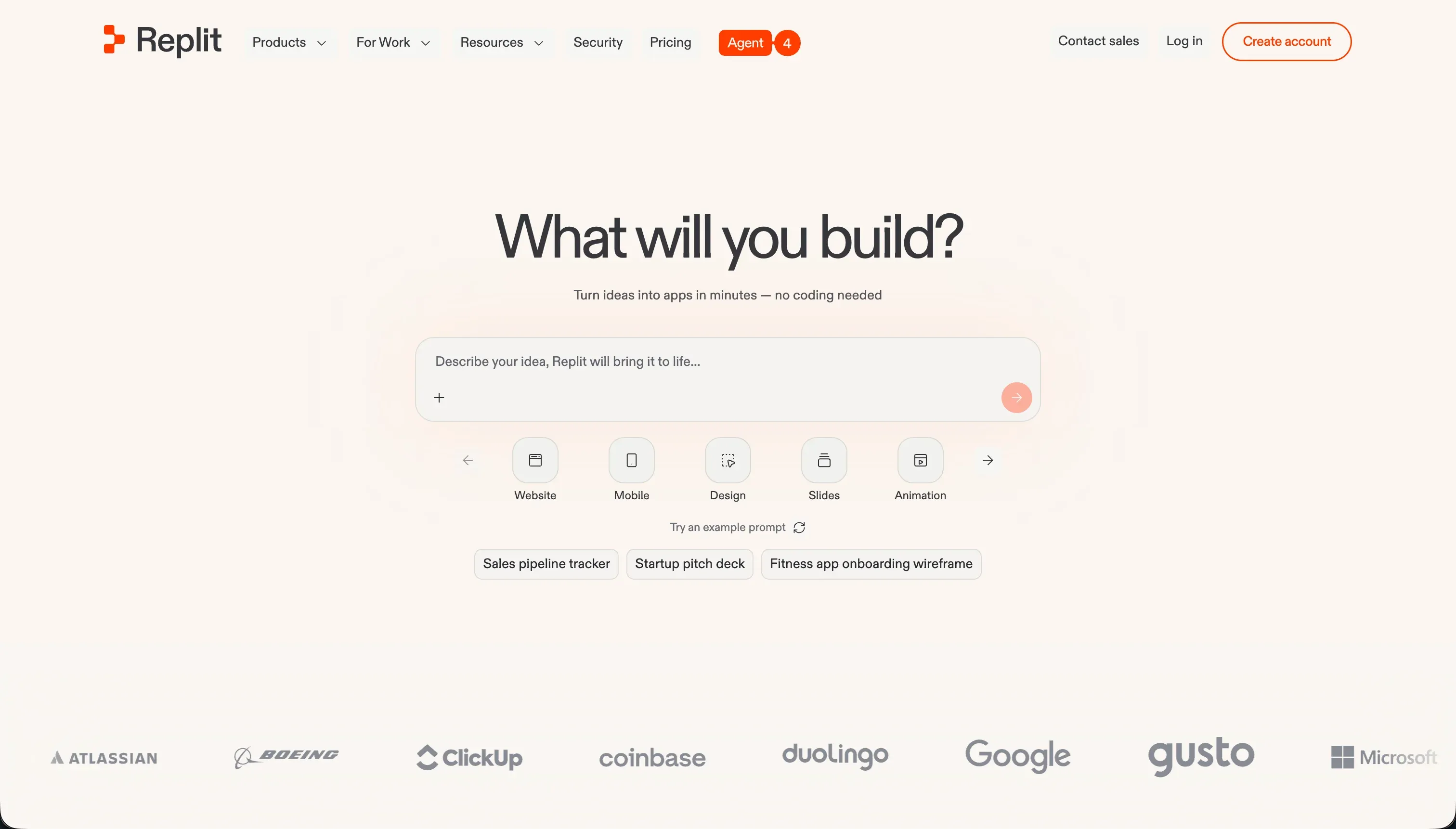
Replit is a browser-based cloud development environment that supports coding in over 50 languages. Replit Agent - now in its fourth generation - builds entire applications autonomously from natural language prompts, including file structures, dependencies, database schemas, and deployment configuration. Unlike prompt-to-preview tools, Replit gives you direct access to a terminal, package manager, and live code editor alongside the AI.
| Spec | Details |
|---|---|
| Primary Stack | Python, JavaScript, TypeScript, Node.js, PostgreSQL |
| Interface | Cloud IDE + AI agent chat |
| Primary Deployment Target | Replit hosting (*.replit.app) or custom domain |
| Key Advantage | Real development environment with full code ownership |
What is Base44?
Base44 is an AI-powered builder that generates full-stack web apps from conversational prompts, bundling a PostgreSQL database, user authentication, and hosting in one environment. There’s no terminal to open, no deployment pipeline to configure, and no environment variables to manage. You describe the app, Base44 builds it, and you can iterate through a conversational editor or click-based UI tweaks.
| Spec | Details |
|---|---|
| Primary Stack | React frontend, PostgreSQL database, managed auth |
| Interface | Conversational AI chat + click-to-tweak visual editor |
| Primary Deployment Target | Base44 cloud (managed hosting) |
| Key Advantage | Zero-setup for database, auth, and hosting from the first prompt |
The Core Difference
Replit is a developer tool that uses AI to help you build faster. Base44 is an AI tool that tries to hide the developer workflow entirely.
That sounds like marketing, but it has real implications. In Replit, when something breaks, you have the actual tools to fix it: a terminal, a file editor, debug logs. In Base44, when something breaks, your only recourse is prompting the AI to fix it - and if the AI created the bug in the first place, you can end up in an expensive loop of the AI “fixing” things by introducing new problems.
Replit gives you more surface area to work with. Base44 gives you a smoother starting experience with a lower ceiling.

Head-to-Head Comparison
1. Developer Experience & Iteration Speed
Replit Agent generates apps quickly from prompts, and the results are real, runnable code. The iteration workflow is honest: you’re in an IDE, the code is visible, and you can intervene at any point. The downside is the environment complexity. Managing environment secrets, database credentials, and deployment settings requires technical comfort. Users also report that the agent gets caught in “infinite fix loops” - generating a bug, announcing it’s fixed, and repeating the cycle until your credit balance is depleted.
Base44 is the faster experience out of the gate. You can have a working app with login, database tables, and a functional UI in minutes. The conversational editor is genuinely good for quick changes. But the platform’s track record with complex apps is rough. Reddit users have documented apps going “completely unusable” after three or four days of iterative feedback, with the AI creating cascading regression bugs instead of stable incremental improvements. As one user put it: “after 7 pages of advice from Chat GPT that I forwarded to B44, I just lost another hour (and credits) for a totally negative result, with new bugs that suddenly appeared.”
2. Code Quality & Portability
Replit outputs real, portable code. You own the entire project directory, can download it, push it to GitHub, and continue developing it anywhere. The generated code quality is generally solid for standard web patterns, though more complex apps benefit from developer review.
Base44 splits this into two layers. The frontend code can be exported to GitHub on the Builder plan ($40/month), which is a meaningful portability option. But the backend - the database schema, API routes, and server-side logic - remains locked on Base44’s infrastructure. Exporting code costs at minimum a year of Builder tier subscription ($480), and you can only take the frontend anyway. One Reddit user described this bluntly: “I’m afraid I would have to pay a year of the builder tier to even get the build off of Base44. That’s $480 which is somewhat ridiculous.”
3. Database & Backend Capabilities
Replit provisions a managed PostgreSQL database and gives you direct access through the IDE. The agent can generate schemas, write queries, and set up migrations. With the Pro plan, you get 28-day database rollbacks - useful insurance when an agent makes a destructive change. The risk is that the agent has full write access to production by default, and there are documented cases of agents triggering cascading data loss during automated “bug fixes.”
Base44 manages PostgreSQL behind the scenes without exposing configuration options. Authentication is included out of the box. The integration credit system charges separately for database queries your app users perform - meaning the more people use your app, the more you pay beyond the message credits for building. This dual-credit model makes cost projection difficult as user volume grows.
4. Hosting & Deployment Options
Replit deploys to *.replit.app with autoscaling, custom domain routing, and managed SSL. Reserved virtual machines are available on higher plans for consistent performance under load. The deployment path is straightforward once configured, though environment variable and secrets management is a step that trips up non-developers.
Base44 deploys instantly with zero configuration - you get a live URL as soon as the app is built. There’s no deployment pipeline or hosting setup. The trade-off is that you’re entirely dependent on Base44’s infrastructure. One Reddit user flagged a deeper concern: “I’m genuinely scared of Base44, because I’m building the foundation of my business on that platform… something works today and then they take it away tomorrow.”

Pricing Comparison
Replit:
- Starter: Free (limited daily credits)
- Core: $20/month (billed annually) - includes $25 monthly AI credits, 2 parallel agents
- Pro: $100/month (billed annually) - includes $100 monthly AI credits, 10 parallel agents
Replit charges based on agent task complexity and runtime, not per-prompt. Heavy agent sessions and database checkpoint operations burn credits fast. Users have reported daily bills reaching $350+ from agent loops that kept running without effective user controls.
Base44:
- Free: $0 - 25 message credits (max 5/day), 100 integration credits
- Starter: $16/month - 100 message credits, 2,000 integration credits
- Builder: $40/month - 250 message credits, 10,000 integration credits, GitHub sync
- Pro: $80/month - 500 message credits, 20,000 integration credits
- Elite: $160/month - 1,200 message credits, 50,000 integration credits
The dual-credit model is the catch. Message credits cover building; integration credits cover your users’ actions in the live app. As your app gains users, integration credit consumption increases independently of how much you’re building. Predicting total monthly costs becomes difficult quickly.
Use Case Fit: When to use which?
When to choose Replit
- You’re a developer or technical founder building a real application, not a prototype.
- You want to own your code completely and potentially move it off Replit later.
- You’re building something that needs a genuine backend - custom APIs, scheduled jobs, or complex database logic.
- You’re comfortable reading generated code and intervening when the agent gets stuck.
When to choose Base44
- You need a working demo or internal tool fast, and technical depth isn’t a priority.
- Your app is relatively simple: one or two user roles, straightforward CRUD operations, no complex permissions.
- You have no developer on the team and want to stay in a fully managed environment.
- You’re willing to accept the backend lock-in for the speed of getting started.
When neither Replit nor Base44 is the right fit
Both tools are AI-first code generators at different levels of abstraction. Both are solid for getting something working quickly. But depending on your actual goals, there are better specialized tools.
For native mobile apps
Neither Replit nor Base44 compiles native mobile packages for app store distribution without significant additional work. If native iOS and Android apps are a requirement, FlutterFlow builds directly on Flutter’s widget engine and compiles to native binaries for both stores.
For internal tools and client portals
If you’re building a business-facing app - a client portal, an internal dashboard, a CRM, or a team intranet - maintaining a generated codebase is the wrong call. Non-technical teams can’t fix bugs, update security rules, or add features without a developer. For this use case, Softr is a better fit. Softr’s AI Co-Builder creates fully functional portals connected to Softr Databases or Airtable, with visual user groups, row-level security, and no generated code to maintain. The app works the day it’s published and keeps working as the business evolves.
For professional developer environments
If you’re an experienced developer who wants AI assistance without giving up IDE control, neither Replit nor Base44 is ideal. Cursor is a VS Code fork with deep codebase indexing and context-aware AI editing. It works with your existing local stack rather than replacing it.

Verdict
- Choose Replit if you’re technical, want full code ownership, and need a real backend with infrastructure you can control.
- Choose Base44 if you want the fastest possible start on a simple app and accept that complex requirements will hit a wall.
Summary Comparison Table
| Feature | Replit | Base44 |
|---|---|---|
| Build Paradigm | Cloud IDE + AI Agent | Conversational AI Builder |
| Output Type | Real code (any language) | React / managed backend |
| Database | Managed PostgreSQL (accessible) | Managed PostgreSQL (locked) |
| Visual Permissions | Code-based (manual/prompted) | Basic role permissions |
| Pricing Metric | Subscription + effort-priced credits | Subscription + dual credit pools |
| Maintenance Burden | High (developer needed) | Medium (AI-only, no code access) |
| Code Export | Full (always) | Frontend only (Builder plan+) |