

Choosing a platform to turn ideas into software usually forces a choice between complete developer agency and fast visual scaffolding. Replit operates as a high-powered, cloud-native development workspace supporting dozens of languages, while Mocha serves as a conversational, web-app generator transforming simple text instructions into visual React applications with a pre-configured database.
Technical founders, product teams, and solo creators often compare these platforms when trying to avoid complex local environmental setups. However, what is at stake under the hood is database control, credit consumption logic, environment maintenance, and the long-term stability of the application - especially with Mocha sunsetting its operations in late 2026.
Meet the Contenders
What is Replit?
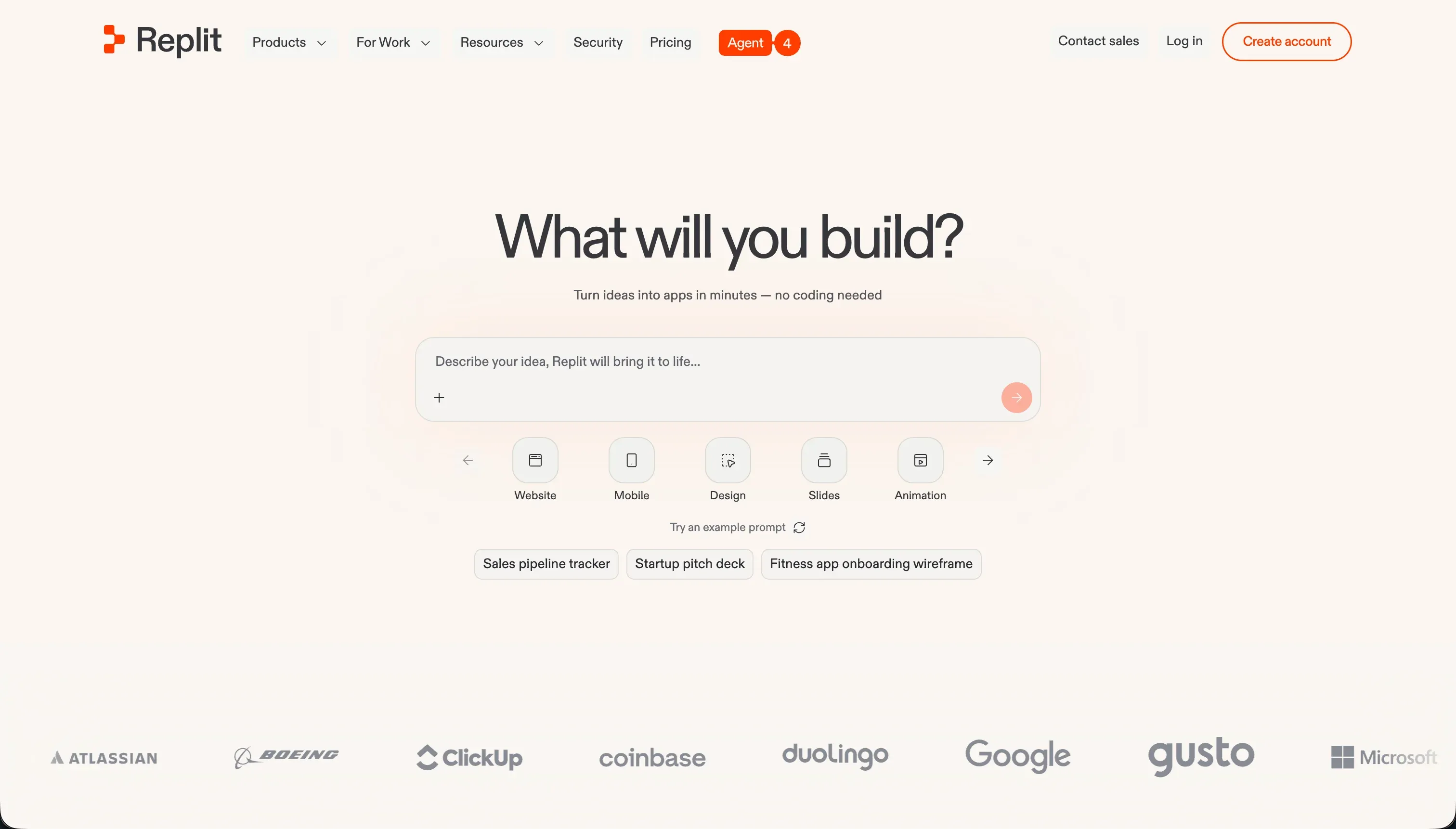
Replit is an instant-on, browser-based integrated development environment (IDE) designed to bypass technical hurdles like local compiler installations, library syncs, and shell configurations. Supporting over 50 programming languages, it provides teams with a collaborative workspace to write, test, run, and host full-stack code.
In practice, it features the Replit Agent, which generates dynamic application scaffolds from natural-language prompts, manages packages, and handles self-correction reflection loops. Users also get access to managed PostgreSQL databases, built-in version histories, and one-click cloud hosting featuring custom domains and server rollbacks.
The workspace is genuinely built for engineers, technical managers, and learners who want direct container control and terminal power without setup friction. However, non-technical users are frequently frustrated by dynamic credit expenses, hidden database checkpoint charges, and the reality that they must still understand environment secrets, API packages, and dependency updates.
| Spec | Details |
|---|---|
| Primary Stack | Multi-language development environment supporting Python, Node.js, Go, Rust, and C++ |
| Interface | Cloud IDE with real-time multiplayer editing, terminal access, and conversational Agent chat |
| Primary Deployment Target | Replit autoscaling cloud containers with reserved virtual machines and custom domains |
| Key Advantage | Deep infrastructure custody combined with automated AI scaffolding and Git integrations |
What is Mocha?

Mocha, formerly known as Srcbook, is a prompt-to-app generator designed to build frontend interfaces, backend routing, and data schemas through a structured chat interface. Rather than presenting a dense code workspace, it abstracts file structures so creators can construct functional React web tools through plain English instructions.
In practice, Mocha provisions an internal SQLite database, sets up Google Sign-in authentication, and hosts published apps on live subdomains without manual alignment. Crucially, the platform features a complete codebase exporter, enabling developers to download the raw React files and run them on their own cloud infrastructure when exiting the platform.
The builder is tailored for creators, non-technical founders, and quick prototypers seeking a code sandbox that bypasses cloud operations. Unfortunately, the platform is shutting down on August 1, 2026, meaning active users now face compile errors, regression credit-burn loops, and the urgent need to migrate their digital property elsewhere.
| Spec | Details |
|---|---|
| Primary Stack | React frontend combined with backend routes and SQLite database configurations |
| Interface | Prompt-driven chat assistant with visual runtime preview and basic layout editing |
| Primary Deployment Target | Direct hosting on live Mocha domains (sunsetting on August 1, 2026) |
| Key Advantage | Rapid prototyping of simple utilities with full React and backend source code export |
The Core Difference
The structural gap between these two tools is about the role of code. While one provides a heavy developer terminal with an AI assistant, the other abstracts the file structure behind a simple prompt interface.
- Replit runs a complete, multi-language cloud workspace where you must think like an engineer, using an AI agent to help manage containers, databases, and dependencies.
- Mocha aims to build and deploy simple web apps entirely through chat dialogs, attempting to compile code without forcing users to edit code files directly.

Head-to-Head Comparison
We evaluated both platforms across four core categories.
1. Developer Experience & Iteration Speed
Replit provides a professional, multiplayer browser environment where multiple builders can edit code files in real time, accompanied by live cursor-tracking and voice chat. Getting an app up and running is fast because the workspace handles compiler provisioning and packages in the cloud automatically.
The drawback lies in resource handling under heavy loads. Users frequently report virtual machine drops and notable performance lag when importing large repository sets or dealing with package conflicts, meaning that the developer is still on the hook for deep environment debugging.
Mocha operates on a conversational workspace designed to let you describe UI additions and quickly review live previews side-by-side. Because it runs on pre-configured SQLite setups, basic web elements like contact lists or calculations load instantly.
However, iterating can become highly expensive. Multiple customer reviews highlight that if the program hits an initial compiling crash or layout break, the system continues to execute automated loops and repeatedly wastes hundred of credits without resolving the bug.
Edge: Replit, because it gives you actual visual control over the code workspace when prompt loops break down.
2. Code Quality & Portability
Replit works with raw code files inside directories, ensuring complete code clarity and access. Advanced users can establish custom folders, edit React configurations, and link external Git structures to maintain full custody of their application assets.
Despite the access, code export requires manual file downloads or external repository syncing, and infrastructure dependencies remain. If you move your project, you must set up your own hosting, configure environment secrets manually, and pay for separate database space.
Mocha was designed with an explicit code-export priority, giving paid builders the capacity to download a complete zip file containing the React code and backend files. This simplifies migration paths and ensures that creators do not face vendor lock-in.
This portability has become highly critical since Mocha announced its official sunset on August 1, 2026. Because developers cannot rely on long-term hosting within the environment, exporting the repository is now a prerequisite for any application.
Edge: Mocha, because it offers clean, direct code export to escape platform lock-in.
3. Database & Backend Capabilities
Replit provisions dedicated, managed SQL and PostgreSQL servers with options for database rollbacks spanning up to 28 days on premium tiers. This structure provides a stable, enterprise-ready data center capable of handling high-volume operational metrics.
The catch is that managing these structures requires database engineering knowledge. Builders must configure environment credentials in a Secrets side-panel, write migration scripts, and monitor backups, with some users reporting over $1,500 in unexpected database checkpoint charges.
Mocha sets up an internal SQLite database that works with zero initial configuration. The AI handles basic data model generation and connects basic forms to tables, allowing creators to store information without manual tables.
The compromise is long-term scale and security. This SQLite setup is not built to support heavy concurrent traffic or multi-tenant structures with advanced row-level security, requiring technical intervention if requirements stretch beyond lightweight data models.
Edge: Replit, because it provides production-ready PostgreSQL databases rather than simple SQLite files.
4. AI Quality & Reliability
The Replit Agent runs self-reflection loops, testing its own outputs and performing auto-corrections until packages work. It excels at parsing multi-file structures, writing functional Python or Node logic, and deploying system configurations.
However, it is prone to infinite loops and credit draining, with users complaining on Reddit about burning hundreds of dollars in a single day due to poor model performance. Technical forums also point to context-window caps at 8,000 tokens, leading to repeated code hallucination mistakes.
Mocha’s prompt builder allows developers to assemble initial screens and backend endpoints with conversational input. It automates basic syntax bug resolutions during simple visual cycles to avoid early compile crashes.
On the other hand, Mocha struggles heavily on subsequent additions. The compiler regularly hits regression errors when adjusting existing states, resulting in repetitive chatbot updates that consume monthly credits while introducing fresh visual bugs.
Edge: Replit, because its Agent handles full terminal configurations and multi-file debugging.
5. Learning Curve & Onboarding
Replit offers clear walkthroughs, educational resources, and multi-language workspaces that make it highly valuable for developers and students. But the initial easy start fades when managing code issues, configuration errors, and VM parameters.
For non-programmers, the learning curve is exceptionally steep. You must learn terminal commands, package structures, and directory paths, meaning that the AI does not insulate you from basic developer thinking.
Mocha provides a simple, direct prompt layout that requires almost zero developer awareness to deploy a homepage or dynamic list. Builders do not edit file maps directly, making the early setup incredibly approachable.
The limit is reached when you want to customize something specific. Because the interface lacks deep visual editors, adjusting micro-styles or database linkages requires introducing custom scripts, which poses a serious barrier for non-programmers.
Edge: Mocha, because it abstracts technical environment details for a simpler onboarding experience.

Pricing Comparison
Replit:
- Starter: $0/mo (Daily dynamic Agent credits, built-in database, publish 1 public project)
- Replit Core: $20/mo billed annually or $25/mo monthly ($25.00 monthly credits, 5 collaborators, 2 parallel agents, unlimited workspaces)
- Replit Pro: $95/mo billed annually or $100/mo monthly ($100.00 monthly credits, 15 collaborators, 10 parallel agents, 28-day database rollbacks)
- Enterprise: Custom pricing (Custom seat limits, SAML SSO, advanced privacy, VPC peering)
Mocha:
- Starter: $0/mo (120 credits/mo, 1 published app deployment, basic templates)
- Bronze: $20/mo (1,500 credits/mo, up to 5 apps, custom domains)
- Silver: $50/mo (4,500 credits/mo, up to 15 apps, priority support)
- Gold: $200/mo (25,000 credits/mo, up to 25 apps, early access to features)
Use Case Fit: When to use which?
When to choose Replit
- Choose Replit when you want to write or edit raw code with AI assistance in any of 50+ programming languages.
- Choose Replit when you need professional development tools like Git, real-time multiplayer editing, and raw terminal commands.
- Choose Replit when you need a robust, scalable PostgreSQL database built for high traffic.
When to choose Mocha
- Choose Mocha when you need to quickly brainstorm a simple MVP and require absolute code export files to host elsewhere.
- Choose Mocha when you want simple, integrated SQLite database and Google login without writing setup logic.
- Choose Mocha when you want an approachable prompt-only interface that hides container configurations.
When neither Replit nor Mocha is the right fit
For internal business platforms and client-facing web portals
Because Replit requires severe developer overhead like environment secrets configuration and package maintenance, and Mocha has basic access controls alongside its upcoming sunset, neither tool serves operational B2B apps. Instead, teams should look at Softr. Softr builds business applications with its native, AI-ready Softr Databases first, then connects to 17 external sources to keep company data structured.
It delivers built-in authentication, custom user groups, and granular permissions out-of-the-box. There is no generated codebase to maintain or debug, eliminating the risk of infinite regression loops and technical debt. Since editing is visual, any non-technical operator can manage permissions, update blocks, and change themes directly.
For native iOS and Android mobile app distribution
Replit and Mocha are built specifically for web applications. Neither platform outputs store-ready files for the App Store or Play Store. If native deployment is required, use FlutterFlow.
FlutterFlow generates real, performant Flutter code with visual drag-and-drop connections, layout structures, and API targets. This is the professional path for mobile-first structures.

Verdict
Choose Replit if you have some engineering background or want to learn systems design. You accept the tradeoff of managing virtual machine environments, provisioning containers, and paying dynamic compute pricing in exchange for complete file customization and multi-language terminal capabilities.
Choose Mocha only if you need a quick, prompt-to-code prototype that you intend to export and host elsewhere immediately. You must accept that the platform is shutting down on August 1, 2026, and you will need to migrate your database structures and host your exported code on a secondary platform like Anything.
If you are building transactional business software, an internal tracker, or a portal for partners and clients, writing code through an AI agent creates massive technical debt. Selecting a structured platform like Softr avoids code maintenance entirely, giving secure visual permissions, stable hosting, and robust databases from the very first day.

Summary Comparison Table
| Criterion | Replit | Mocha |
|---|---|---|
| Build Paradigm | Cloud Developer IDE with AI Agent | Conversational Prompt Builder |
| Target Audience | Technical founders and developers | Creators and early-stage founders |
| Output Type | Native hosted codebase | React and SQLite source code |
| Database | Managed PostgreSQL with backup and rollback | Pre-integrated SQLite |
| Pricing Metric | Subscriptions plus usage-based compute | Flat monthly credits |
| Development Control | Complete access to packages and terminal | Abstracted chat interface |