
Why people look for Mocha alternatives
Mocha (formerly known as Srcbook) generated significant excitement by bundling local SQLite, Google authentication, and React hosting into a simple prompt-to-app workflow. However, the platform announced it is officially shutting down on August 1, 2026, forcing developers, technical founders, and product teams to quickly migrate their applications.
Beyond the imminent shutdown, developers had already begun migrating away due to critical engineering limitations and unpredictable platform behaviors.
Imminent platform sunset and migration timeline
The most urgent driver is the platform’s announced sunset. On May 15, 2026, the team announced they are terminating all hosting and API services on August 1, 2026, citing high AI token costs and capital demands. Builders must immediately plan code exports and database migrations. After August 1, any hosted applications will go offline, and access to the generation dashboard will be cut off. Migrating local SQLite databases to production-grade PostgreSQL or Airtable has become a critical task for active users.
Credit-burning regression loops
Mocha users frequently complained about the credit burn rate during debugging. If the AI generator encountered a compilation error or a runtime crash in the React or Node.js environment, it would enter an automated debugging loop. The agent would repeatedly attempt to fix the error in self-correcting cycles, burning hundreds of billing credits within minutes without resolving the issue, often leaving the codebase in a more corrupted state than before.
Hidden billing and opaque credit metrics
Mocha’s credit consumption model was notoriously difficult to budget. Unlike tokens-per-character models, Mocha used abstracted “credits” for generations. The relationship between prompt complexity, files modified, and credit usage was never transparent. Builders frequently ran out of monthly credits unexpectedly in the middle of standard layout iterations, halting development and forcing immediate credit top-ups.
Local runtime and package dependency failures
Because Mocha was built on a local runtime approach (derived from Srcbook’s developer roots), it relied heavily on local Node.js packages and SQLite environments. As applications grew in complexity, updating or adding packages frequently broke the local build. The AI agent struggled to resolve dependency conflicts, leaving non-technical founders stuck with package lock mismatches that required manual terminal debugging.
Lack of design granularity
Mocha excelled at generating quick prototypes, but customizing layouts beyond the initial AI-generated output was painful. The platform lacked visual drag-and-drop or grid adjustment tools. Even minor design tweaks - like modifying button paddings, changing column widths, or shifting text alignments - required repeatedly prompting the AI (and risking credit burn) or writing custom React code directly.

The best Mocha alternatives, by use case
If you want to generate full-stack React MVPs with AI
For builders who need the speed of prompt-to-app generation but want an active, robust platform that won’t get sunset.
Bolt
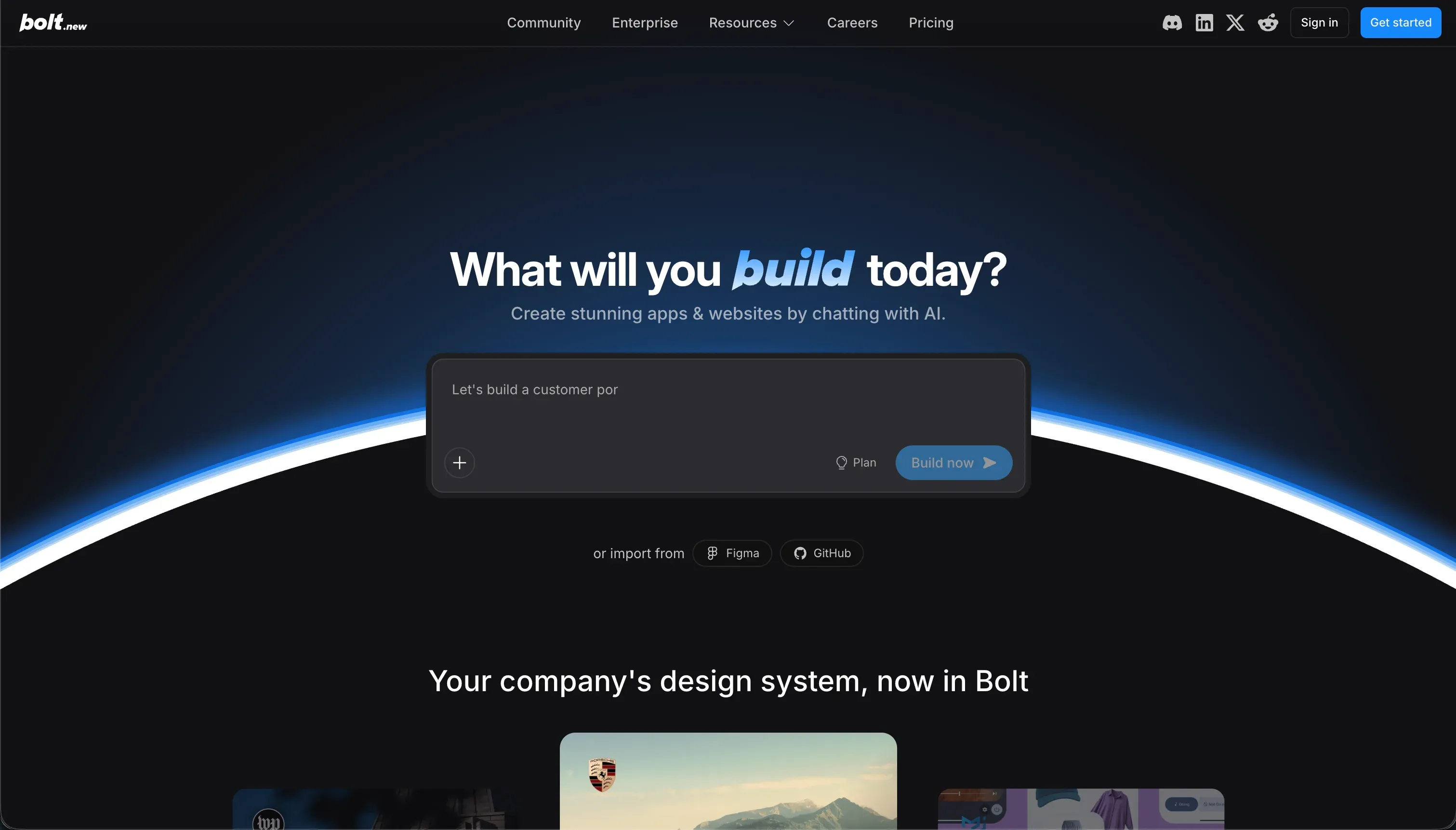
Bolt is a direct alternative for generating full-stack React applications. It runs a complete development environment directly in your browser using StackBlitz WebContainers, allowing you to install npm packages, manage database connections, run terminal commands, and view a live preview in real time.
Unlike Mocha, which often got stuck in credit-draining compilation loops, Bolt handles package dependencies and errors in a transparent sandbox where you can see the terminal output. You can edit files directly in an integrated sidebar editor and push the clean codebase straight to GitHub.
Pricing: Pro plan is $25/month for 10M tokens, which provides a significantly larger iteration volume than Mocha’s tier-based credit models.
v0

v0 by Vercel excels at generating clean React user interfaces built on shadcn/ui and Tailwind CSS. While it does not manage your database natively, it generates production-ready code that integrates directly into Next.js.
This makes it an ideal alternative to Mocha if you want clean code output and prefer to manage your own database layer. Because v0 is built by Vercel, the generated components deploy to Vercel in a single click with premium performance.
Pricing: Free tier includes basic credits. Pro plan starts at $20/month for increased usage.
If you’re building internal tools your team needs to maintain
If you were using Mocha to build internal business utilities, tracking apps, or administrative tools, maintaining generated React code is an unnecessary burden.
Softr
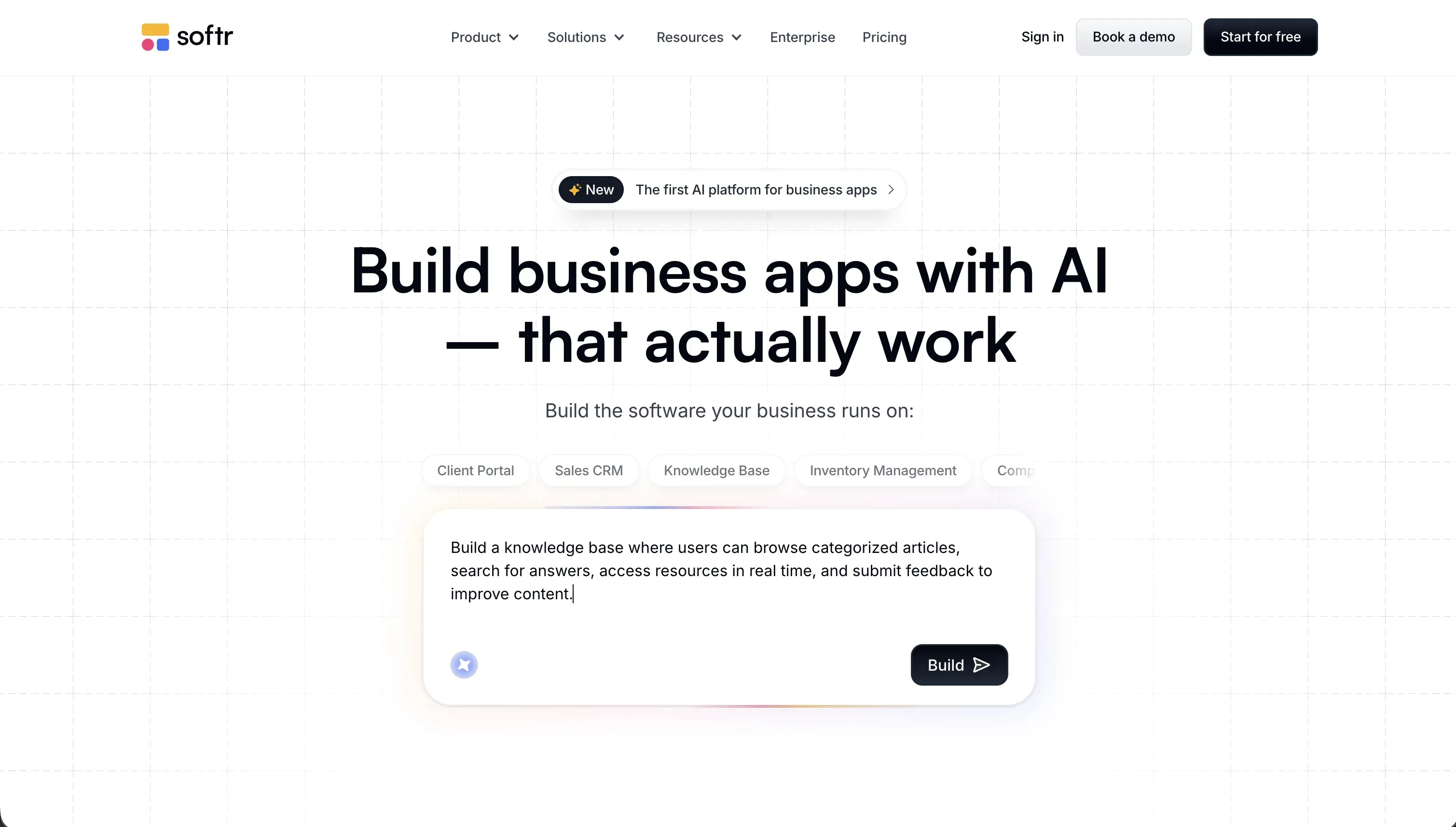
Softr is built specifically for internal business applications. Its AI Co-Builder generates a complete app - database tables, pages, layouts, user roles, and permissions - from a single plain-language prompt. But unlike Mocha, the output is a stable no-code application running on Softr’s tested platform, not raw React code.
Your team can update the app visually: add a database field, modify a page layout, or adjust access rules - without touching code or wasting AI tokens.
The comparison against Mocha for business tools:
- Pricing: Softr uses flat-rate plans. Basic is $19/month (5 team + 5 client users, 50k records), Pro is $99/month (10 team + 50 client users, 500k records), and Business is $329/month (30 team + 100 client users, 1M records). There are no usage-based token charges for running the app, and you can edit layouts visually at any time.
- Data Source: Softr connects natively to Softr Databases, Airtable, Google Sheets, and SQL databases. Mocha was limited to its managed SQLite database.
- Maintenance: Non-technical team members can maintain Softr apps directly. Mocha required a developer to fix backend routes and frontend React scripts.
If you want a visual builder with direct database control
If you want to build clean data-driven apps without relying entirely on AI code generation.
Glide
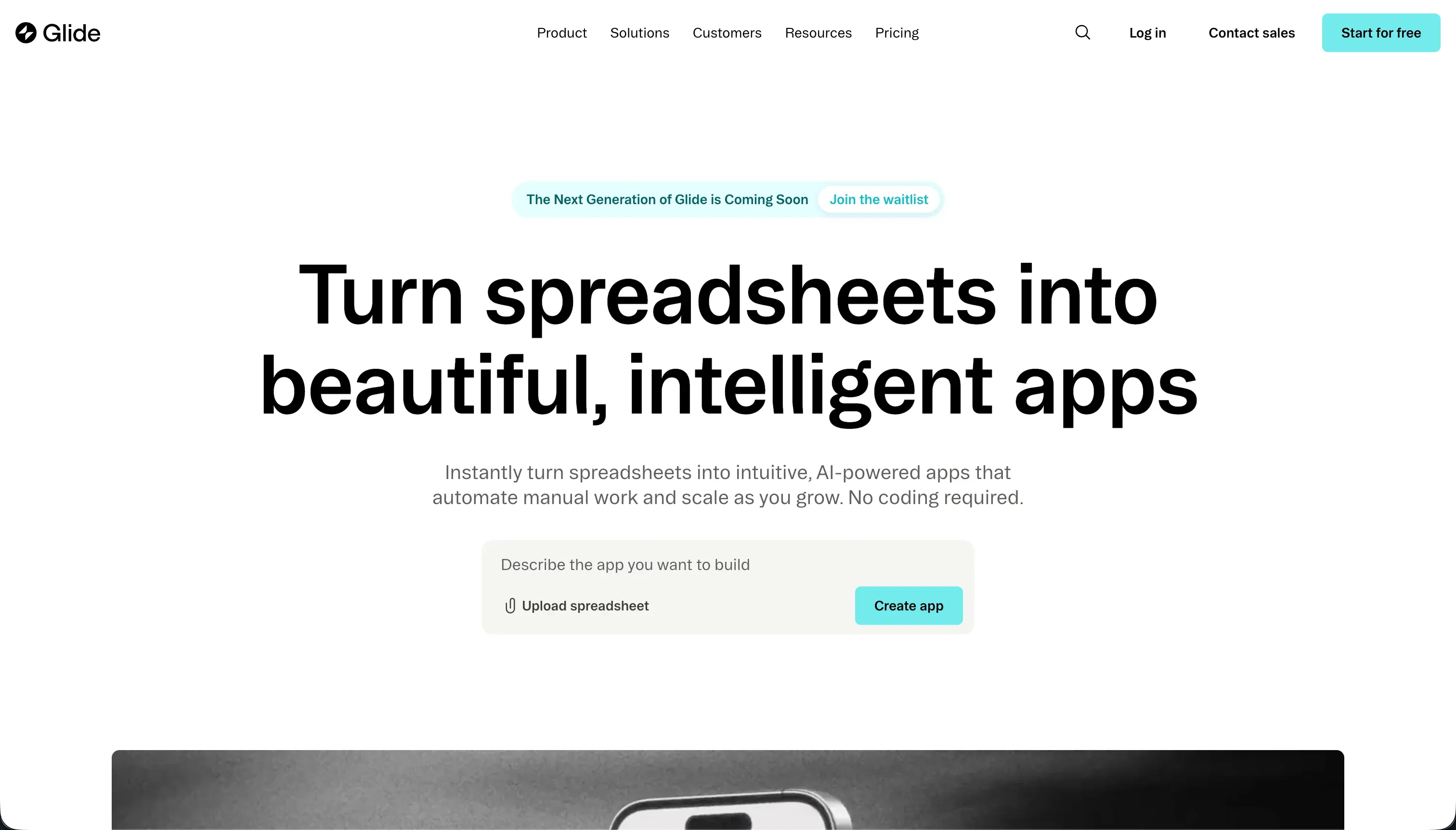
Glide allows you to connect a Google Sheet, Excel file, or Airtable database and visually configure list views, detail pages, and form fields. It provides a polished, mobile-friendly interface out of the box. This makes it a great alternative to Mocha if you want structured layout systems without dealing with code syntax or compilation errors.
Pricing: Free plan is available. Starter plan is $49/month, while Make plan (ideal for teams) starts at $99/month.
WeWeb
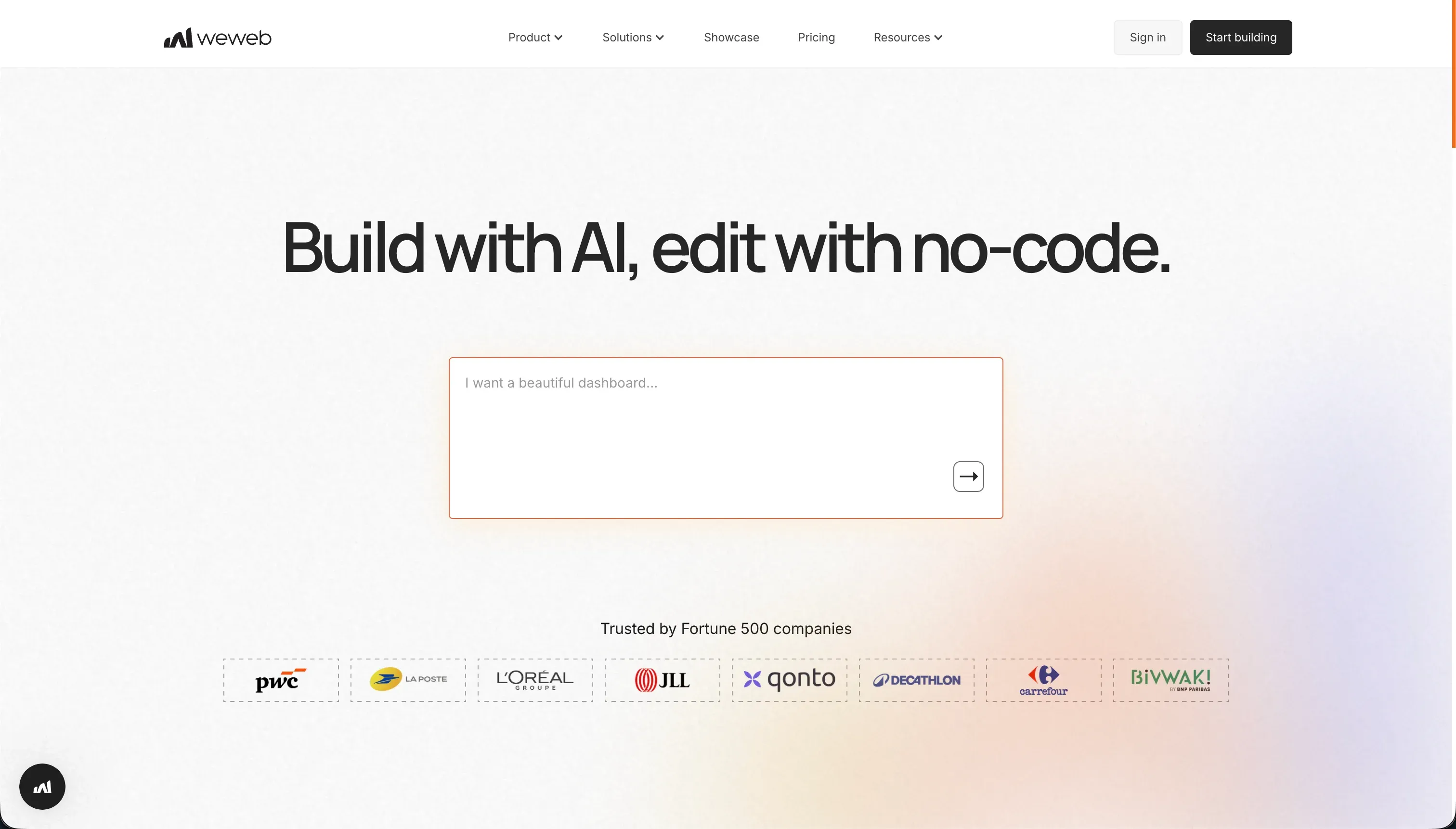
WeWeb is a no-code frontend builder that connects to your own backend, such as Supabase, Xano, or a custom REST API. You get complete visual control over the UI, but your data lives in infrastructure you own. This is a much more stable environment than Mocha for production apps, as you are not locked into a proprietary hosting platform.
Pricing: Free design plan available. Paid plans start at $39/month (billed annually) for custom domains and publishing.
If you need client portals or external-facing apps
When sharing data with clients, security and access levels are critical. You cannot rely on AI-generated scripts to secure sensitive client data.
Softr
Softr provides a secure, visual user permissions model out of the box. You define user groups (like Clients, Partners, and Admins) and configure exactly what pages, blocks, and records they can view. If a client logs in, they only see their own files and invoices. This is set up in a visual interface, not by writing custom React auth logic.
Softr also includes built-in login, signup, password reset, and SSO pages, and supports custom domains so you can white-label the app under your own brand.
If you want to own your code and edit in a local developer environment
If you are a developer who wants AI assistance without losing control of your codebase, using a local editor is a much safer approach than working inside a web-based sandbox.
Cursor
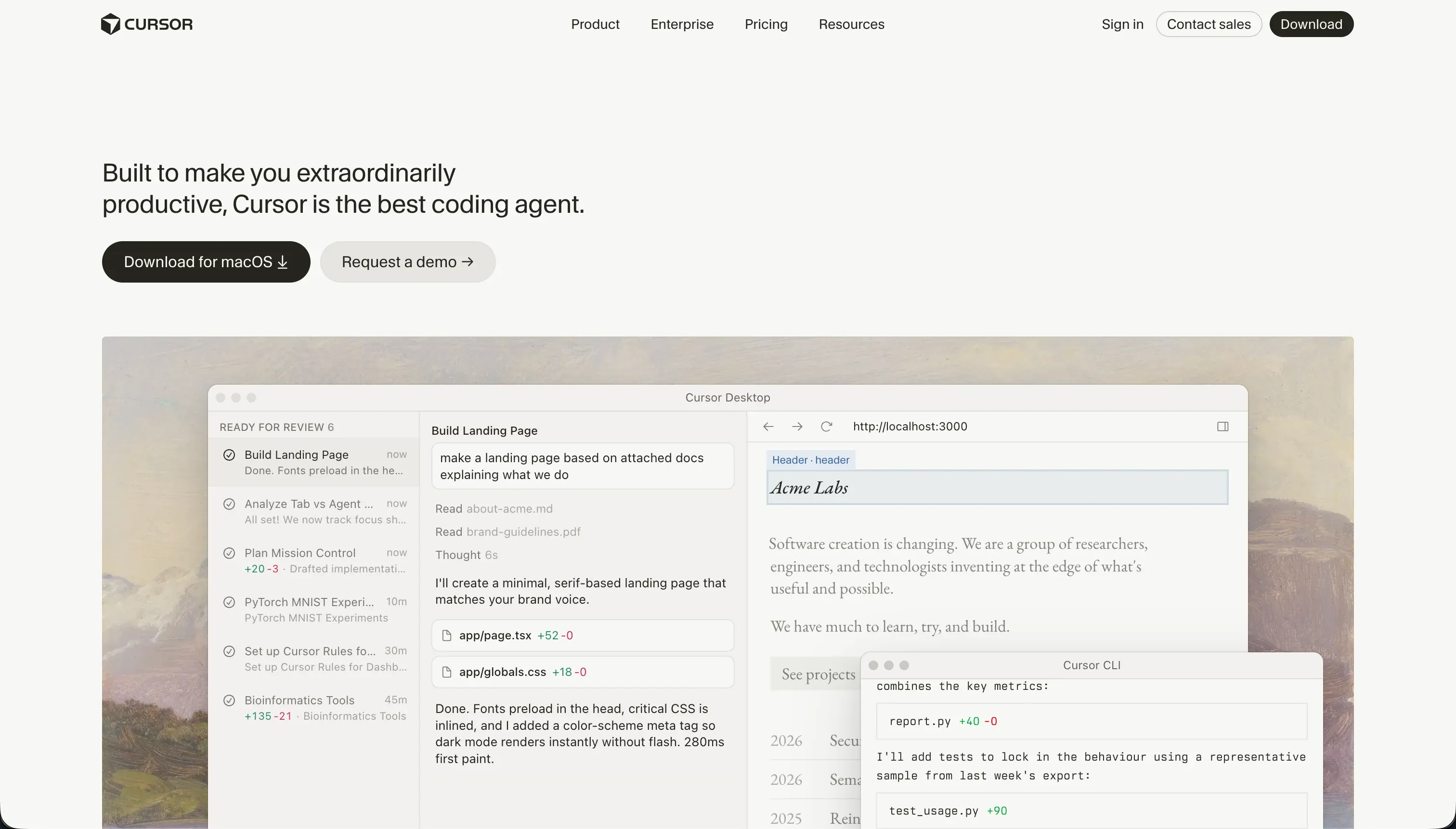
Cursor is a fork of VS Code with AI deeply integrated. It reads your entire project directory, allowing you to ask questions, refactor code, and generate files with complete context. Instead of relying on a web-based sandbox that can discard your work, Cursor lets you run AI prompts directly on your local machine. This allows you to use Git version control and revert any buggy AI iterations instantly.
Pricing: Free tier includes basic queries. Pro plan is $20/month for unlimited completions and high-speed models.
Replit
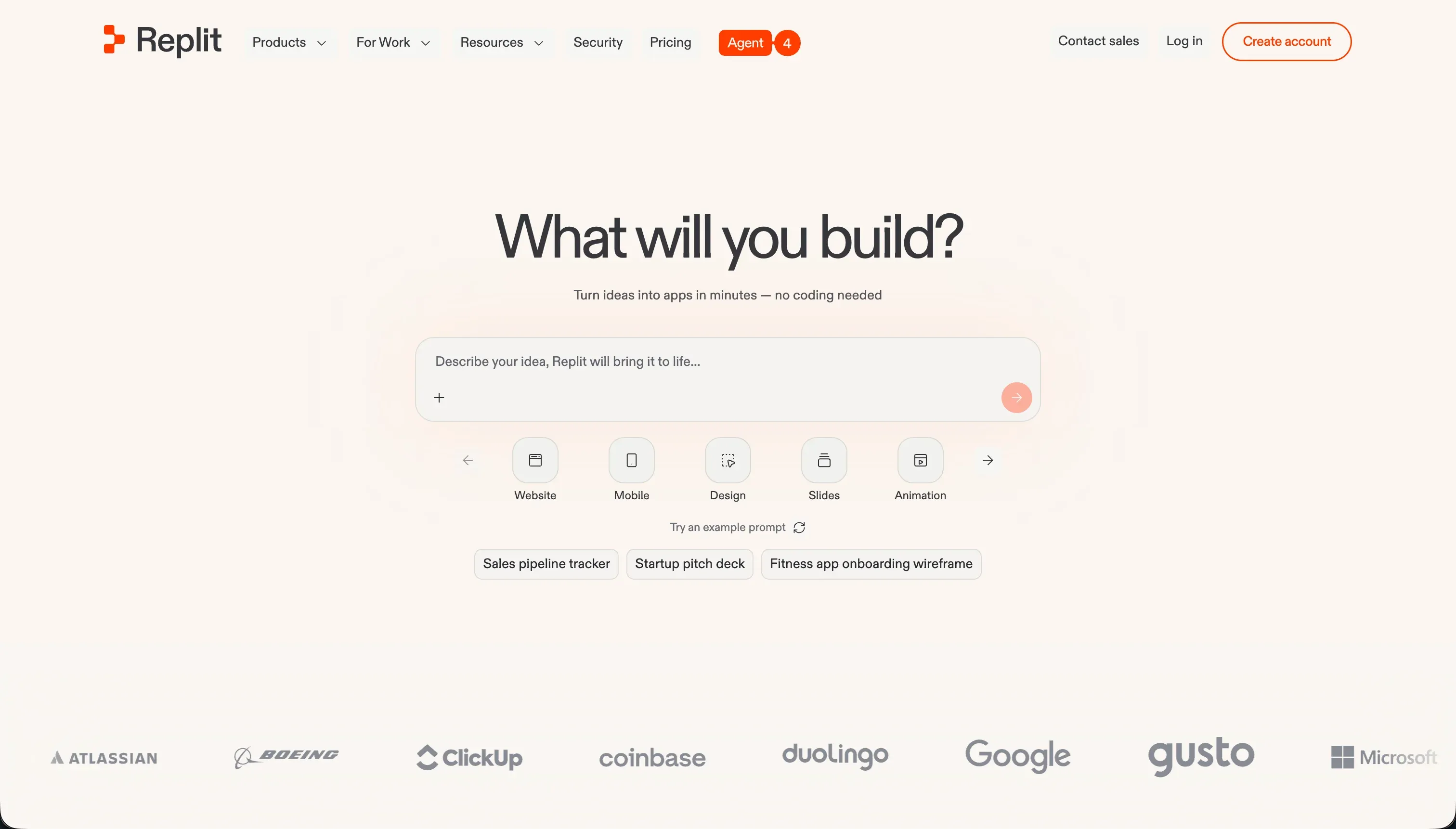
Replit is a collaborative cloud IDE with built-in AI agents. You can prompt Replit to generate code, install packages, and deploy your project with one click. Unlike Mocha, Replit provides full terminal access and supports backend languages, making it a complete cloud-based development environment.
Pricing: Core tier is $15/month, while advanced developer features and dedicated compute scale on higher plans.

Bottom line
With Mocha shutting down in August 2026, migrating is no longer optional. For internal tools and portals that require stability, Softr is the best choice. For full-stack developers who want to maintain absolute control over their code, migrating to Cursor or Replit is the most logical path.
→ See how Bolt compares to Softr to learn more about transitioning from generated code to visual stability.