What is VibeCode?
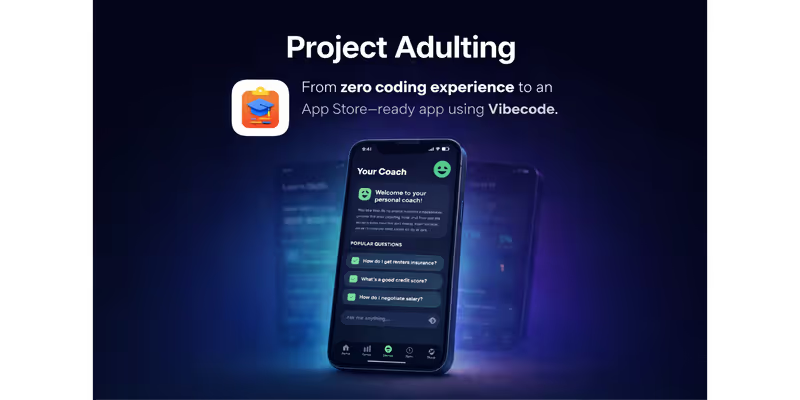
VibeCode is an AI-powered, mobile-first development platform designed to build, test, and publish native mobile applications from natural language descriptions. Operating on the principles of “vibe coding,” it translates plain English instructions into mobile interfaces, databases, and API integrations without requiring manual programming.
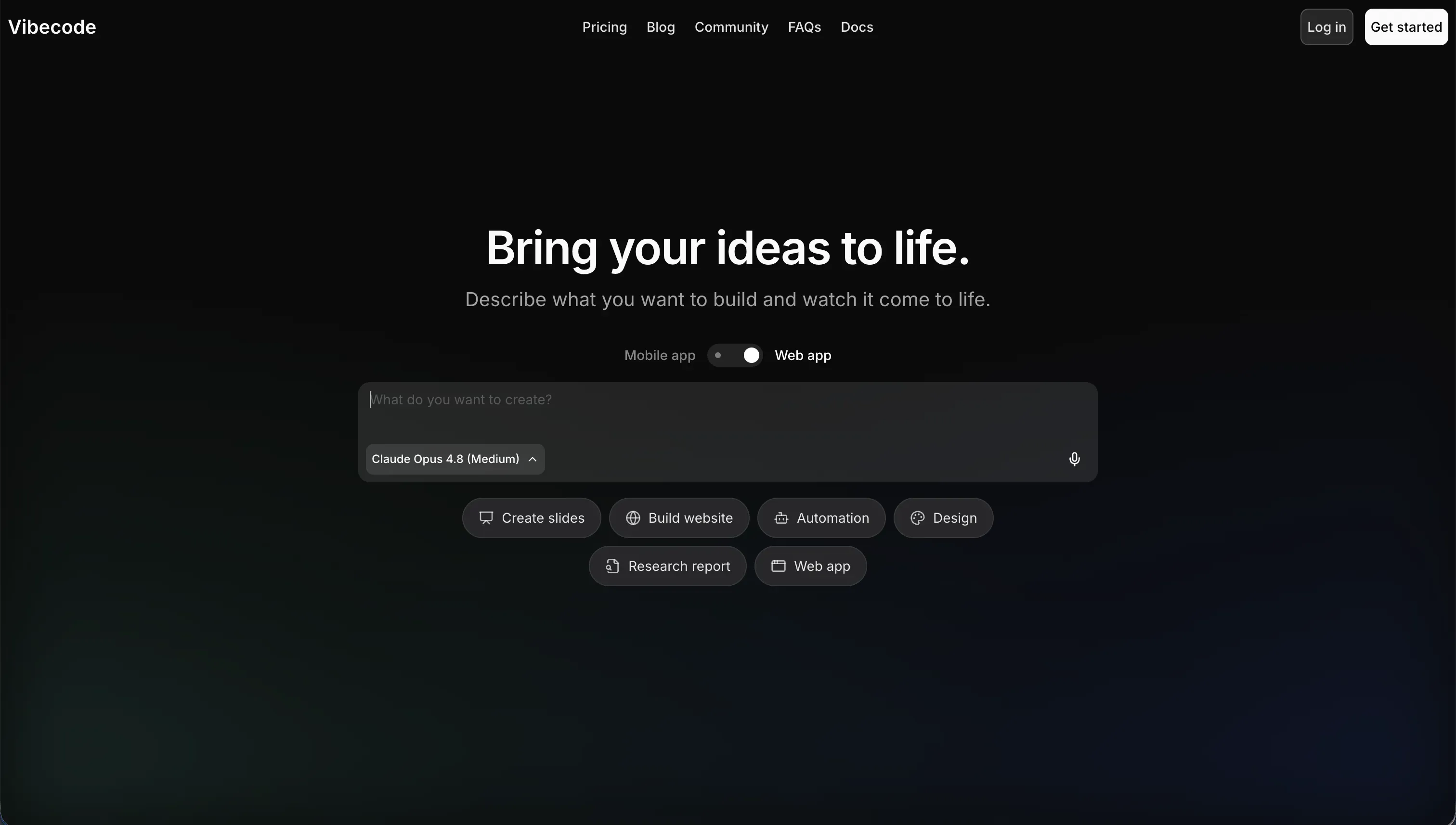 VibeCode product snapshot
The platform aims to let builders describe what their application should do, watch the AI generate the components, and preview it instantly in mobile web browsers or on local mobile devices.
What types of applications can you build with VibeCode?
VibeCode focuses on mobile-first environments:
- Native Mobile Apps (iOS & Android): Build fitness trackers, simple task lists, daily logs, and utility tools.
- Lightweight Games: Quickly scaffold visual matching games, puzzles, or simple arcade layouts.
- Mobile Prototypes: Create rapid mockups and functional MVPs to test mobile-centric product ideas before investing in full-scale native development.
However, because the AI manages the entire codebase from prompts, scaling these applications past early-stage prototypes into complex corporate systems can run into context limits and code quality regressions.
Where VibeCode genuinely shines
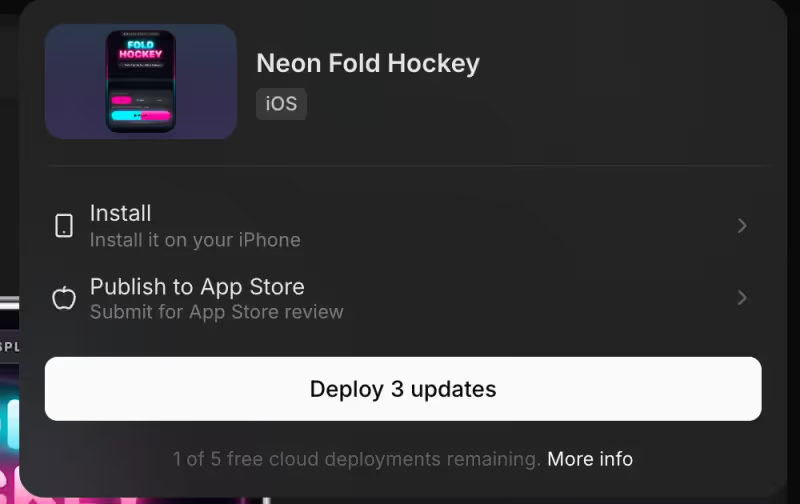
The standout benefit of VibeCode is its native mobile publishing capability. Builders on paid plans can package and deploy their applications directly to the Apple App Store.
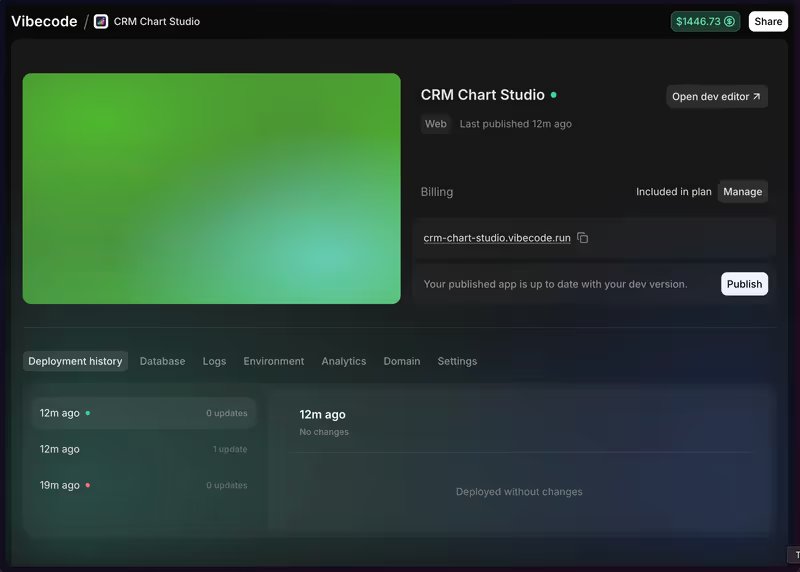
Its transparent pricing model is also a major highlight: rather than using marked-up proprietary credits, VibeCode charges a direct conversion of payments into raw AI developer model costs, with credits rolling over month-to-month. Furthermore, offering SSH connectivity to external editors like Cursor on Pro tiers gives developers a clear escape path to refine the code manually.

The engineering overhead & setup complexity
While VibeCode lets you prompt an app into existence, managing it long-term presents specific challenges:
- The Context Wall: As your application grows in size, the AI’s understanding of the codebase can degrade, which sometimes causes it to overwrite existing code blocks or generate bugs.
- Opaque Logic Errors: If the AI introduces compilation bugs or invalid API calls, non-technical builders can find it difficult to debug the issues without exporting the code to a local editor.
- Lock-in on Base Tiers: If you are on the Free or Plus tiers, you cannot export your source code or connect via SSH, leaving you entirely dependent on the in-browser prompting interface.
Public Sentiment & Community Consensus
Discussions in the developer community indicate positive feedback on ease of use:
- Praise for Prototyping Speed: Non-technical creators love how easy it is to go from an idea in their head to a running mobile mock on their phone in one afternoon.
- Warnings on Scaling Production: Experienced developers caution that relying purely on vibe coding for production apps can result in structural issues, unoptimized assets, and security vulnerabilities if the code is not reviewed manually.
For business teams looking to build secure B2B client portals, team dashboards, or company databases, compiling a native mobile framework is unnecessary. If you’re building operations systems or partner directories, Softr is a much more practical fit. Softr’s AI Co-Builder generates a complete app from a prompt - database, pages, user permissions, and navigation - so you co-build with AI rather than re-prompt your way through every fix. The foundation is Softr Databases (with built-in MCP support), and you can also connect to over 17 external sources including Airtable, Google Sheets, and HubSpot. Auth, role-based permissions, and SOC 2 security are built in from day one, not bolted on after the fact. Business teams can build mobile-responsive web apps and configure them as Progressive Web Apps (PWAs) that load instantly and install on devices with a single tap, bypassing App Store review cycles entirely.
Verdict: Who is it actually for?
Best for: Creators, designers, and developers who want to rapidly prototype native mobile apps from prompts and need direct App Store publishing or code exports.
Not for: Non-technical business teams who need to build secure, desktop-first operational tools, client portals, or company databases.