
Why people look for VibeCode alternatives
VibeCode has built a reputation as a mobile-first “vibe coding” builder that generates native iOS and Android apps from chat prompts. But when your mobile application needs to scale beyond basic templates, the limitations of pure prompt-based development quickly surface.
The mobile complexity wall
As a mobile app grows to include custom data structures, complex API integrations, or native device features (such as background location tracking or local cache storage), VibeCode’s AI agent can hit a wall. When it struggles to manage local component state across multiple nested files, it often introduces database hallucinations or breaks existing screen layouts.
Platform-level lock-in and high tier pricing
While VibeCode allows code export and SSH connections to editors like Cursor, these developer-friendly features are locked behind the Pro ($50/mo) and Max ($200/mo) tiers. If you are on the Free or Plus plans, you are locked into their proprietary hosting platform and cannot download your source code to run locally or customize.
Context window drift in large codebases
For projects that exceed 30–40 files, VibeCode’s AI can lose track of the overall folder structure. When writing new mobile screens or actions, the agent frequently overrides existing import statements, writes duplicate logic libraries, or drops crucial validation utilities, causing runtime compilation failures that halt building.
Strict App Store review rejections
Relying entirely on AI-generated code for mobile apps presents compliance challenges. App stores are highly strict: Apple (under Guideline 4.2 Minimum Functionality) often rejects basic prompt-built apps because they lack high-quality, custom user experiences or trigger silent layout glitches on specific phone viewport sizes. Auditing these errors without writing React Native or Swift code manually is extremely difficult.

The best VibeCode alternatives, by use case
If you want to build native mobile apps for App Store distribution
If your primary goal is to compile and deploy native iOS and Android apps directly to the official App Stores.
FlutterFlow
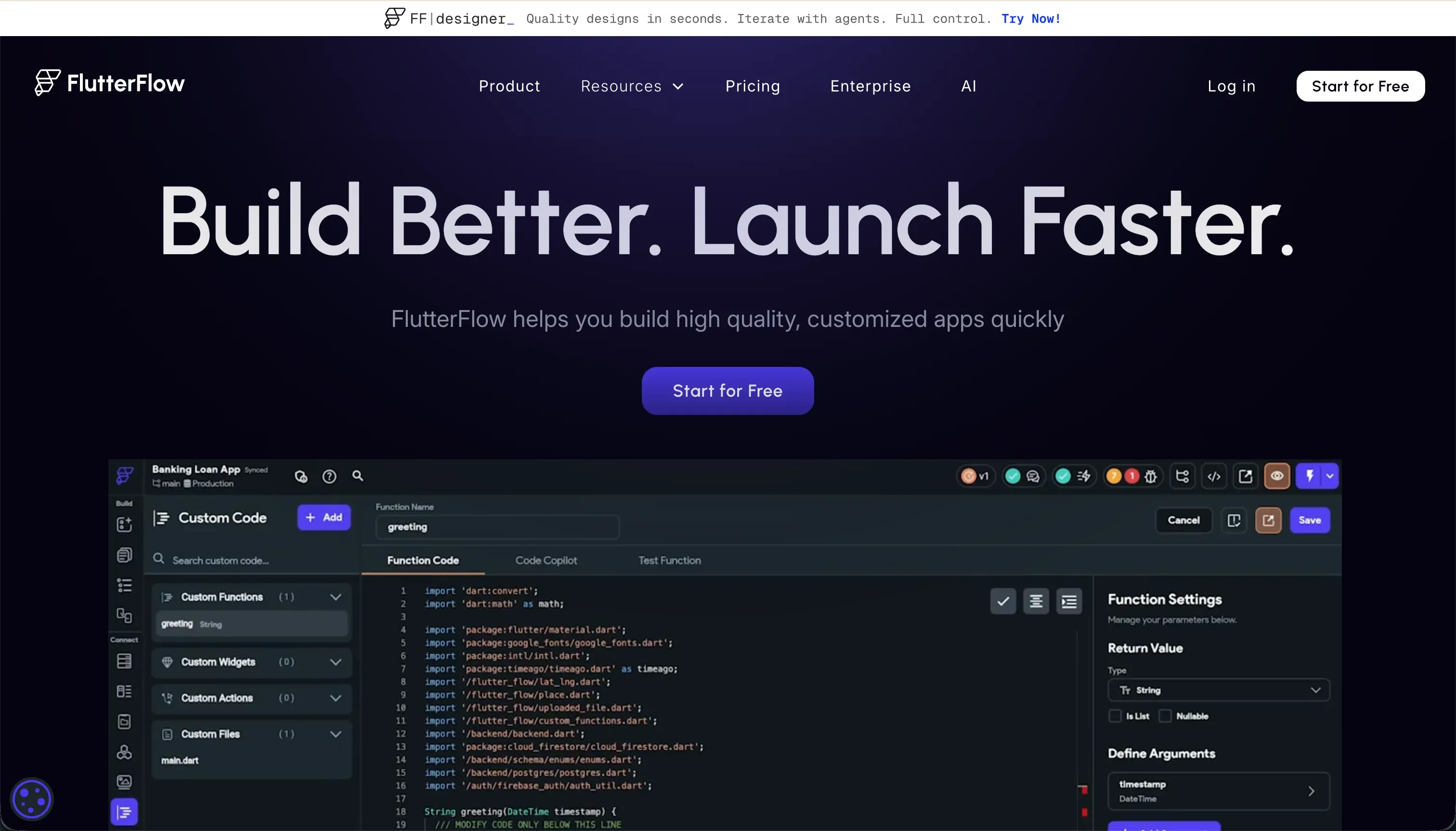
FlutterFlow compiles directly to native Flutter (Dart) apps that deploy to the Google Play Store and Apple App Store. It is a visual builder with AI generation features, direct Firebase and Supabase integration, and full code export.
For teams that need native performance, access to custom device hardware features, and clean version control via GitHub integration, FlutterFlow provides far more control than VibeCode’s prompt-only workflow.
Pricing: Free plan available. Pro plan at $50/month (billed annually) includes full code export, Git integration, push notifications, and App Store deployment.
Adalo
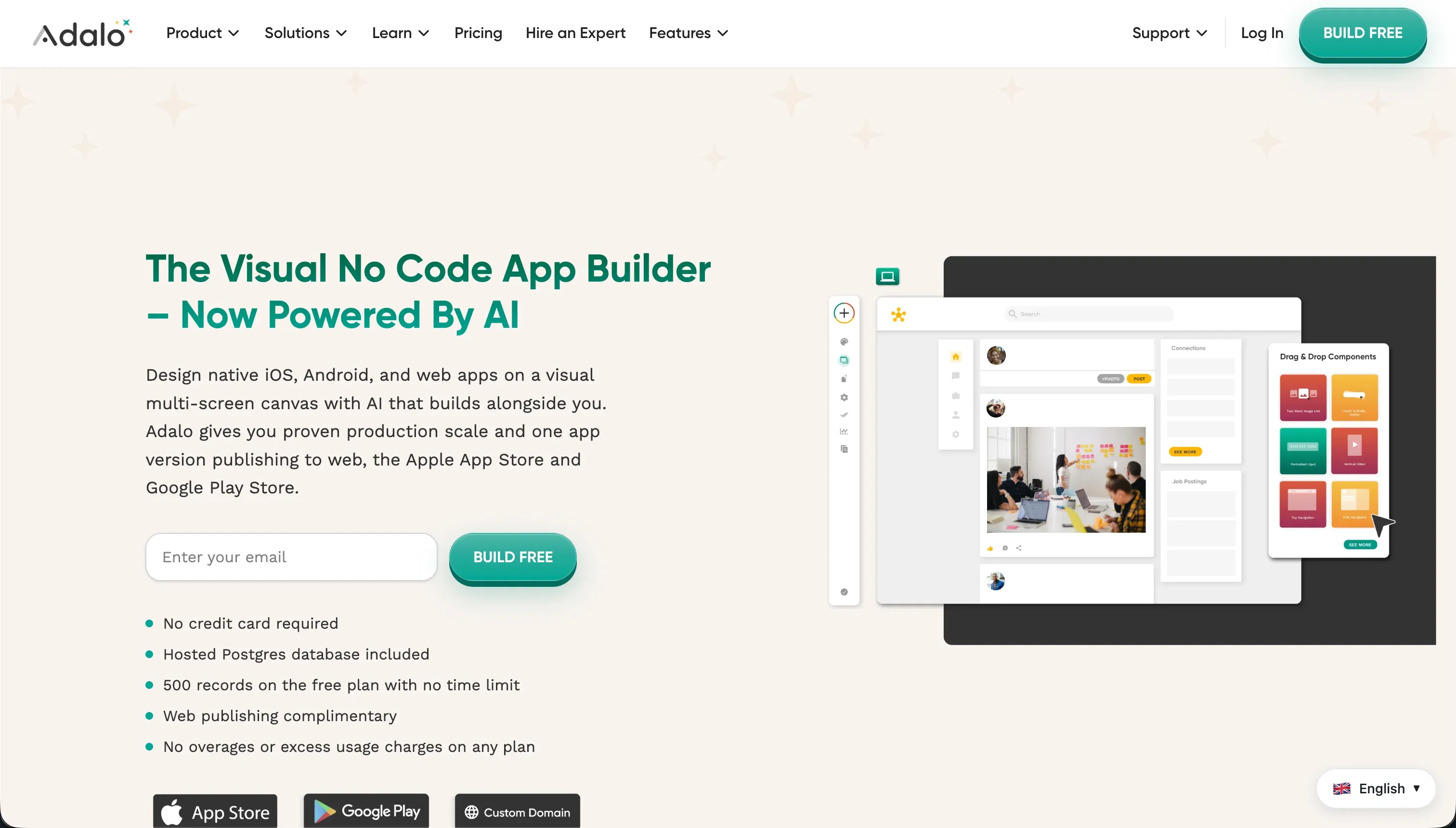
Adalo targets simpler mobile apps with a lower learning curve than FlutterFlow. Its canvas editor is highly accessible for non-technical users, and it supports publishing directly to the app stores. However, Adalo suffers from scaling limitations, performance slowdowns on larger databases, and a weak permissions model.
Pricing: Free plan is available. Paid plans with custom database support start at $52/month.
If you’re building internal tools your team needs to maintain
If you are building mobile apps for internal operations - like inventory trackers or field inspection tools - you do not need the complexity of native App Store deployments.
Softr
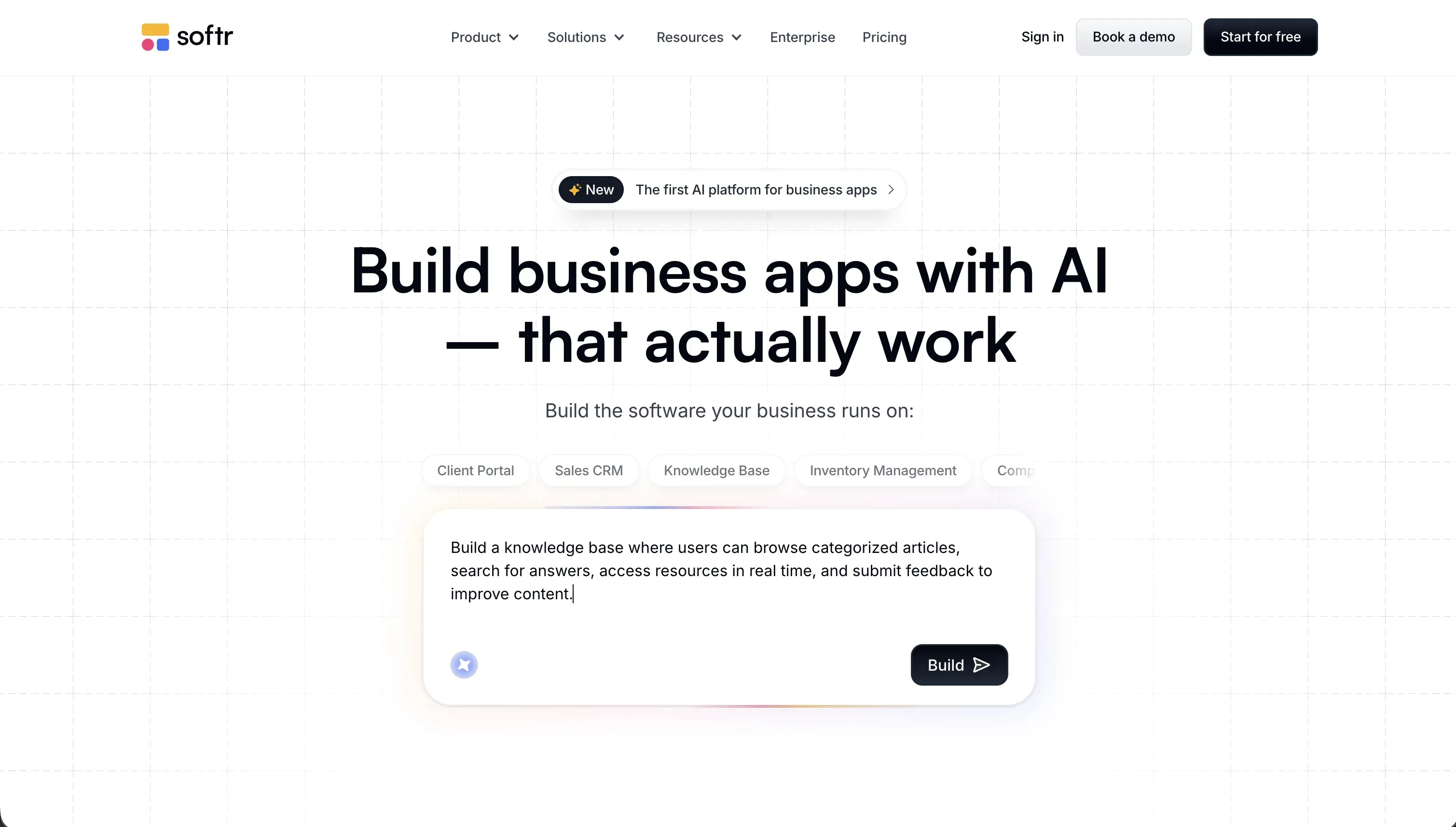
Softr is built specifically for business applications. Its AI Co-Builder generates a complete app - database tables, pages, layouts, user roles, and permissions - from a single plain-language prompt. But unlike VibeCode, the output is a stable no-code application running on Softr’s tested platform, not raw code. Softr builds mobile-responsive web apps that configure instantly as Progressive Web Apps (PWAs). Users can add the app to their home screens with a single tap, bypassing App Store reviews entirely.
The comparison against VibeCode for business tools:
- Pricing: Softr uses flat-rate plans. Basic is $19/month (5 Team + 5 Client users, 50k records), Pro is $99/month (10 to 50 Team + 50 to 250 Client users, 500k records), and Business is $329/month (30 to 100 Team + 100 to 500 Client users, 1M records). There are no usage-based token charges for running the app, and you can edit layouts visually at any time.
- Data Source: Softr connects natively to Softr Databases, Airtable, Google Sheets, and SQL databases.
- Maintenance: Non-technical team members can maintain Softr apps directly. VibeCode requires a developer to fix backend routes and frontend React Native or Swift scripts.
- PWA Convenience: Update layouts or fields instantly. Your updates push directly to mobile devices without waiting for Apple or Google review cycles.
If you need AI-powered mobile-responsive web development
If you want to rapidly prototype and iterate on web applications that are highly optimized for mobile viewports.
Bolt
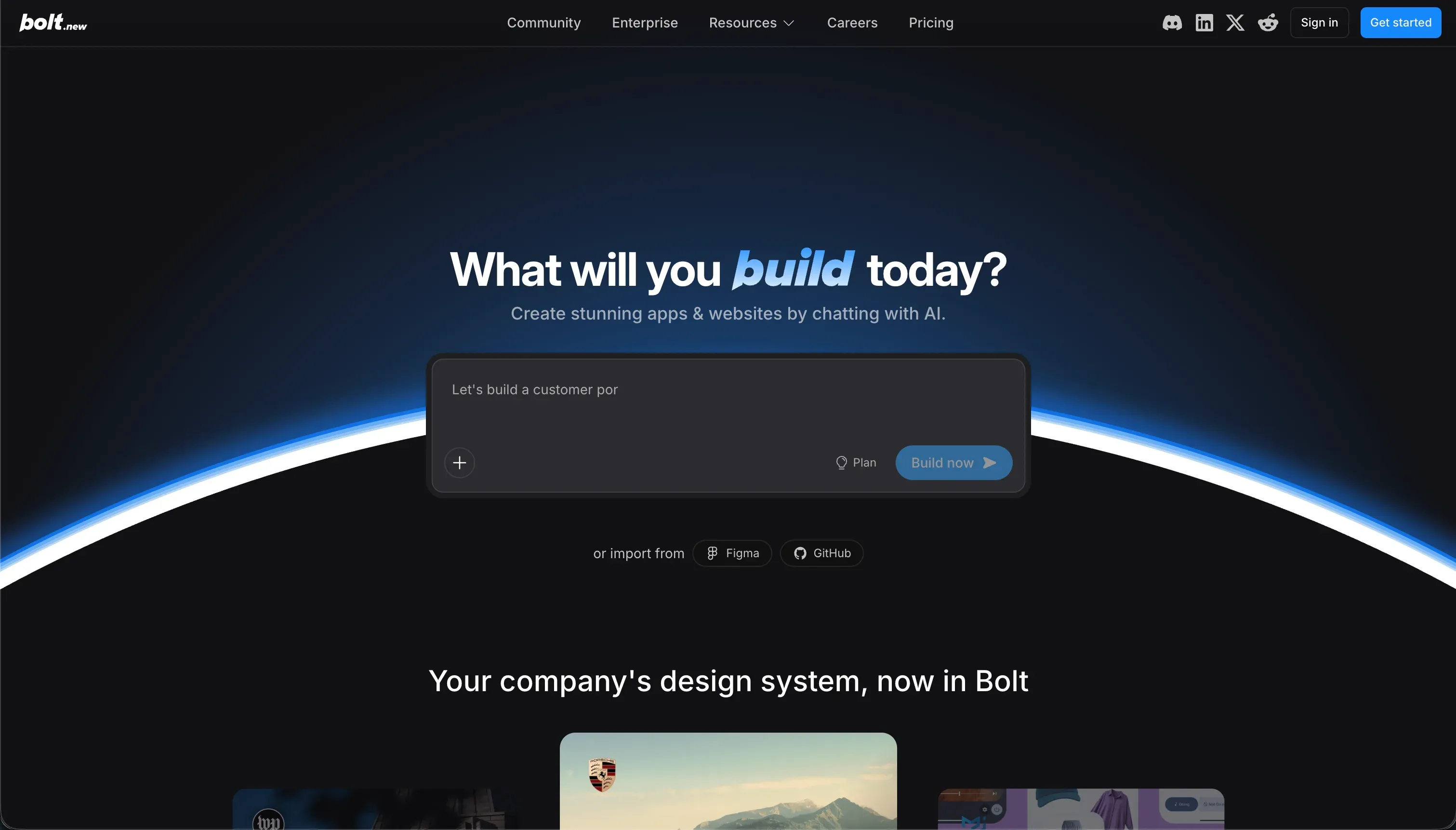
Bolt runs a complete Node.js development environment in your browser using StackBlitz WebContainers. It generates web apps via AI, allowing you to install npm packages, edit files directly, and view a live preview. For builders who want AI generation speed but need to prototype web apps with responsive mobile styling, Bolt is significantly more flexible.
Pricing: Pro plan is $25/month for 10M tokens.
v0
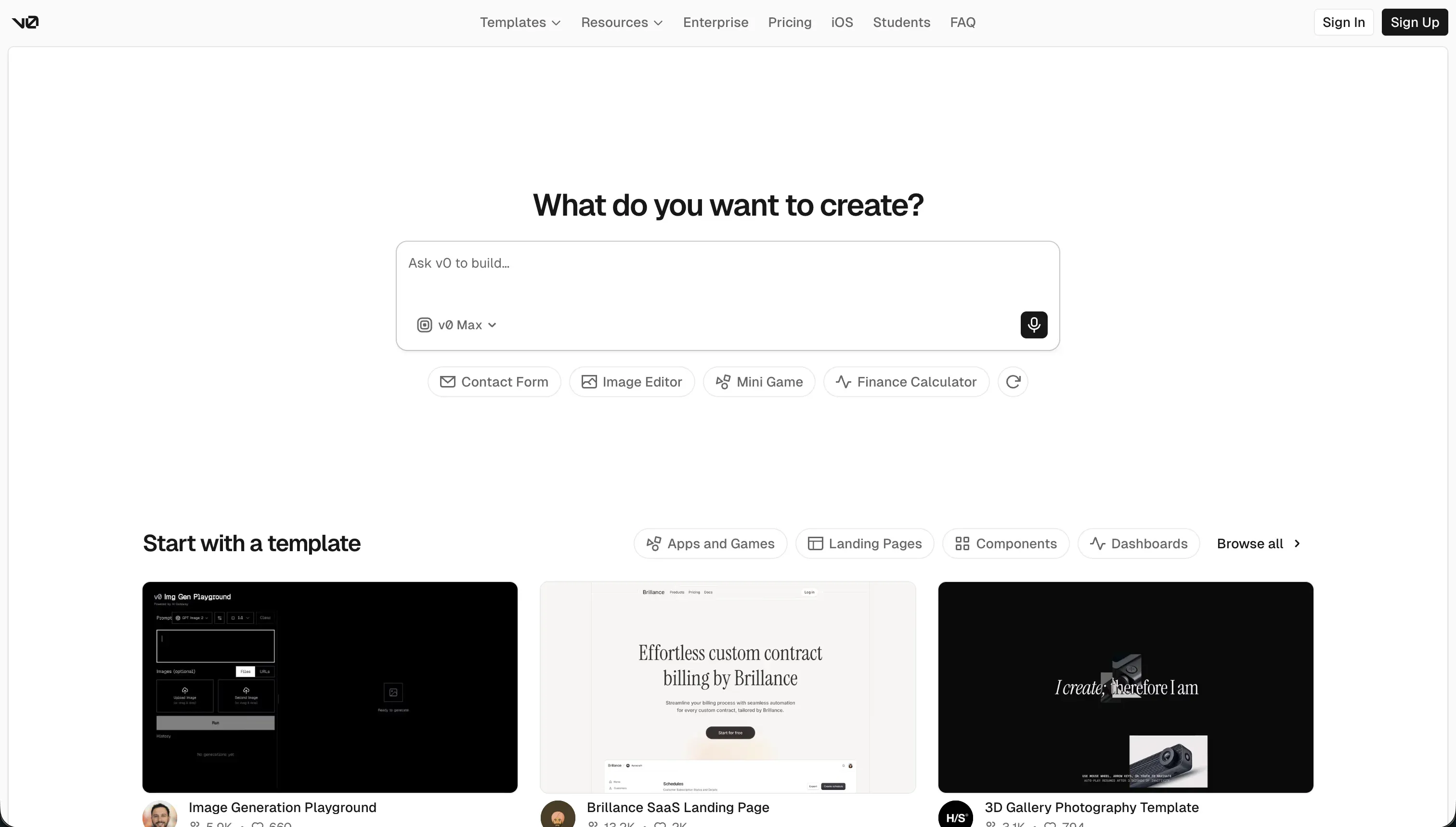
v0 by Vercel generates React components built on shadcn/ui and Tailwind CSS. It is excellent for generating responsive mobile interfaces. Because it outputs clean, modular code, you can easily copy and paste the generated UI elements into your own mobile web projects.
Pricing: Free tier includes basic credits. Pro plan starts at $20/month.
If you need client portals or external-facing apps
For client portals and member directories where data access must be secure, visual permission configurations are safer than generated code.
Softr
Softr provides a secure, visual user permissions model out of the box. You define user groups (like Clients, Partners, and Admins) and configure exactly what pages, blocks, and records they can view. If a client logs in, they only see their own files and invoices. This is set up in a visual interface, not by writing custom React auth logic.
Softr also includes built-in login, signup, password reset, and SSO pages, and supports custom domains so you can white-label the app under your own brand.
If you want a developer environment with full control over mobile code
If you are a developer who wants AI assistance but prefers to manage code locally and compile native projects.
Cursor
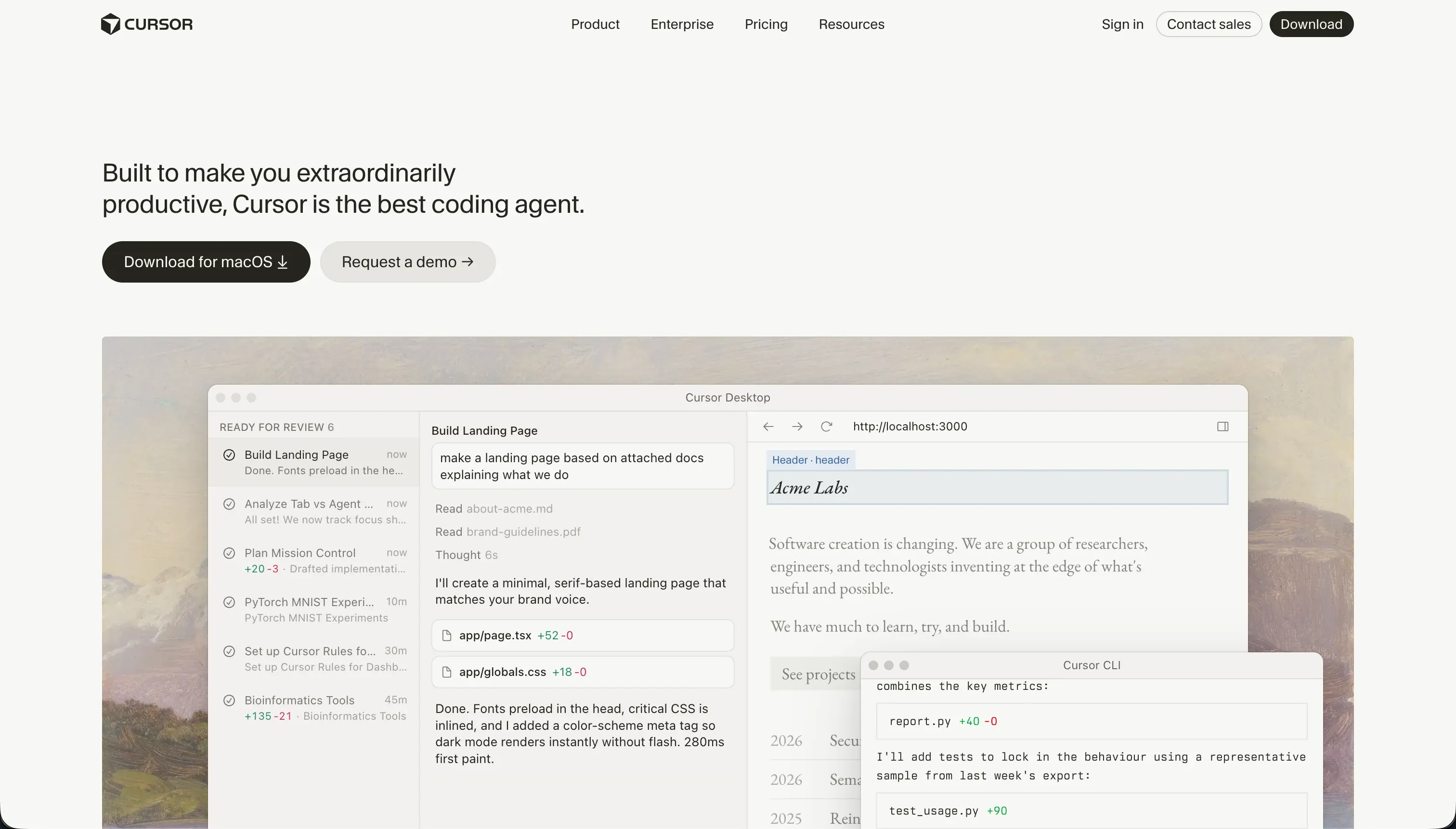
Cursor is a fork of VS Code with AI deeply integrated. It reads your entire project directory, allowing you to ask questions, refactor code, and generate files with complete context. Instead of relying on a web-based sandbox that can discard your work, Cursor lets you run AI prompts directly on your local machine. This allows you to use Git version control and revert any buggy AI iterations instantly.
Pricing: Free tier includes basic queries. Pro plan is $20/month for unlimited completions and high-speed models.
Replit
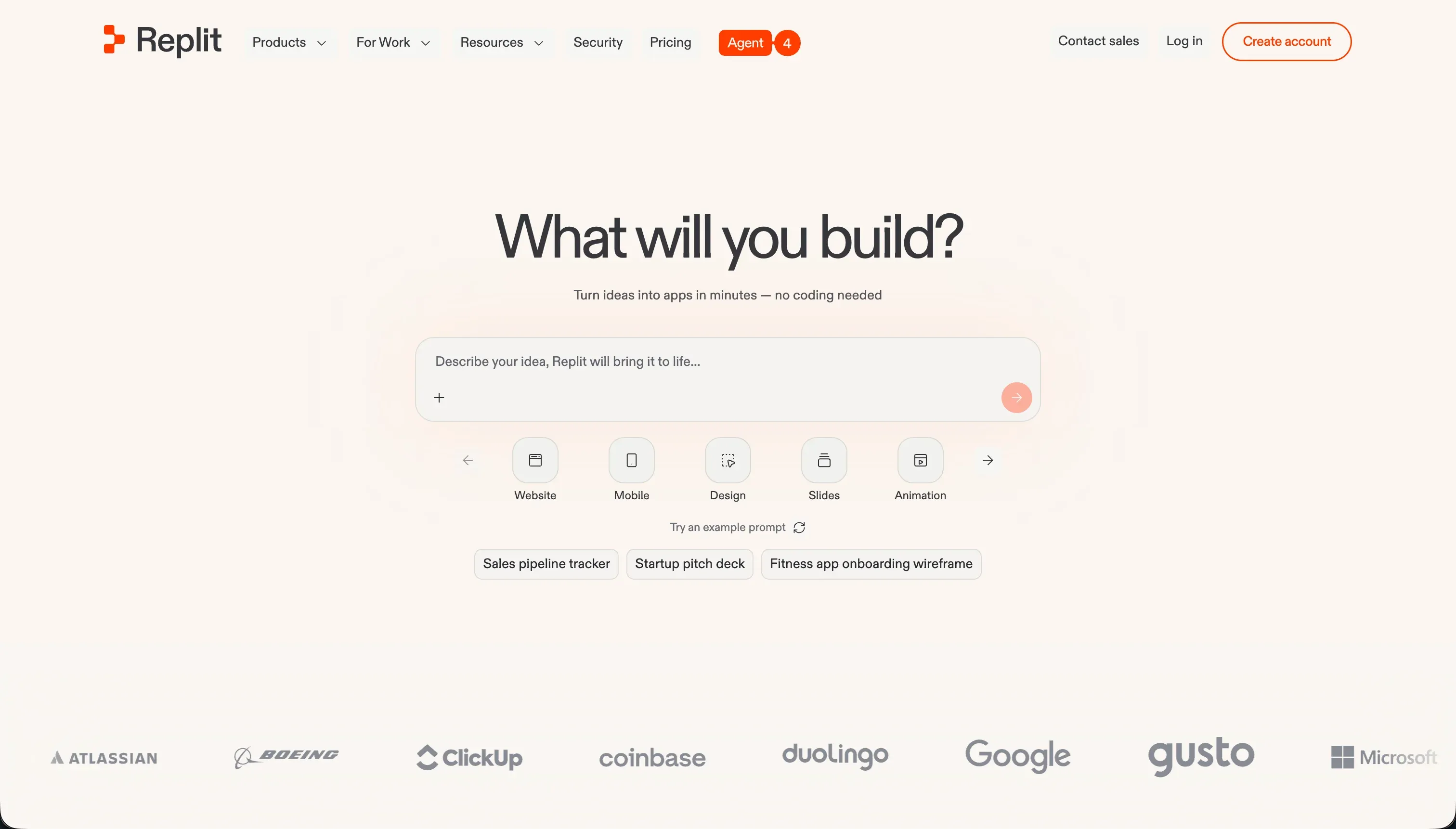
Replit is a collaborative cloud IDE with built-in AI agents. You can prompt Replit to generate code, install packages, and deploy your project with one click. Unlike VibeCode, Replit provides full terminal access and supports backend languages, making it a complete cloud-based development environment.
Pricing: Core tier is $15/month, while advanced developer features and dedicated compute scale on higher plans.

Bottom line
VibeCode is a fast tool for prototyping consumer mobile utilities, but its codebase limitations and tier restrictions can slow down production development. If you need to build business portals and PWAs, Softr is the most reliable option. If you are compiling native apps for the app store, look at FlutterFlow.
→ See how Bolt compares to Softr to learn more about mobile-responsive vs. native code architectures.