
Why people look for Retool alternatives
Retool is a highly capable platform for developers building database-driven admin dashboards. However, its coding requirements and pricing model introduce significant barriers for non-technical teams and client-facing portals.
High coding and technical barrier
Retool is not a true no-code tool. To build anything beyond basic table grids, users must know how to write custom SQL queries, write JavaScript to manipulate data arrays, and debug API payloads. If a query fails or a layout action breaks, non-technical team members cannot fix the issue. This creates a development bottleneck where minor operational updates must wait on your software engineers.
Expensive seat-based pricing model
Retool charges per user seat for both internal developers and end users. The Team plan starts at $10/user/month (billed monthly), and the Business plan is $50/user/month. If you build a tool for a large internal operations department or need to onboard hundreds of external clients, your monthly subscription costs will scale aggressively, making Retool cost-prohibitive for large-scale distribution.
External users are an afterthought
Because Retool is built for internal business utilities, setting up external client-facing portals is difficult. The platform lacks native user onboarding, signup pages, and custom password recovery flows. Configuring secure, gated client access requires writing custom authentication scripts and manual database permissions.
Rigid, data-dense UI layouts
Retool’s pre-built component library is designed for data density rather than aesthetic appeal. The layouts look and feel like generic internal admin panels. Customizing styles to match a specific corporate brand or building a highly polished, consumer-grade client portal requires writing custom CSS and overriding default component themes, which is a slow and technical process.
Complex, script-heavy workflow automations
Retool Workflows let you schedule cron jobs and build data pipelines, but they require scripting knowledge to configure. Unlike visual no-code automation tools that use simple step-by-step logic, Retool Workflows assume you understand programming structures, API loops, and query parameters.

The best Retool alternatives, by use case
If you want a simple spreadsheet-driven builder with clean layouts
If you want to build simple tracking apps or databases without writing SQL queries, spreadsheet-to-app builders offer a much lower learning curve.
Glide
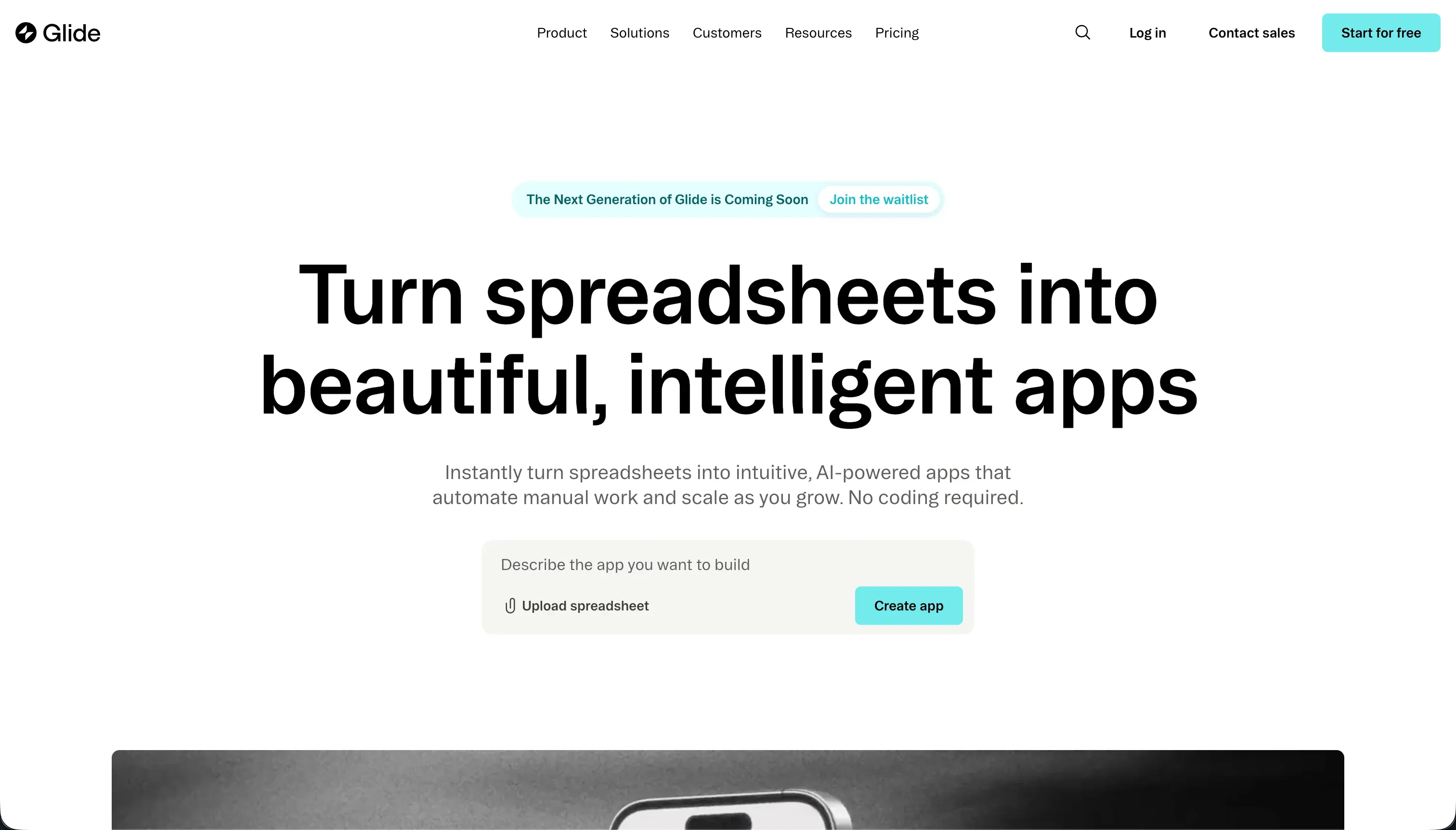
Glide allows you to connect a Google Sheet, Airtable, or Excel file and turn it into a web or mobile application in minutes. It relies on pre-designed layout templates, meaning you do not need to design user interfaces from scratch. It is a highly effective choice for building simple internal inventory trackers, employee directories, or asset managers where you want a clean, responsive mobile layout out of the box.
Pricing: Free tier available. Paid plans for teams start at $125/month ($99/month billed annually), which includes custom domains and increased data record limits.
Bubble
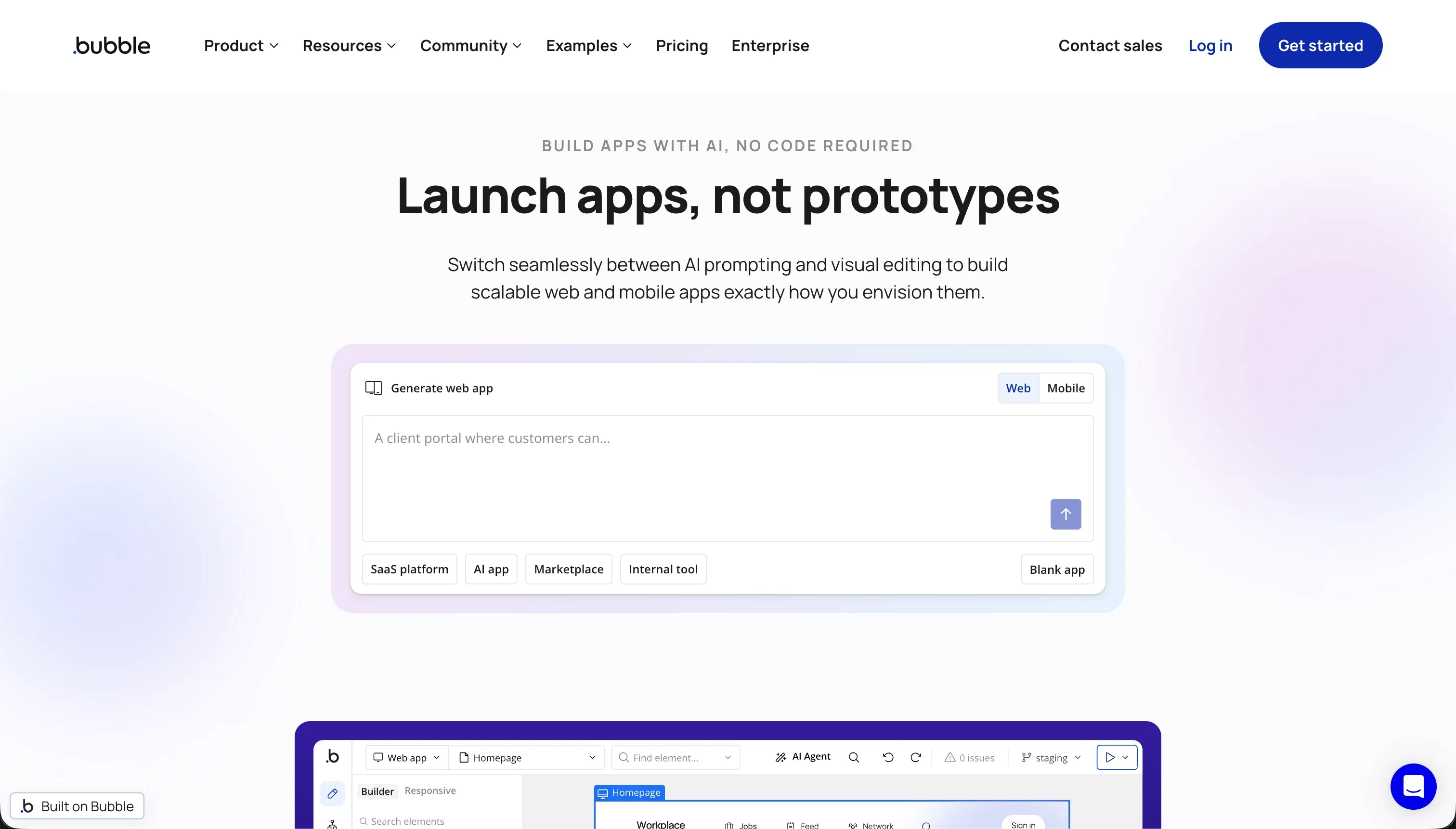
Bubble is a visual web application builder that handles both the frontend layout and the database layer. Unlike Retool’s developer-focused interface, Bubble uses a visual canvas and a step-based workflow builder, allowing you to build highly custom application logic without writing raw code. It is a strong alternative if you need to build complex SaaS MVPs with custom relational databases but want to avoid writing SQL queries.
Pricing: Starts at $32/month (billed annually) for the Starter plan, but pricing is based on Workload Units (WU), which can scale unpredictably based on database activity.
If you’re building internal tools your team needs to maintain
If you are building database dashboards, CRM portals, task managers, or HR hubs that your operational teams need to update and configure, you need a visual no-code platform.
Softr
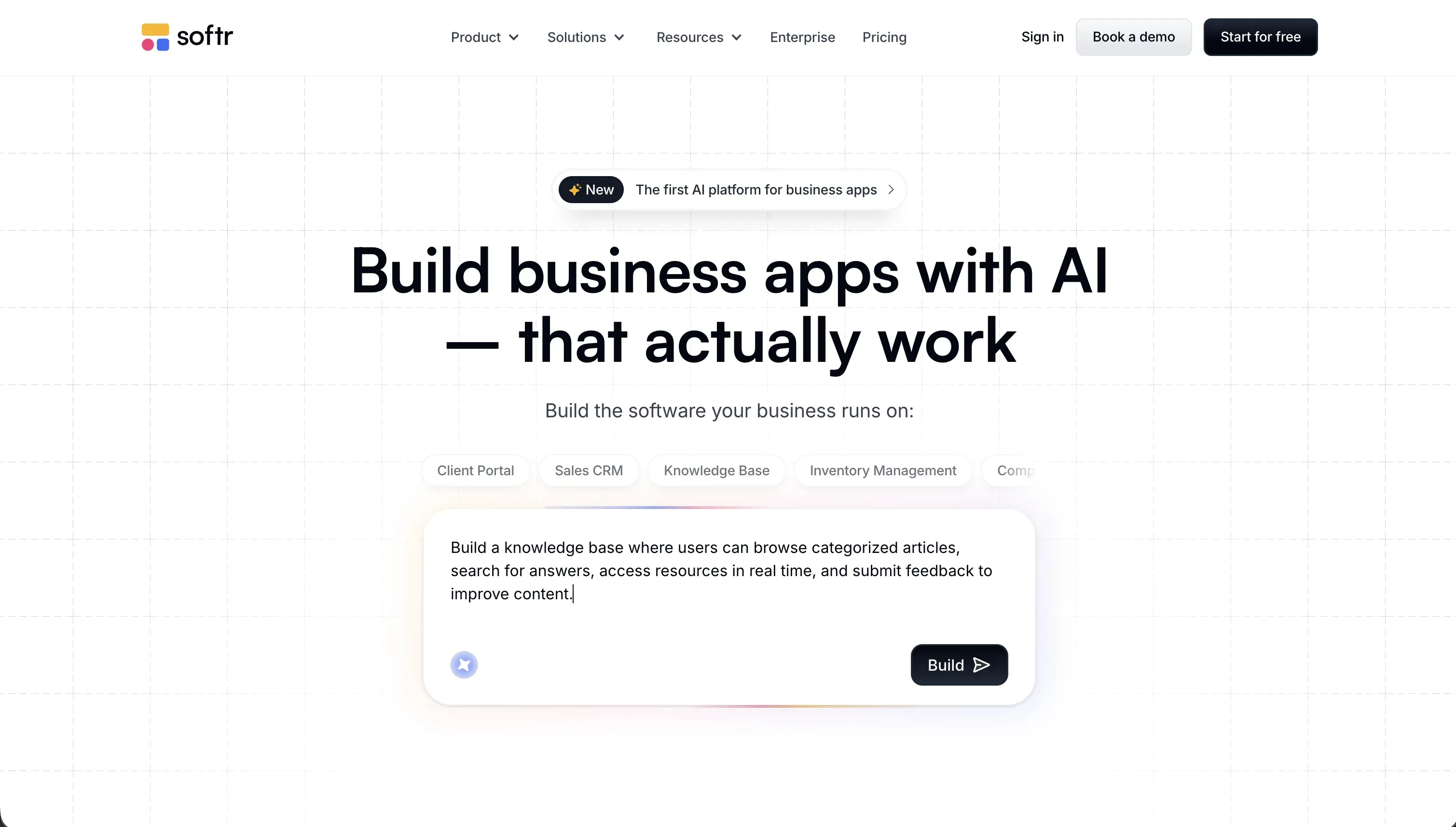
Softr is a no-code builder designed to create secure business applications. Its AI Co-Builder scaffolds a complete web application - including pages, lists, forms, user access roles, and database tables - from a simple prompt. Because Softr uses a visual block-based editor, anyone on your team can maintain the application. If you need to add an input field, change a list layout, or update a workflow, you can do so visually without writing SQL or JavaScript.
The direct advantages of Softr over Retool for team apps:
- Predictable flat-rate plans: Softr charges flat monthly fees. Basic is $19/month, Pro is $99/month, and Business is $329/month, with app users split into Team and Client seats (Business includes 30 Team expandable to 100 and 100 Client expandable to 500). Extra users are billed automatically on a pay-as-you-go basis instead of requiring you to pre-purchase capacity, making it affordable as your team scales.
- Zero code maintenance: Softr manages all hosting, server infrastructure, and security patches. You never have to debug Next.js code, clean up database connection pools, or manage server containers.
- No-code databases: Softr provides its own native database, and also integrates directly with Airtable, Google Sheets, SmartSuite, and HubSpot.
Softr is the standard for operational apps, trusted by teams at companies like Netflix, Google, Stripe, and UPS to run secure databases and dashboards.
If you want a developer-friendly headless frontend builder
If you are a developer who wants visual control over your frontend designs but wants to keep your database and backend APIs entirely separate in infrastructure you control, headless builders are a strong fit.
WeWeb
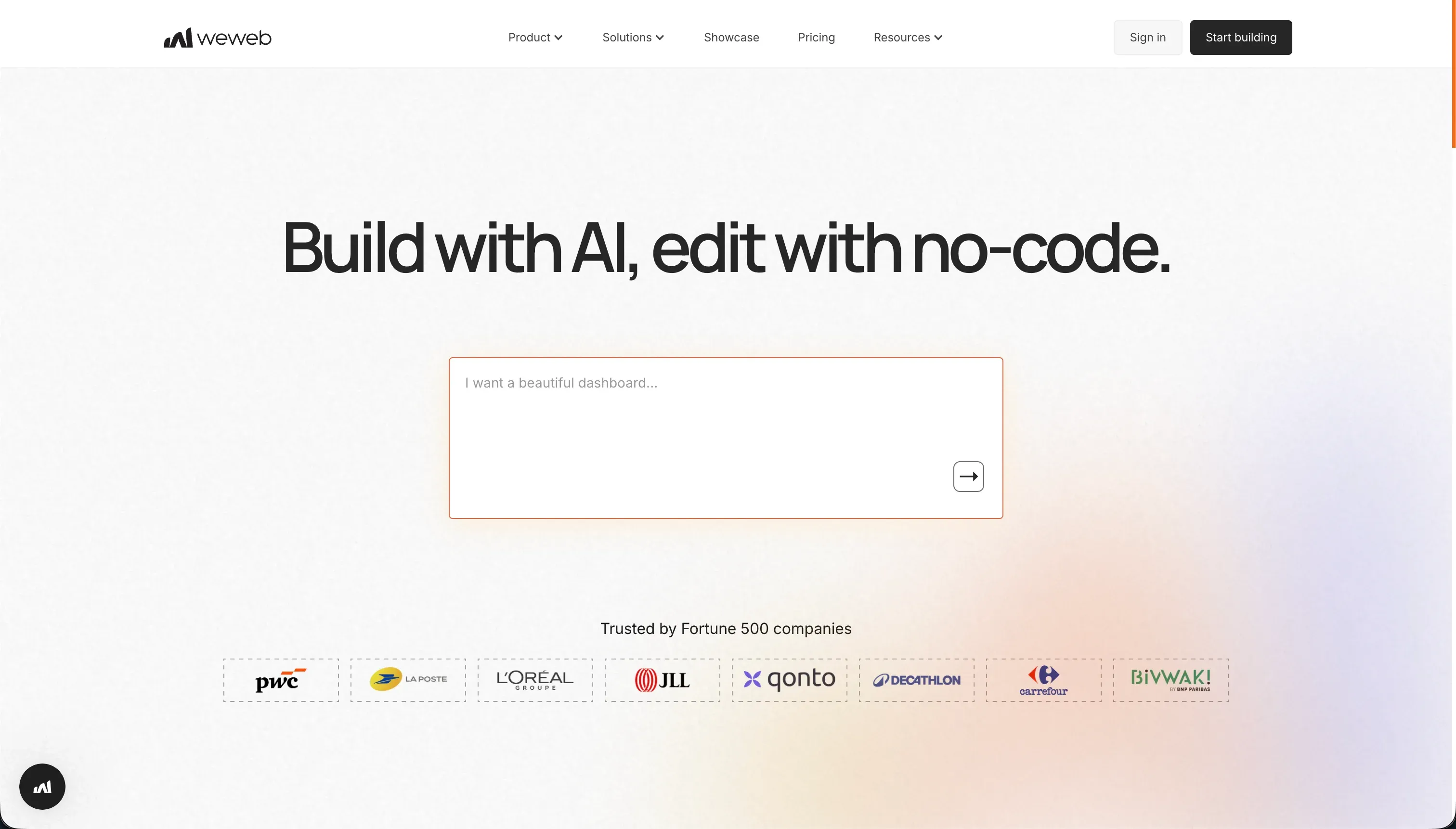
WeWeb is a visual frontend builder that connects to any backend API or SQL database (such as Supabase or Xano). You build the user interface visually on a canvas with absolute design controls, and WeWeb generates clean, production-ready React code. Unlike Retool, you can export and host this code on your own servers, giving you complete independence from the builder platform.
Pricing: Free to design. Paid hosting plans start at $39/month (billed annually) for custom domains and standard feature sets.
FlutterFlow
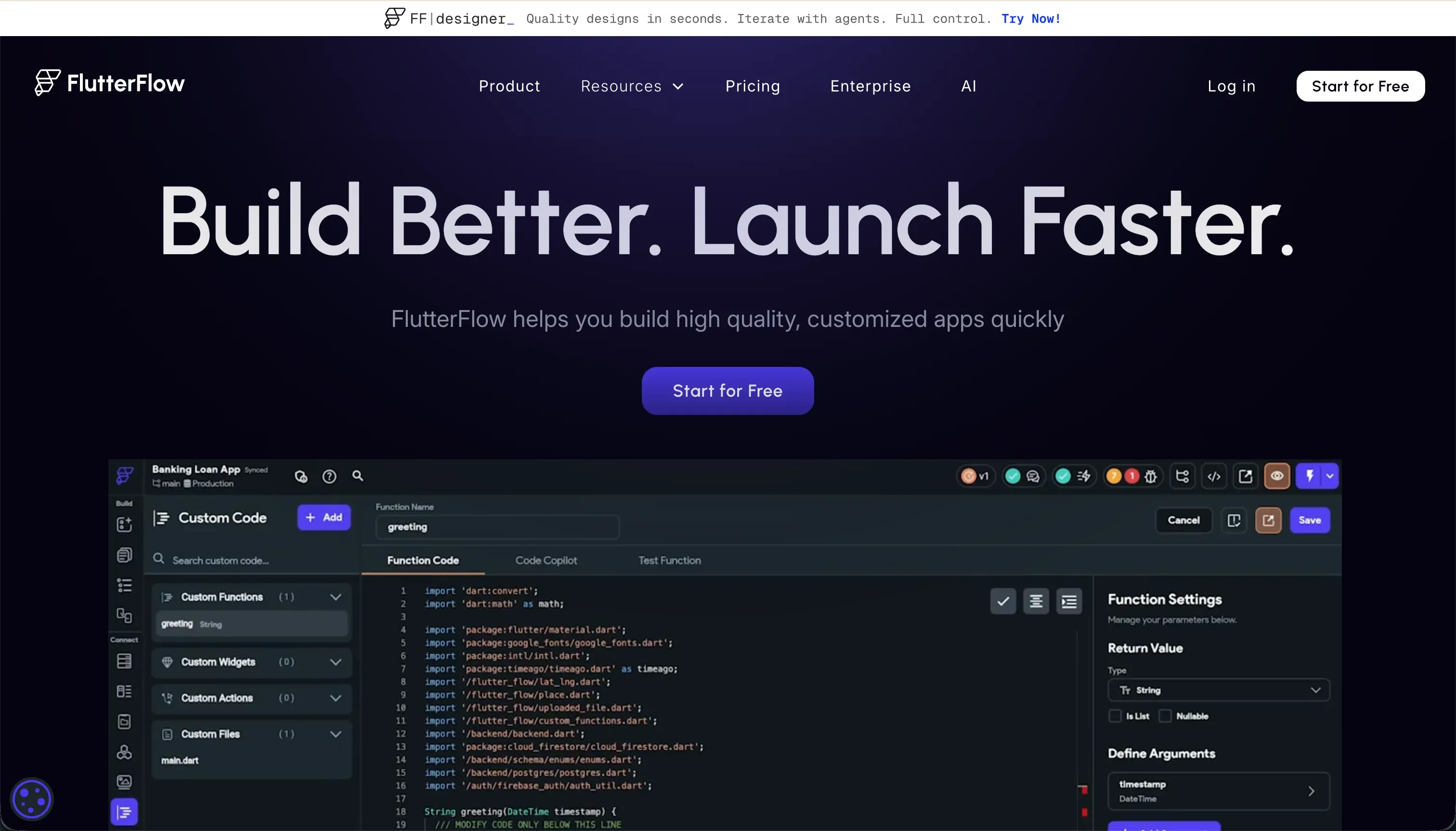
FlutterFlow is a visual development builder that compiles clean Flutter (Dart) code for cross-platform mobile and web applications. It features drag-and-drop layout components, built-in integrations for Firebase and Supabase, and AI design generation. It is the strongest alternative if you want to build native mobile apps that deploy to the App Store.
Pricing: Free tier available. Pro plan is $70/month ($50/month billed annually) for full source code export and direct store deployment.
If you need client portals or external-facing apps with secure logins
Building client-facing portals on Retool is highly expensive due to seat-based pricing, and it requires you to engineer your own authentication, login pages, and database filters to protect client data.
Softr
Softr includes secure user authentication, signup screens, and permissions natively. Gating client access is handled through a point-and-click interface. You can set up client-specific data views (e.g. “only show records where Client matches the logged-in user”) in seconds, ensuring that clients can only view their own projects and invoices.
Typical external systems built on Softr:
- Client portals: Clients log in to view project tasks, upload assets, and pay invoices.
- Partner networks: Brokers track leads and download co-marketing files.
- Vendor portals: External vendors update inventory status and delivery schedules.
Softr handles user onboarding, password recovery, and custom domain setup out of the box, letting you launch a secure portal in a weekend without writing custom authentication APIs.
If you want AI-generated app builders for fast prototyping
If you want to use conversational prompts to scaffold your database and interface rather than dragging and dropping components manually, AI-native IDEs are a fast alternative.
Bolt
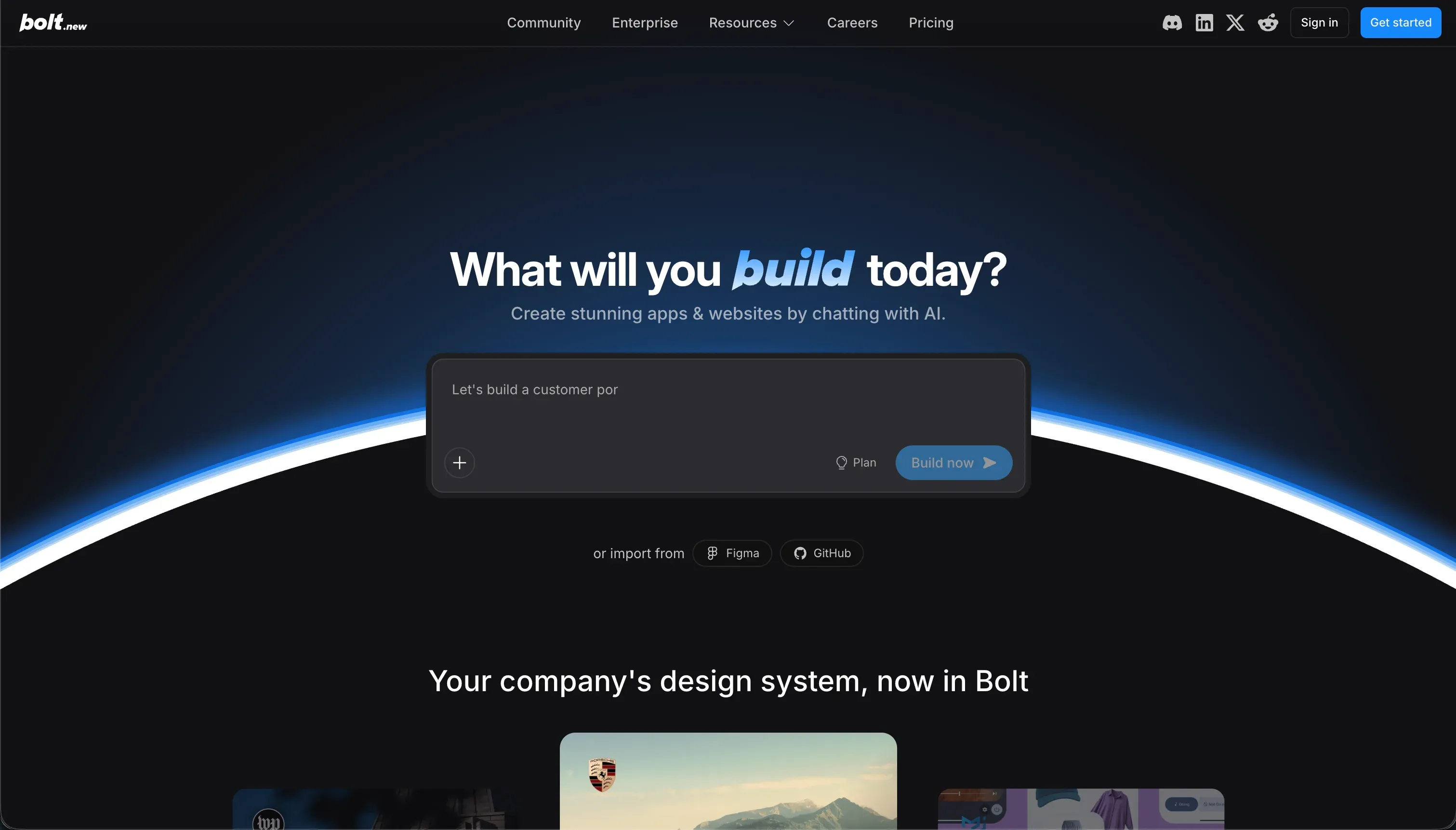
Bolt is a browser-native development workspace that runs Node.js containers directly in your browser. You type a prompt, and Bolt scaffolds the entire React frontend and backend database logic. You can install npm packages, execute bash terminal commands, and view a live preview in the same tab. It is a strong alternative to Retool if you want to prototype custom web applications without setting up local development servers.
Pricing: Free tier includes 1 million monthly tokens. Pro plan starts at $25/month for 10 million tokens, scaling up to $2,000/month for team tiers with high token requirements.
Replit
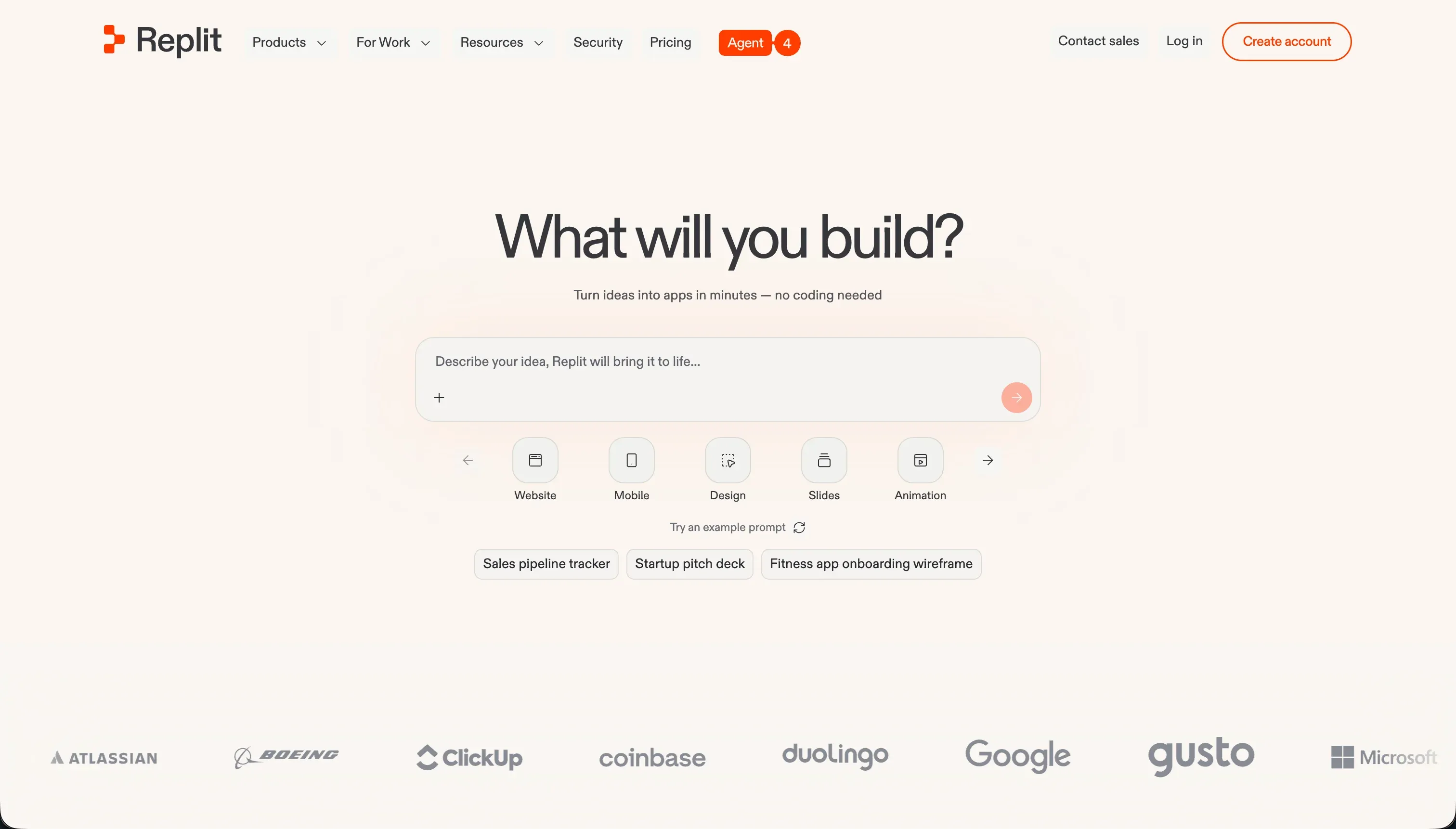
Replit provides a browser-based development workspace supporting over 50 programming languages. It features Replit Agent for prompt-based app generation, a managed database layer, and one-click cloud hosting. It is a highly collaborative cloud-hosted environment for developers who want to write and test backend code with multiplayer features.
Pricing: Replit Core starts at $25/month ($20/month billed annually) with $25.00 of included monthly credits. Performance plans scale up to $100/month for heavier compute resources.
Bottom line
If you are a developer who wants to connect directly to databases using custom SQL queries, use Retool. If you want to visually build a custom web app and host it on your own server, choose WeWeb. If you want to build secure business portals, trackers, or internal dashboards without writing code or paying expensive seat fees, choose Softr.
→ Compare Retool vs Softr in detail - pricing models, coding requirements, and permissions. → Browse all reviewed tools to find the right builder for your stack.