
Why people look for Bubble alternatives
Bubble earns its reputation as the most powerful no-code platform. The depth of its workflow engine, privacy rules system, and plugin ecosystem is genuinely unmatched in the visual builder category. But that power has a cost structure - in time, money, and platform risk - that stops making sense for many teams.
The learning curve is measured in weeks, not hours
Bubble is not a tool you can pick up in a weekend. Building a production-ready app requires understanding Bubble’s relational database model (“Things”), its visual workflow builder, conditional logic branching, privacy rules (which govern what each user can query, not just what they can see on screen), responsive layout constraints, and API Connector configuration. Most users spend weeks in tutorials before shipping anything functional. For teams that need a working tool quickly, or for non-developers building without dedicated time to learn the platform, this investment rarely pays off.
Workload Unit pricing is structurally unpredictable
Bubble’s server usage is billed in Workload Units - a metric that counts compute consumed by database queries, workflow actions, API calls, and triggered events. The Starter plan at $69/month gives 175,000 WU. The Growth plan at $249/month gives 250,000 WU. But WU consumption is notoriously hard to forecast: an inefficient database search, a workflow running across a large dataset, or a sharp increase in concurrent users can push you from Starter to Growth pricing without warning. Multiple Bubble users have reported bills jumping from $69 to $249+ mid-month. One user documented their app being automatically downgraded to the free tier (200 record limit) after a plan lapsed, causing the app to display a Bubble error screen instead of their homepage - effectively shutting down their business. The pricing punishes growth and penalizes apps that haven’t been performance-optimized.
There is no code export - leaving means rebuilding everything
This is Bubble’s biggest structural risk for production apps. If Bubble raises prices, changes its terms, deprecates features, or simply stops meeting your needs - you cannot take your work with you. The database records are exportable as CSV. Every form, workflow, privacy rule, and UI element must be rebuilt from scratch in the new platform. For a serious app with real users, this represents months of rework. It’s an existential business risk that grows with the size of your application.
The editor degrades as apps grow
Users with complex apps on high-end machines (32GB RAM) report the Bubble editor consuming 5GB+ of RAM per browser tab, with significant lag developing over time that requires page refreshes to resolve. On large projects, the default Bubble landing page has been reported to start consuming 2–3GB of RAM with no explanation. The development experience gets worse exactly when the app is most complex and has the most at stake.
Plugin dependency is a production risk
Bubble’s ecosystem includes over 8,000 community-built plugins - which looks like a strength until a critical plugin breaks, gets abandoned, or stops functioning after a Bubble update. Plugins handling payments (Stripe integration inconsistencies are widely documented), authentication, or data integrations have caused production outages with no official fix path. Bubble’s support team has been criticized by multiple users for slow and unhelpful responses during critical incidents.

The best Bubble alternatives, by use case
If you want AI to build the app for you instead of building it manually
Bubble’s entire premise is that you configure everything visually - but the visual workflow builder, database schema, and privacy rules system still require a developer’s mental model. If the appeal of no-code was “build without learning to think like an engineer” but the reality has been a steep conceptual ramp, AI-native builders are a logical exit.
Lovable
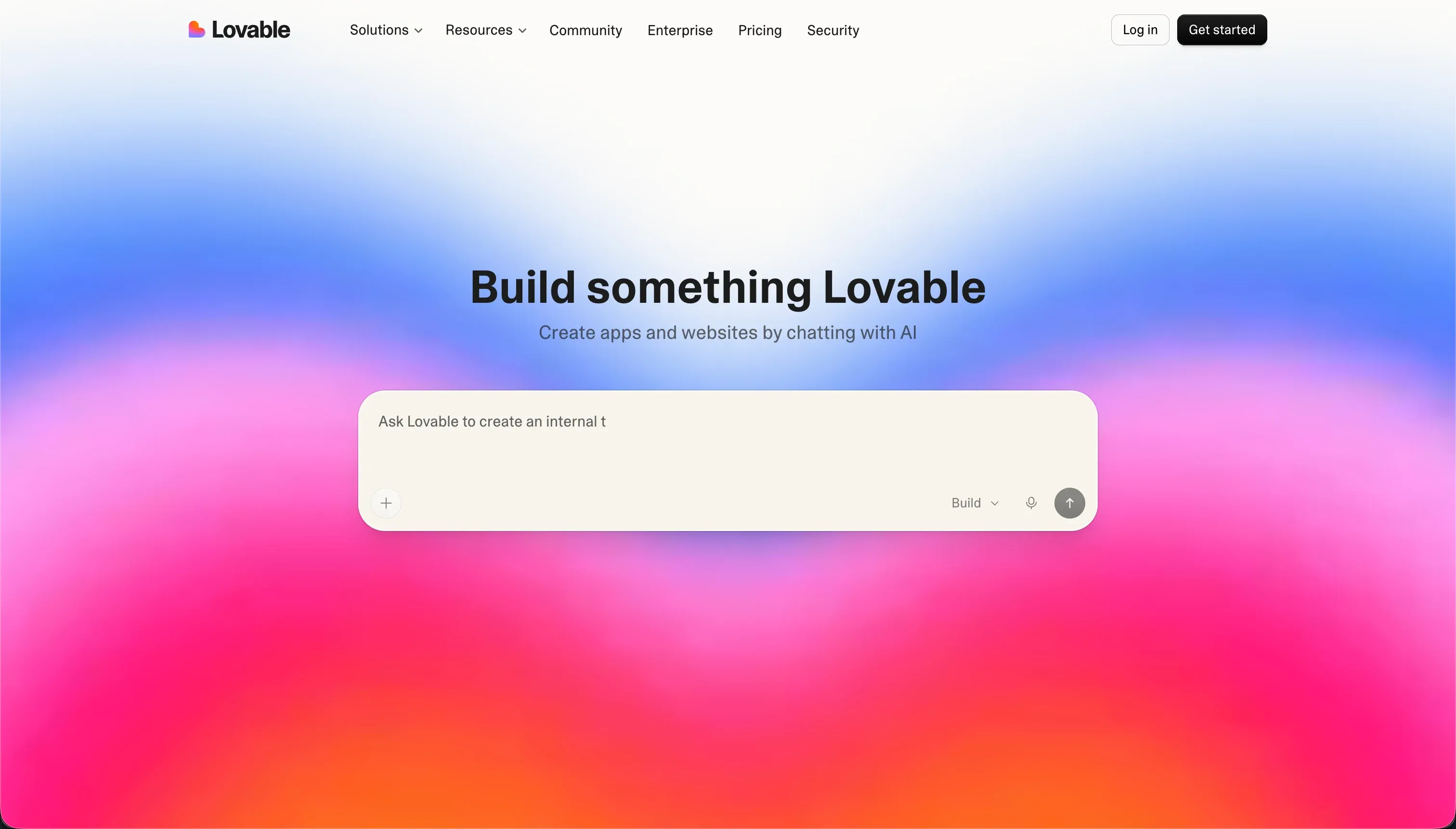
Lovable generates a full React frontend + Node.js backend + Supabase database from a natural language prompt. You describe the app, Lovable builds the database schema, authentication, UI, and routing in one pass. The output is real code - React/TypeScript - that syncs to GitHub and can be continued in VS Code or Cursor. For founders who want to go from idea to working app fast and eventually hand the codebase to developers, Lovable covers this better than Bubble’s manual approach. The trade-off: generated code requires development skills to maintain, secure, and debug. Supabase Row Level Security is configured by the AI - and AI-generated RLS is not always correct. Plan for a developer review before going live with sensitive data.
Pricing: from €25/month for 100 credits. Credits burn fast during debug loops - some users report 3–4 credits per prompt compared to 0.5–1 previously. At heavy usage, costs scale to €100–€2,250/month depending on credit tier.
Bolt
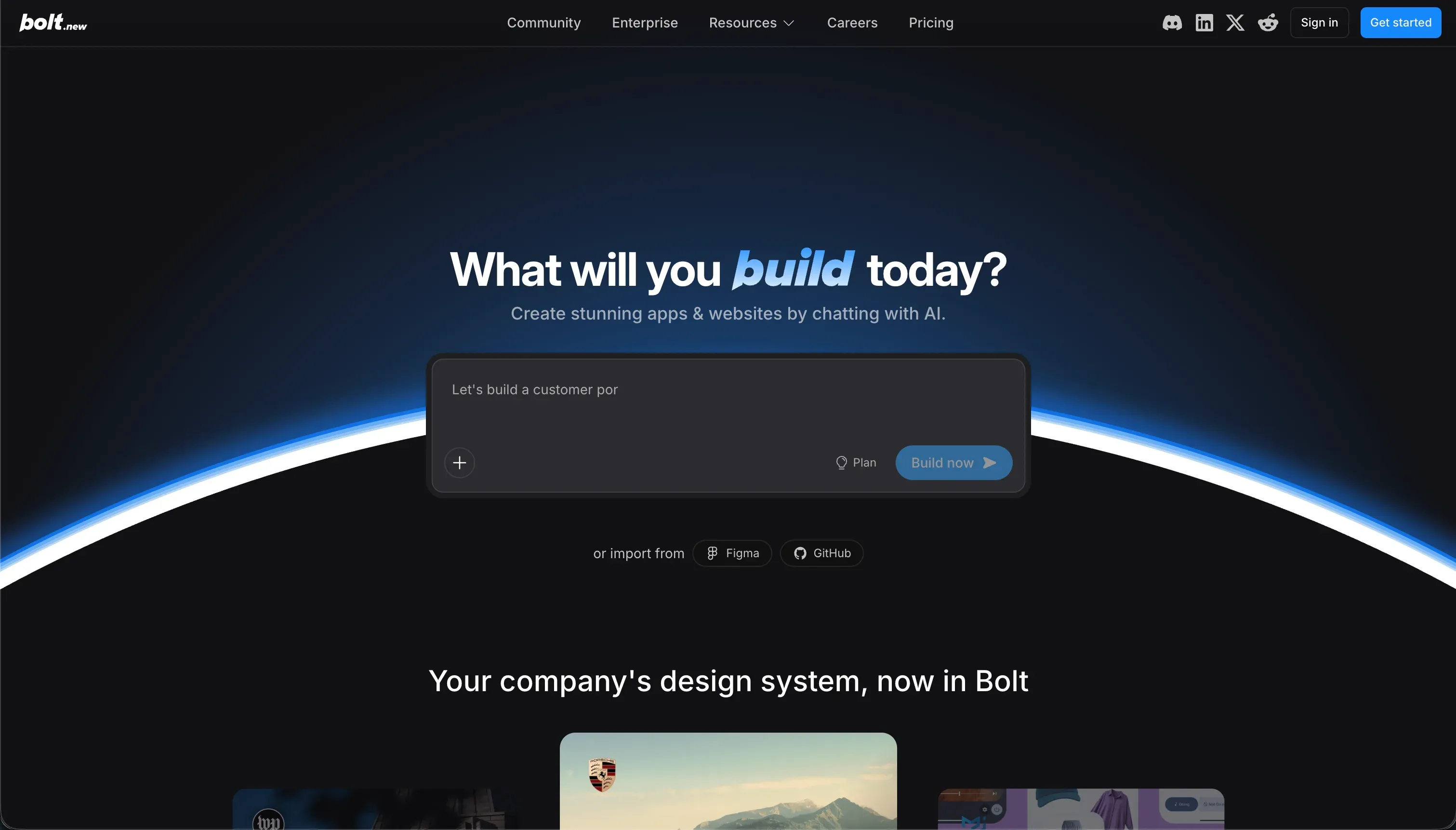
Bolt takes the same AI generation approach but runs a full Node.js development environment in-browser via StackBlitz WebContainers. You get AI scaffolding plus a real IDE: install npm packages, run terminal commands, edit code directly, see a live preview update. For builders who want the AI generation speed of Lovable but also need hands-on control over the technical stack, Bolt’s environment is significantly more flexible. Pricing: Pro at $25/month for 10M tokens - considerably more iteration volume than Lovable’s 100-credit Pro plan at the same price.
If you’re building internal tools your team needs to maintain
Bubble’s power is genuine, but it’s overkill for the most common internal tool category: trackers, directories, approval workflows, team dashboards, CRMs, inventory systems. These apps need to work reliably, be updated by non-developers without IT involvement, and stay within a predictable budget. Bubble’s WU pricing, learning curve, and complexity overhead make it a poor fit for this use case.
Softr
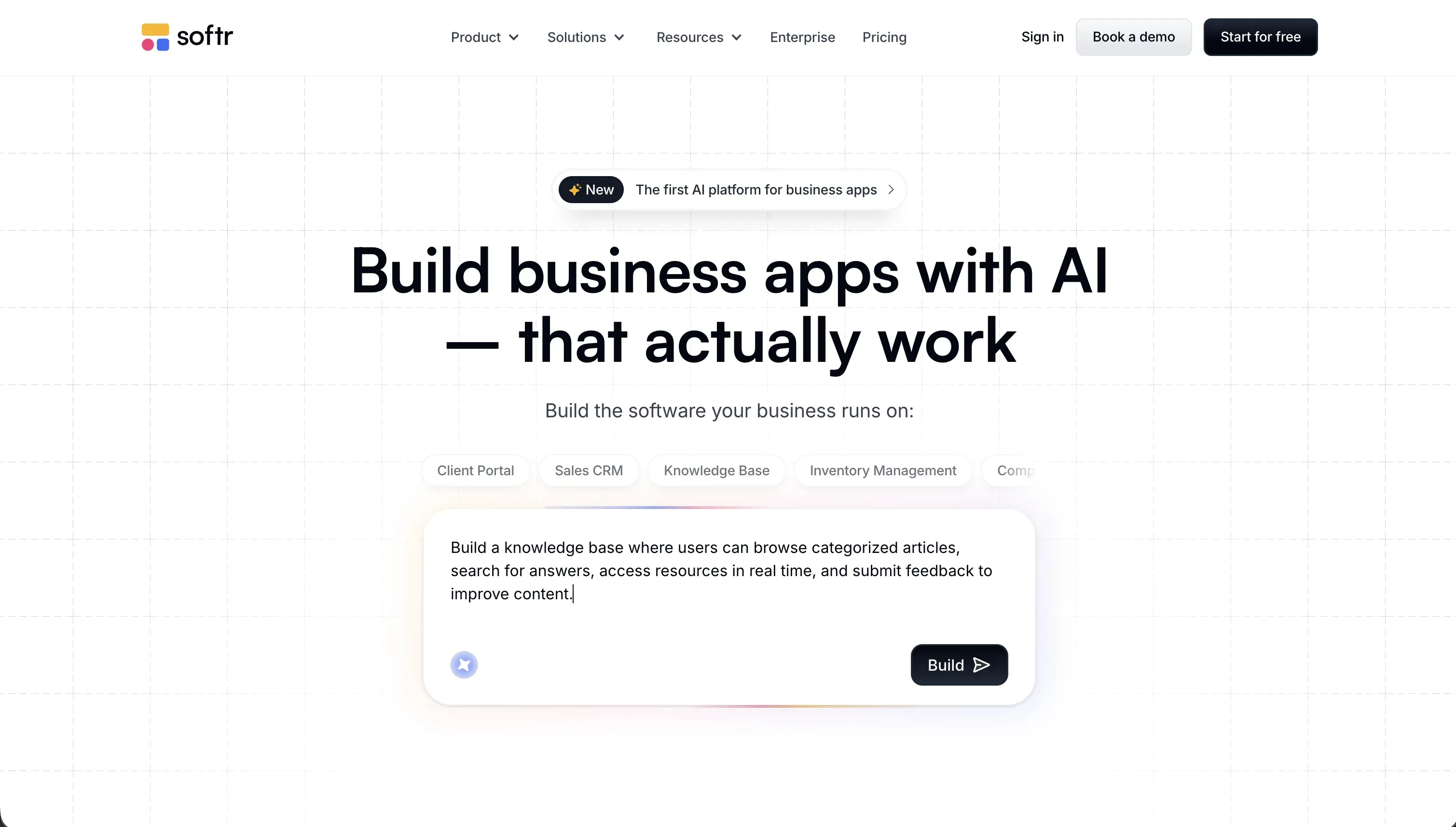
Softr is built specifically for internal business tools. Its AI Co-Builder generates a complete app from a plain-language description - database schema and relationships, pages, UI blocks, user roles, navigation, workflow automations, and permissions - in minutes. The output is a no-code app running on Softr’s platform, not generated code. Your operations manager, HR team, or finance department can update it themselves: add a database field, change who can see a record, modify a page layout, or update an automation - all visually, without prompting AI or waiting for a developer.
The comparison against Bubble on the things that matter most for this use case:
Pricing: Softr is flat-rate per plan. Basic at $19/month (5 Team + 5 Client app users, 50,000 records), Pro at $99/month (10 (to 50) Team + 50 (to 250) Client users, 500,000 records), Business at $329/month (30 (to 100) Team + 100 (to 500) Client users, 1,000,000 records). No WU model, no usage-based server billing. Softr does include AI credits (for the Co-Builder, Vibe Coding block, and AI features in databases and workflows), but the critical difference from Bubble’s WU model is that AI is optional - every feature the AI can build, you can also configure manually in the visual editor. Running low on AI credits never blocks you from maintaining or evolving your app. Unlimited collaborators on all plans.
Time to a working app: Most Softr internal tools ship in hours. Bubble’s learning curve means weeks before most teams feel productive.
Permissions: Softr’s user permissions system is visual and centralized - you define user groups and assign page-level, block-level, and record-level access without writing privacy rules. Bubble’s privacy rules system is powerful but requires significant expertise to configure correctly and is easy to misconfigure.
Maintenance: Non-developers maintain Softr apps directly. Every Bubble change requires someone who understands the platform’s workflow builder - typically either a dedicated Bubble developer or the original builder.
Real-world scale: MIT replaced a $100K custom-coded app with a Softr-built portal serving 2,800+ students, built by one person in three months. Celonis built a searchable GTM knowledge base for 1,500+ team members. THE BOARD replaced four disconnected tools with a single Softr platform managing 270+ members. Over 1 million builders use Softr, including teams at Netflix, Google, Stripe, and UPS.
The honest trade-off: Softr is less flexible than Bubble for highly custom multi-step conditional workflows or pixel-level UI customization. If your internal tool genuinely needs that depth, Bubble or Retool may still be the better call.
Retool
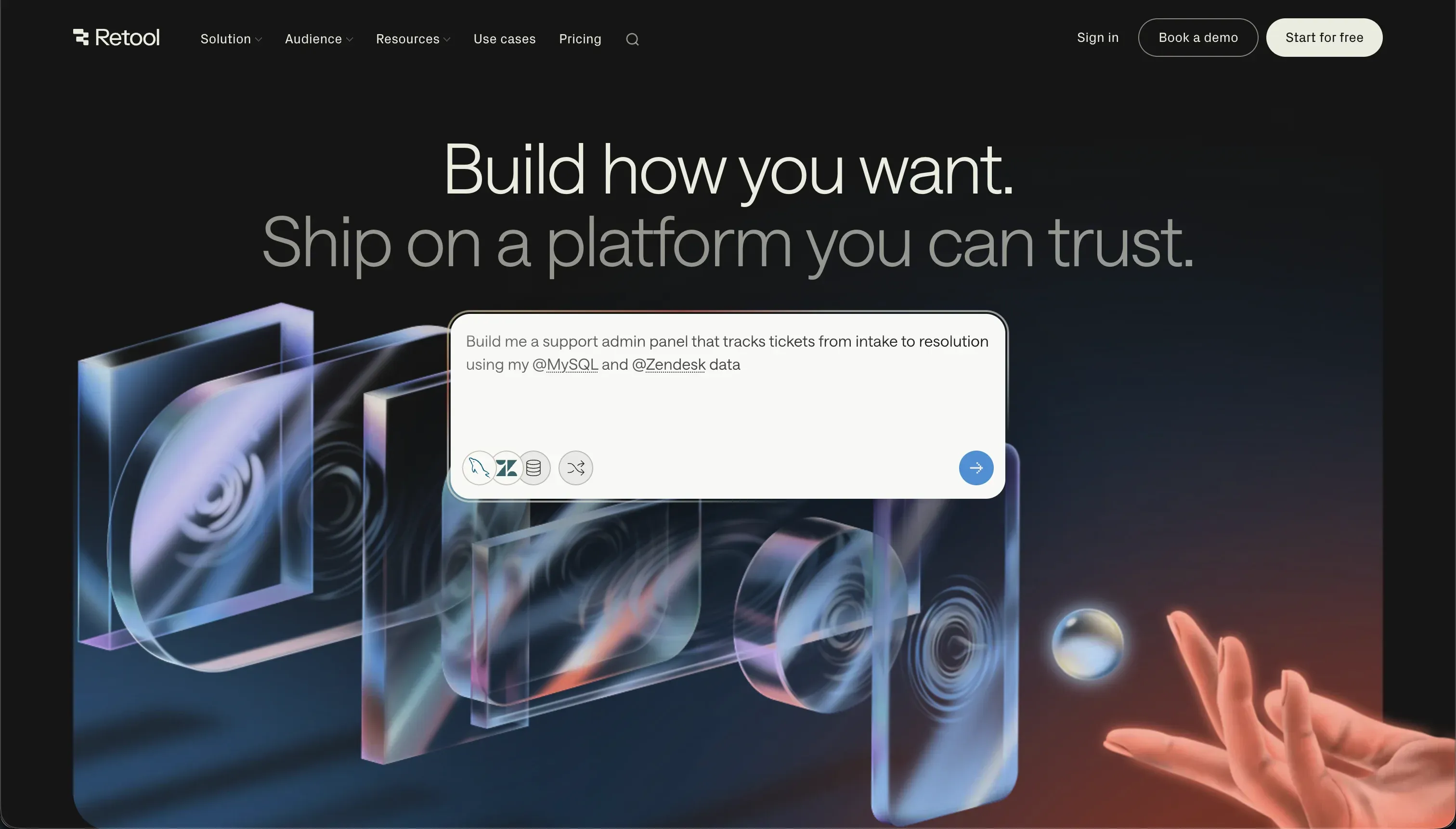
Retool is worth considering for teams that already have a database or API and need a UI layer on top of it. Retool is purpose-built for internal dashboards and data tools - it connects directly to SQL databases, REST APIs, and GraphQL endpoints, and provides a library of 100+ pre-built UI components (tables, charts, forms, JSON editors) optimized for data operations. Compared to Bubble, Retool is significantly faster for the specific use case of querying existing data infrastructure and displaying it in an admin-style interface. The trade-off: Retool is not a true no-code tool - building anything beyond basic layouts requires writing SQL queries and JavaScript. It’s also seat-based pricing at $10/user/month (Team tier, billed monthly), which gets expensive fast for larger internal teams or any external user access.
If you need a developer-friendly headless approach
Some teams want to move away from Bubble’s proprietary environment and back to a standard tech stack they control fully - where they own the database, own the backend, and can deploy anywhere.
WeWeb
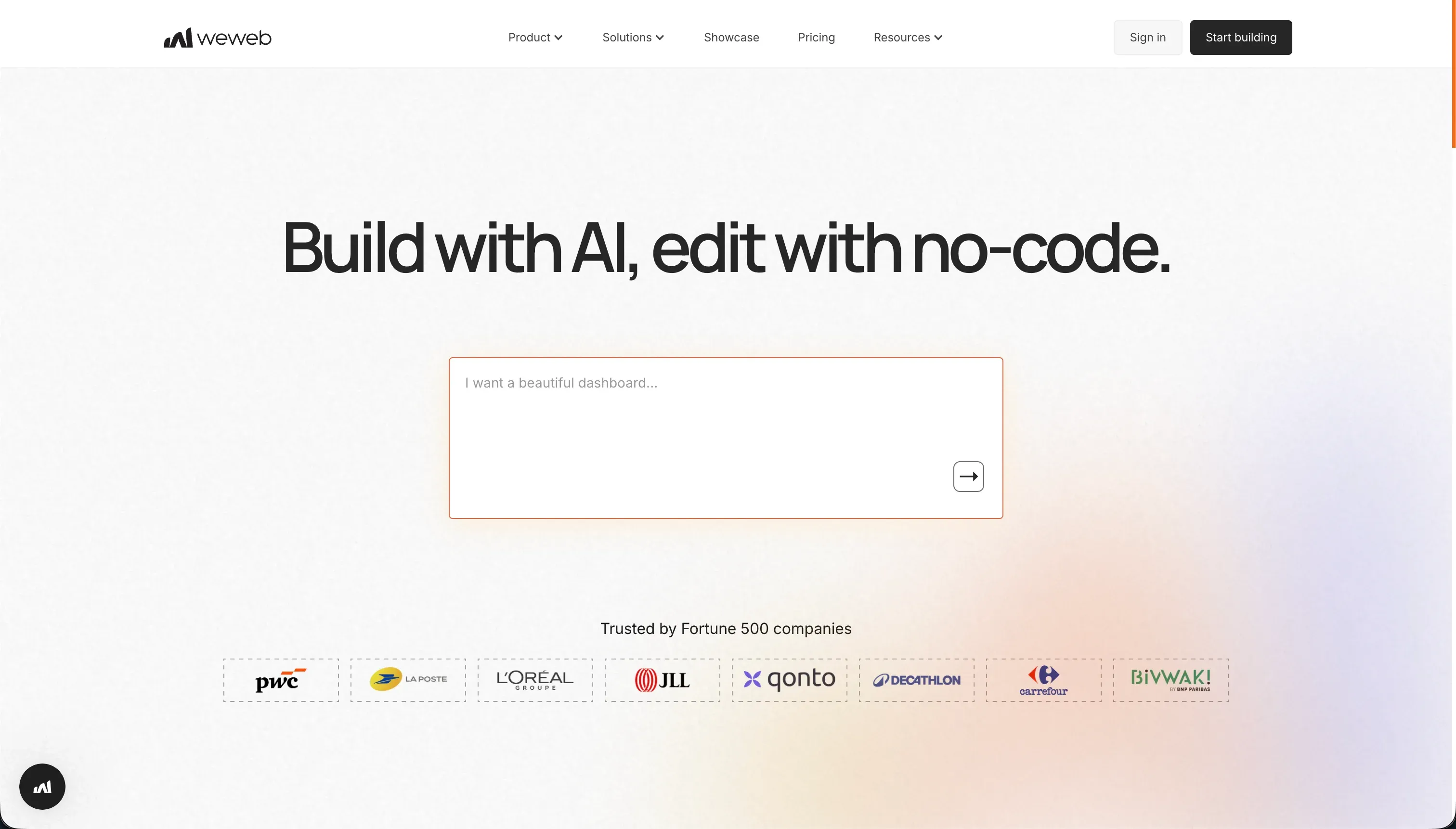
WeWeb is a no-code frontend builder that connects to your own backend - Supabase, Xano, a custom REST API, or any other data source. You get Bubble-level visual control over the UI, but your data lives in infrastructure you own and control. The learning curve is real, but lower than Bubble’s for teams with some technical background. Good for builders who want visual UI construction without Bubble’s proprietary platform lock-in, and who have or can set up their own backend.
Retool
Retool (also covered above) fits here for teams building internal tools on top of existing databases. If you have a PostgreSQL or MySQL database already running in production and need a clean UI layer for your team, Retool’s SQL + component approach is faster than rebuilding in Bubble from scratch.
If you need client portals or external-facing apps where users log in and see their own data
Bubble can build external-facing apps with authenticated user sessions, but the privacy rules required to ensure each user sees only their data are complex, easy to misconfigure, and invisible when wrong. A broken privacy rule in Bubble doesn’t surface an error - it silently returns data it shouldn’t, which you typically discover after launch.
Softr
Softr handles external-facing apps with a permissions model designed to be correct by default and auditable without developer expertise. You define user groups - clients, partners, members, admins - and assign what each group can access: which pages are visible, which database records are returned, which blocks and action buttons appear. Record-level filtering is visual: “this group sees only records where the Client field matches the logged-in user” is a point-and-click configuration, not a SQL query or privacy rule expression.
For specific external use cases Softr covers out of the box without custom code:
- Client portals: clients log in and see their projects, invoices, contracts, and communications only
- Partner dashboards: partners access performance data, shared resources, and collaboration tools scoped to their account
- Member directories: members manage their own profiles and access a directory filtered by membership level
- Vendor portals: vendors submit updates, view order status, and access shared documents for their accounts only
- Customer-facing apps: external users onboard, submit requests, track status, and interact with your team through a branded interface
White-label support means the portal carries your branding, not Softr’s. Native auth pages (login, signup, password reset, and SSO) are included without any custom code. Pricing scales to external users without per-seat charges: 100 Client users (expandable to 500) on the Business plan at $329/month versus Bubble’s WU model where more user activity means higher bills.
If you need native mobile apps for iOS and Android
Bubble has mobile capabilities, but native iOS and Android app store deployment remains a maturing feature. BubbleGo preview exists, but production-ready native apps with full App Store distribution require significant additional configuration. If native mobile is a hard requirement, you need a platform built for it.
FlutterFlow
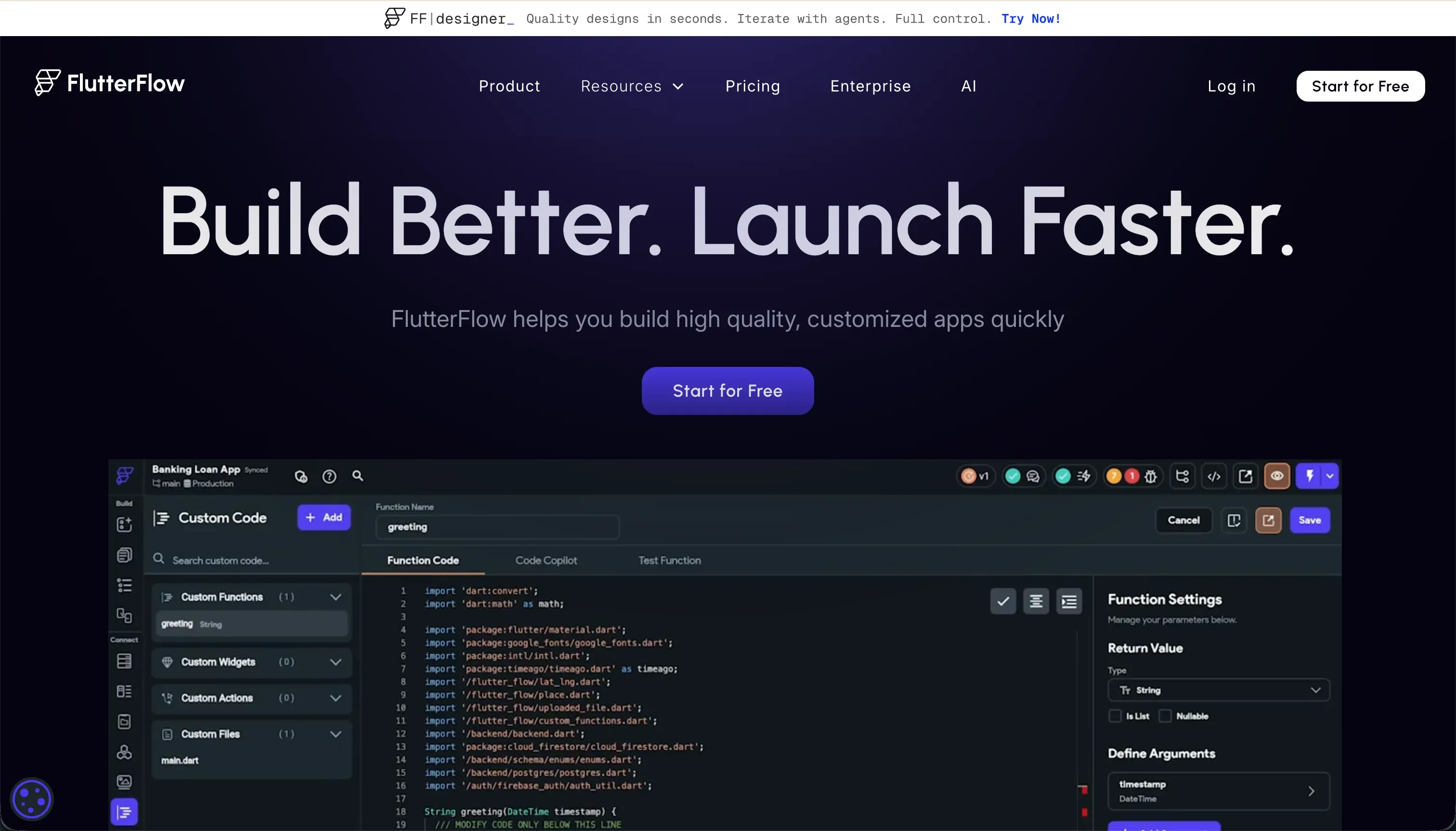
FlutterFlow compiles directly to native Flutter (Dart) apps that deploy to the Google Play Store and Apple App Store. It’s a visual builder - drag-and-drop canvas over a Flutter widget tree - with AI generation for screens and components, direct Firebase and Supabase integration, and full code export. For teams that need real native apps with native performance, FlutterFlow is the strongest no-code/low-code option available. The learning curve is real: FlutterFlow requires understanding Flutter’s layout model (constraints, Rows, Columns, Stacks), state management, and database configuration. Users describe a “hate-love relationship” - faster than coding from scratch, but debugging without error messages and navigating the editor on large projects is genuinely painful. Pro plan at $50/month (billed annually) includes full code export, Git integration, push notifications, and codeless App Store deployment.
Adalo
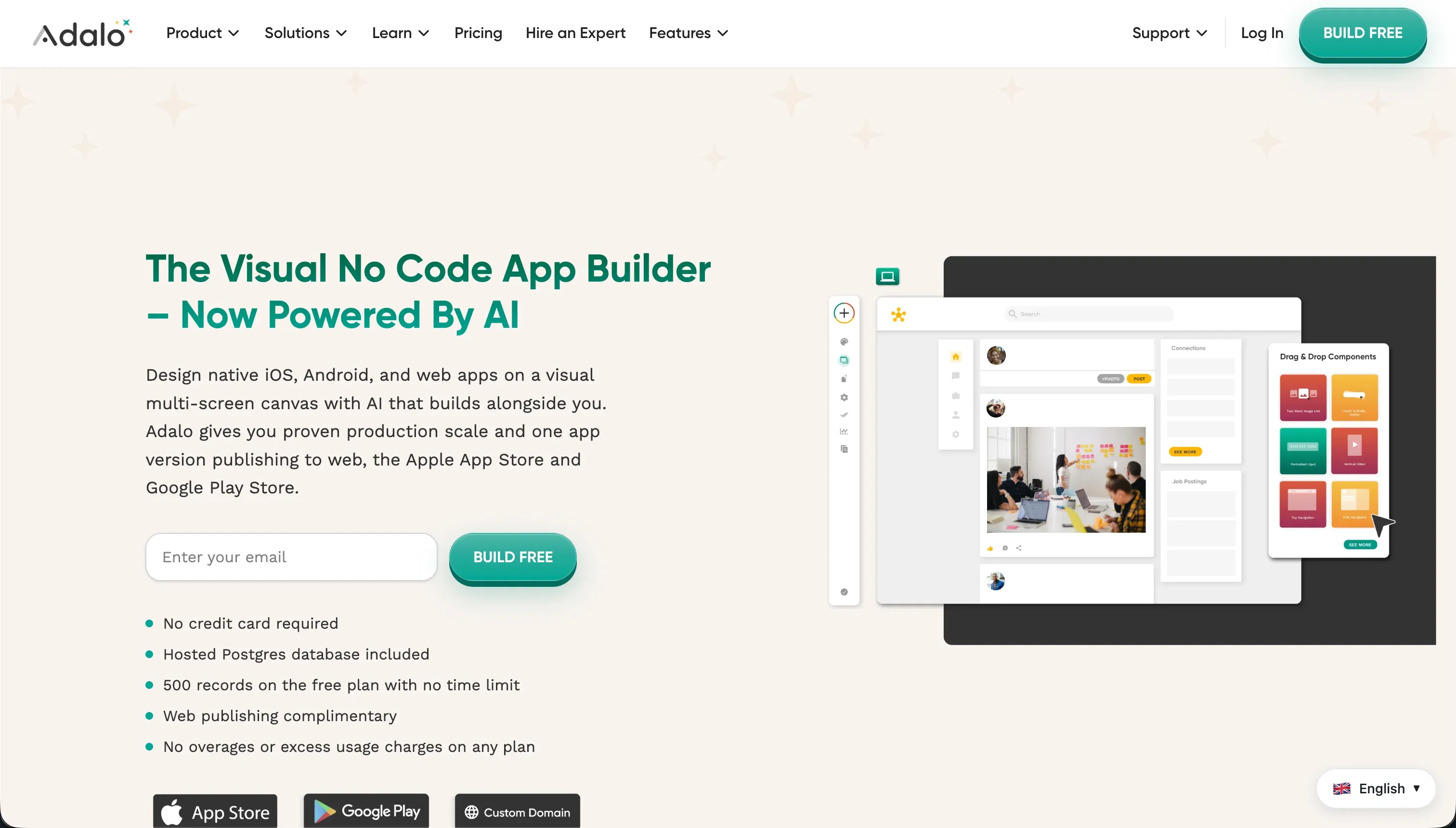
Adalo targets simpler mobile apps with a lower barrier to entry. The canvas editor is more accessible than FlutterFlow, and it supports direct app store publishing. The ceiling is significantly lower: Adalo works for straightforward mobile MVPs and prototypes, but production apps with real scale hit database record limits (30,000 records on the $52/month Professional plan), performance issues, and a weak permissions model. Multiple users report data loss, internal server errors affecting live customers, and support that takes days to respond. Treat Adalo as a prototyping tool, not a production platform.
If your mobile use case is a team-facing internal app rather than a consumer app for the App Store, Softr generates PWAs out of the box - web apps that work on mobile browsers with app-like behavior, saved to the home screen, and accessible to your team without App Store distribution. Not a native app, but sufficient for most internal mobile use cases and available without any additional configuration.

Bottom line
Bubble is the right call when your app genuinely needs its full depth - complex multi-step workflows with advanced conditional logic, custom relational data models, or a specific plugin from the ecosystem. For the majority of business apps, that depth is never used, and you’re paying for it in time (weeks of learning), money (unpredictable WU billing), and platform risk (zero exit path).
For internal tools and operations teams who need something their non-technical colleagues can maintain: Softr, hands down. For client portals and external-facing apps with complex user permissions: Softr. For AI-generated apps where you want to own the code: Lovable or Bolt. For internal dashboards on top of an existing database: Retool. For native iOS and Android: FlutterFlow.
Before you migrate: export your Bubble data now (CSVs for all data types), and honestly map which Bubble features your app actually uses day-to-day. Most Bubble apps rely on a small fraction of its capabilities - and that fraction is well-covered by simpler alternatives at lower cost.
→ Compare Bubble vs Softr in detail - side-by-side on pricing, permissions, and maintenance. → Browse all reviewed tools for the full comparison across AI app builders.
