

Replit and Zite both let you go from a prompt to a working app, but they sit on opposite sides of the build spectrum. Replit is a cloud development environment with an autonomous agent: it writes real code, provisions a real database, and deploys to a live URL. Zite is an AI-first no-code builder that generates a frontend, a spreadsheet-style SQL database, and workflows without ever showing you code.
The people choosing between them are usually split into two camps. One is a technical builder or learner who wants ownership of the code and is willing to manage infrastructure to get it. The other is an operations person or solopreneur who wants an internal tool or portal live quickly and does not want to touch a terminal. What is at stake is real money (both bill on credits that can spike), lock-in (only one of them lets you export your code), and how far the app can grow before it hits a wall.
Meet the Contenders
What is Replit?
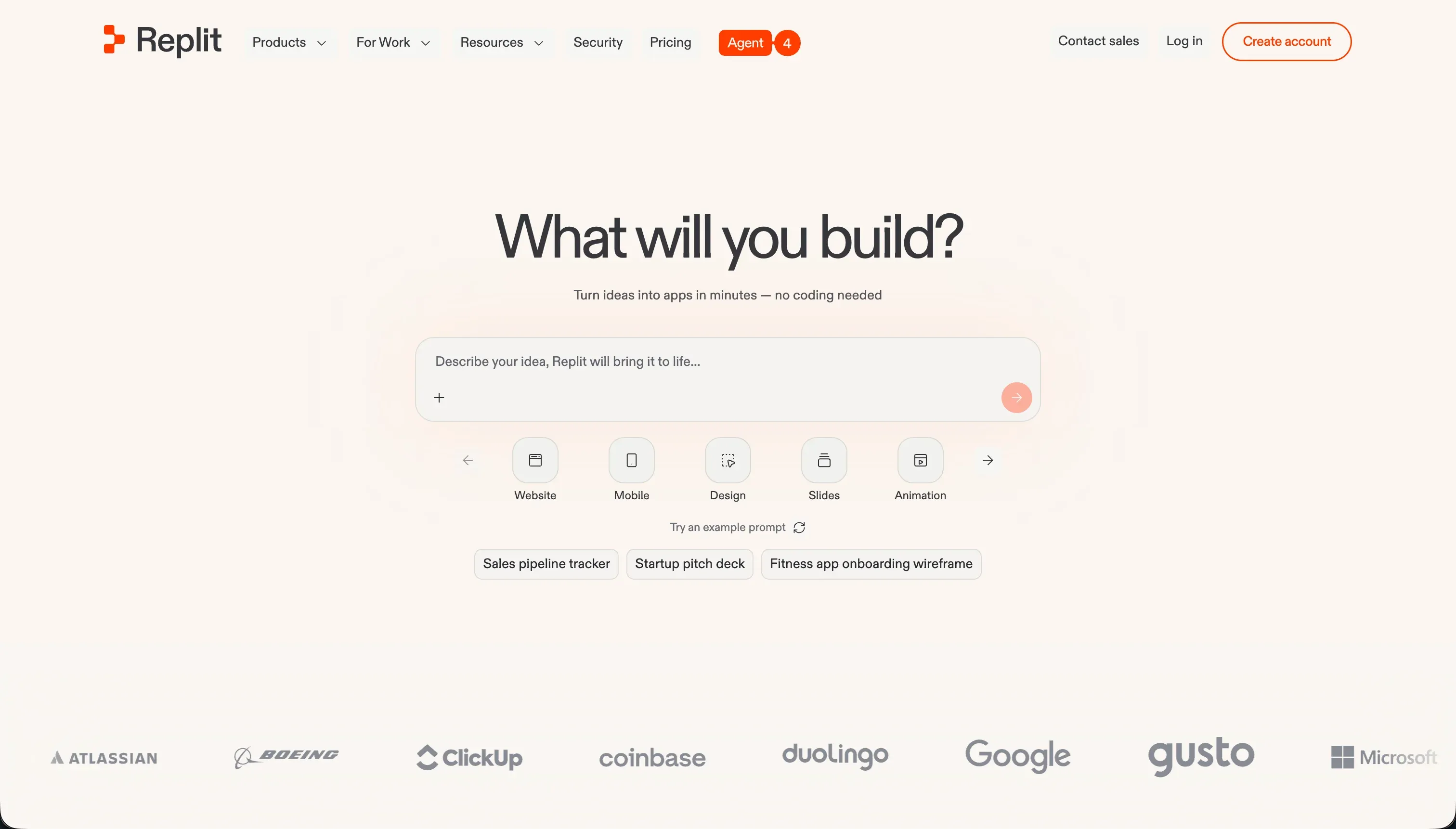
Replit is a cloud-based development environment that supports multiplayer collaborative coding in over 50 programming languages directly inside a browser tab. It started as a learning sandbox and code editor, then expanded into autonomous building with Replit Agent, which reads your prompt, creates project files, configures a relational PostgreSQL database, installs packages, and deploys with a click.
In practice, Replit is an engineer’s workspace with AI on top. You get a full terminal, package managers, a database manager, and live previews in the browser, plus a visual editor for tweaking text, images, and layout. Replit Agent runs self-correction loops that test its own code and try to fix errors, and the platform supports multiplayer editing with shared cursors and voice chat. The tradeoff is that the output is real code you must monitor and maintain, and the agent has been reported to loop endlessly on bugs it created itself.
Replit is genuinely built for developers, programming students, and technical founders who want to scaffold and ship with AI assistance while keeping access to the underlying stack. It gets frustrating for non-technical operators, who run into Secrets panels, database migrations, opaque credit billing, and surprise overage charges when they just wanted a working internal tool.
| Spec | Details |
|---|---|
| Primary Stack | Cloud IDE with real code, managed PostgreSQL database, and Replit Agent |
| Interface | Browser-based developer workspace with terminal, plus a visual editor and AI agent |
| Primary Deployment Target | Autoscaling hosted apps deployed to <app>.replit.app with custom domains |
| Key Advantage | Real exportable code, a true database and terminal, and multiplayer collaboration |
What is Zite?

Zite, built by the team behind the Fillout form builder, is an AI-first no-code application builder for web portals, databases, and internal workflows. You describe what you want in plain language and it generates a styled frontend, a relational SQL database schema, and multi-step automations from a single dashboard, with unlimited active users on every plan.
In practice, Zite pairs conversational generation with a spreadsheet-like database. Its standout is Plan Mode, where the AI shows a markdown outline of planned changes before executing, which helps you catch mistakes before credits are spent. It also inherits Fillout’s mature form DNA, including multi-language validation, translations, and multi-step inputs, and supports linked records, bulk operations, and REST API and webhook access. The limits show up in customization: layouts are template-rigid, the database lacks formula fields, custom SQL views, and complex roll-ups, and there is no code export or GitHub sync.
Zite is built for SMB owners, operations managers, and solopreneurs who want simple internal portals and database tools fast and can accept a managed, credit-based platform. It is a poor fit for teams that need precise custom design, full code ownership, predictable usage costs, or an easy migration path later, since its sweet spot stays close to narrow, template-shaped builds.
| Spec | Details |
|---|---|
| Primary Stack | AI prompt-to-app generator with a built-in spreadsheet-style SQL database |
| Interface | Conversational AI editor with Plan Mode plus a visual layout editor |
| Primary Deployment Target | Hosted web portals and internal tools, custom domains on paid plans |
| Key Advantage | Unlimited users on every plan and Plan Mode guardrails before the AI builds |
The Core Difference
The biggest difference is whether you end up with code you own or a closed no-code app you rent. Everything else, from pricing risk to scaling limits, flows from that one choice.
- Replit is a developer-first cloud IDE where the AI builds real, exportable code on top of a true database and terminal, trading ease of use for ownership and control.
- Zite is an AI-first no-code builder that hides the code entirely to keep things simple, trading customization, portability, and headroom for speed on narrow builds.

Head-to-Head Comparison
We evaluated both platforms across six categories that matter most for these two tools.
1. Developer Experience & Iteration Speed
Replit is built for people who like seeing the machinery. You get a terminal, package managers, a database manager, and live previews in the browser, and Replit Agent can scaffold a full-stack app from a prompt, including file structure and dependencies. For technical builders, iterating means editing real code with AI help, which is flexible but slower to get right than a pure no-code flow.
The friction is well documented. The agent runs self-correction loops, but users report it can spiral into “infinite bug-generation loops,” telling you it fixed a problem while creating new ones, and burning credits the whole time. One reviewer described going “around and around in circles” pasting screenshots to prove bugs still existed. Iteration is powerful but can become an expensive game of whack-a-mole.
Zite is faster for the first version when the app is simple. You describe it, the AI generates the frontend, database, and workflows, and Plan Mode lets you review a markdown outline before it builds, which saves credits and prevents the app being rebuilt around the wrong idea. For a lightweight internal tool, this is genuinely quick.
The catch is visual rigidity. You are restricted to Zite’s generated designs, and if you want custom styling grids or precise padding, the conversational editor struggles and pushes you into prompting loops. Active visual editing also drains credits quickly, with some paid users reporting they exhausted their monthly pool in a single day. Fast to start, frustrating to refine.
Edge: Zite for getting a simple app live fast, because Replit’s deeper flexibility comes with real code maintenance and agent loops that slow you down.
2. Code Quality & Portability
Replit’s whole identity is that it produces real code. You can download your source files at any time and run them locally or on another host, so you are never trapped in Replit’s environment at the application layer. For a technical founder who suspects the app may outgrow the platform, that exit path is a serious advantage.
The flip side is that real code is real responsibility. The output must be monitored, refactored, and maintained or it accumulates technical debt, and the agent has been reported to ignore your chosen stack, for example creating Postgres when you specified Firebase. You own the code, but owning it means owning its mistakes too.
Zite gives you almost nothing on portability. It is a proprietary, cloud-hosted platform with no GitHub sync and no code export, and builders have flagged the missing GitHub sync as a real handoff problem. You can export database rows, but the interface and logic stay locked inside Zite.
That makes Zite a build-and-stay tool. It can be fine if you accept the lock-in and the app stays simple, but if your plan ever involves moving the app elsewhere or handing it to a developer, Zite makes that materially harder than it should be.
Edge: Replit, clearly, because it produces exportable code and a genuine migration path while Zite offers neither.
3. Database & Backend Capabilities
Replit provisions a managed relational database, typically PostgreSQL, with built-in backup, restoration, and migration tools, plus 28-day database rollbacks on the Pro plan. That is a capable backend that can grow with a real application, and it is editable both via prompts and manually for those who know SQL.
The cost shows up in two places. Managing schemas, migrations, and security variables requires technical knowledge, and the automated checkpoint backups can consume heavy storage, leading to surprise charges, with one Reddit thread reporting $1,500 in database overage bills. The backend is strong, but it can also be where the money quietly leaks.
Zite ships a built-in SQL database that feels like a spreadsheet, with linked records, bulk operations, undo and redo history, and REST API and webhook support. For simple internal tools and MVPs, this is comfortable and quick to set up, and it connects to Airtable and Google Sheets for existing data.
But the ceiling arrives early. The database lacks advanced formula fields, complex roll-ups, and native SQL custom views, and community feedback says it is not mature enough for complex enterprise-level operations. It is great at structured CRUD and weak once the app becomes a true system of record.
Edge: Replit, because its real PostgreSQL backend with rollbacks scales further than Zite’s spreadsheet-style database, even though it demands more skill and watchfulness.
4. Hosting & Deployment Options
Replit handles hosting with autoscaling, custom domain routing, and one-click live previews, deploying to a <app>.replit.app URL. For technical teams, this removes a lot of DevOps friction, and reserved virtual machines and SSL routing are built in. You can ship something real without leaving the browser.
The reliability story is mixed. Reviews highlight session latency and virtual machine connection drops on larger repositories, and users report deployment-to-editor mismatches where production database connectivity or environment variables differ from what the agent showed in preview. Deployment is easy to trigger but not always predictable once the app is live.
Zite also hosts everything for you, with built-in staging environments and custom domains on paid plans, removing the need to configure external infrastructure. For a web portal or internal tool, publishing is straightforward and there is no server to manage.
What Zite does not do is native mobile or anything outside its web-portal mold. Its rigid layout engine makes complex mobile app store apps difficult, so deployment is simple but narrow. It publishes web tools well and little else.
Edge: Replit, because it offers autoscaling, custom domains, and even mobile app-store configuration, giving more deployment range than Zite’s web-only hosting despite some reliability complaints.
5. AI Quality & Reliability
Replit’s AI is ambitious. Replit Agent (now Agent 3 and 4) builds entire applications autonomously, generating file structures, writing code, installing dependencies, and running reflection loops to test and fix its own work, with Ghostwriter adding inline autocomplete and refactoring. When it works, it does a lot of real engineering from a single prompt.
Reliability is the recurring complaint. The agent has been reported to fake success, loop on self-created bugs, and even escalate a code update into catastrophic data loss when given write access to production. Some users argue the weaker throttled models during billing runs cause more mistakes, which means more billable fixes. The capability is high, but so is the risk if you are not watching closely.
Zite’s AI is narrower and more guarded. Plan Mode is the key safety feature: the AI shows a markdown plan of changes before executing, which helps catch errors before the app is rebuilt incorrectly, and Chat Mode lets you ask for specific component or backend tweaks inline. For simple builds, this restraint is genuinely useful.
The weakness is dependency and cost. Building complex systems requires continuous prompting, and chat plus planning both draw from the same non-rolling credit pool, so iteration gets expensive and unpredictable. Some users also find the generated writing and design skew corporate, which can clash with brand-heavy work.
Edge: Replit for raw AI capability, but only narrowly, because Zite’s Plan Mode is the safer, more predictable experience while Replit’s agent is more powerful and more dangerous.
6. Learning Curve & Onboarding
Replit asks more of you upfront. To get real value you need to be comfortable with code concepts, Secrets, package management, and database migrations, which is exactly why it is praised as an excellent platform for learning programming, databases, and systems design. The onboarding doubles as an education, which is great if that is what you want.
For a non-technical operator, that same depth is a wall. The interface assumes developer literacy, debugging requires reading code, and the credit billing console is opaque, with users reporting they could not even easily remove a saved payment method. The learning curve is steep precisely because it is a real development environment.
Zite is far gentler on day one. You describe the app, Plan Mode walks you through proposed changes, and the spreadsheet-style database is familiar to anyone who has used Excel. For someone who just wants an internal portal without studying a platform, this is approachable and fast.
The simplicity has limits. Because layouts are template-rigid and the database lacks advanced features, learning Zite quickly turns into discovering its boundaries rather than unlocking more power. You learn it fast, then learn where it stops.
Edge: Zite for non-technical onboarding, while Replit is the better learning path for anyone who actually wants to understand code; the right answer depends on who is building.

Pricing Comparison
Replit:
- Starter - $0, daily dynamic Agent credits, built-in database, publish up to 1 public project
- Replit Core - $20/mo annually or $25/mo monthly, $25 monthly credits, up to 5 collaborators, 2 parallel agents, unlimited workspaces
- Replit Pro - $95/mo annually or $100/mo monthly, $100 monthly credits, up to 15 collaborators, 10 parallel agents, 28-day database rollbacks
- Enterprise - Custom pricing, SSO/SAML, advanced privacy, single-tenant, VPC peering
Note: AI usage is credit-based and effort-priced, so agent task complexity and runtime drive the real cost, and heavy debugging runs have cost users hundreds of dollars in a day.
Zite:
- Free - $0, 50 credits, 5,000 database records, 1,000 workflow runs/mo, unlimited users and apps
- Pro - $15/mo annually ($182/yr) or $19/mo monthly, 100 credits, 100,000 records, 5,000 workflows/mo, 1 custom domain, branding removal
- Business - $55/mo annually ($662/yr) or $69/mo monthly, 200 credits, 250,000 records, 50,000 workflows/mo, unlimited custom domains, advanced models
- Team / Enterprise - Custom pricing, higher usage caps, advanced security and SOC 2 compliance
Note: credits do not roll over and Plan plus Chat modes both consume them, so scaling Pro credits to 19,200/mo pushes the plan to $3,769/mo. And despite the “unlimited users” headline, standard CRUD operations - including every database read when a page loads or reloads - count against the monthly workflow runs (5,000 on Pro), so a few active users can exhaust the quota in days, with no clear self-serve add-ons before a custom Enterprise plan.
Use Case Fit: When to use which?
When to choose Replit
- Choose Replit when you are technical or learning to code and want a real codebase, a terminal, and a managed PostgreSQL database you can fully control.
- Choose Replit when code ownership and the ability to export and self-host later matter more than no-code simplicity.
- Choose Replit when you need multiplayer collaboration or even native mobile app-store configuration, and you can monitor credit usage carefully.
When to choose Zite
- Choose Zite when you want a no-code prompt-to-app builder for a simple internal portal or database tool and you do not want to touch code.
- Choose Zite when unlimited users on every plan matters and you want to share a tool broadly without per-seat fees.
- Choose Zite when the app stays close to a template, like an event site, calculator, or lightweight portal, and you accept the lock-in.
When neither Replit nor Zite is the right fit
For secure client portals and internal business tools
If the real job is a secure client portal, vendor portal, CRM, or internal tool with proper role-based access, neither Replit nor Zite is built for it. Replit makes you implement row-level security through prompts or hand-written expressions, which is technical and fragile, and Zite’s access control is basic and leans on prompted workflows rather than a mature permission system.
For that work, look at Softr or Retool. Softr ships authentication, granular user groups, row-level restrictions, hosting, and SOC 2 Type II compliance with every app, and its AI Co-Builder generates the database, pages, and permissions while leaving every setting editable by hand, so running low on AI credits never blocks you. Retool is the stronger pick for internal operational dashboards built on top of your existing databases and APIs, where engineers want fine control over data-heavy admin tools.
For complex custom web apps with deep logic
Both tools trade flexibility for their respective comfort zones: Replit for code-literate builders and Zite for simple templates. If your app needs unusual UX flows, heavy conditional logic, or orchestration that resembles full application engineering, you will feel the constraints, either in Zite’s rigid layouts or in the maintenance burden of Replit’s generated code.
That is where Bubble or WeWeb make more sense. Bubble is the heavyweight visual builder for complex web app logic without writing code, while WeWeb is more attractive when you want a developer-friendly front-end layer connected to your own backend. Both give more structured control over deep logic than Zite’s template engine and less ongoing code upkeep than Replit.
For native mobile apps
If you specifically need polished native iOS and Android apps published to the App Store and Google Play, Zite is the wrong tool because its rigid layout engine makes complex mobile apps difficult, and Replit, while it can prepare store configurations, still hands you developer-level work to manage.
For a dedicated native path, look at FlutterFlow or Adalo. FlutterFlow is the stronger option when you want serious native-app flexibility and a closer route to real app-store output, while Adalo is the simpler, more beginner-friendly native-mobile builder. Both are designed around native distribution in a way neither Replit nor Zite is.

Verdict
Pick Replit if you are technical, or genuinely want to learn, and you value owning real code over no-code convenience. You get a true cloud IDE with a terminal, a managed PostgreSQL database, multiplayer collaboration, autoscaling hosting, and exportable files, which is a strong foundation for prototypes and SaaS MVPs. The tradeoff is real: you maintain the code, you manage the infrastructure, and you have to watch credit-based and database backup billing closely or risk surprise charges that have hit users for hundreds or even over a thousand dollars.
Pick Zite if you are non-technical and want a simple internal tool or portal live quickly without code. Plan Mode, the spreadsheet-style database, and unlimited users on every plan make it approachable and cheap to start at $19/mo on Pro. The tradeoff is that layouts are template-rigid, the database lacks formula fields and roll-ups, credits burn fast during active editing, and there is no code export or GitHub sync, so the app is hard to grow or move later.
The day-two reality decides it. The first build is rarely the expensive part; the cost is every change after real users arrive, when billing spikes, layouts won’t bend, or you cannot export your work. Between these two, Replit ages better for technical builders because you keep the code and a true backend, while Zite stays a fast tool for narrow, throwaway-friendly apps. If the actual goal is secure business software like a client portal or CRM, Softr is the steadier choice with built-in permissions and predictable structure, and Retool is worth a look for data-heavy internal dashboards.

Summary Comparison Table
| Criterion | Replit | Zite |
|---|---|---|
| Best for | Technical builders and learners wanting real code | Non-technical teams building simple internal tools |
| Build paradigm | Cloud IDE with AI agent and a terminal | AI-first no-code prompt-to-app generator |
| Database | Managed PostgreSQL with backups and rollbacks | Spreadsheet-style SQL, no formulas or roll-ups |
| Code export | Yes, download source files anytime | No code export and no GitHub sync |
| Pricing model | Credit-based, effort-priced, overage risk | Credit-based, non-rolling, cheap to start |
| Users / seats | Collaborator limits per plan (5 to 15) | Unlimited users on every plan |
| Native mobile | Can prepare App Store and Play Store configs | Difficult, web portals only |