

VibeCode and Lovable look similar from a distance because both sell AI scaffolding from plain-English prompts, but they are aimed at different outputs. VibeCode is a mobile-first native app builder, while Lovable is a web-first full-stack code generator built around React, Node, and Supabase. The real choice is not just which AI feels smarter on day one, but whether you are shipping to app stores or shipping a browser app.
The people actually deciding between these two are usually founders, indie makers, and small product teams trying to buy speed without buying six months of cleanup later. What is at stake is not only first-build speed, but also credit burn, backend control, code portability, and how painful iteration becomes once the app is no longer a toy. If you pick the wrong category here, you can waste weeks forcing a mobile tool into web work or a web tool into mobile work.
Meet the Contenders
What is VibeCode?
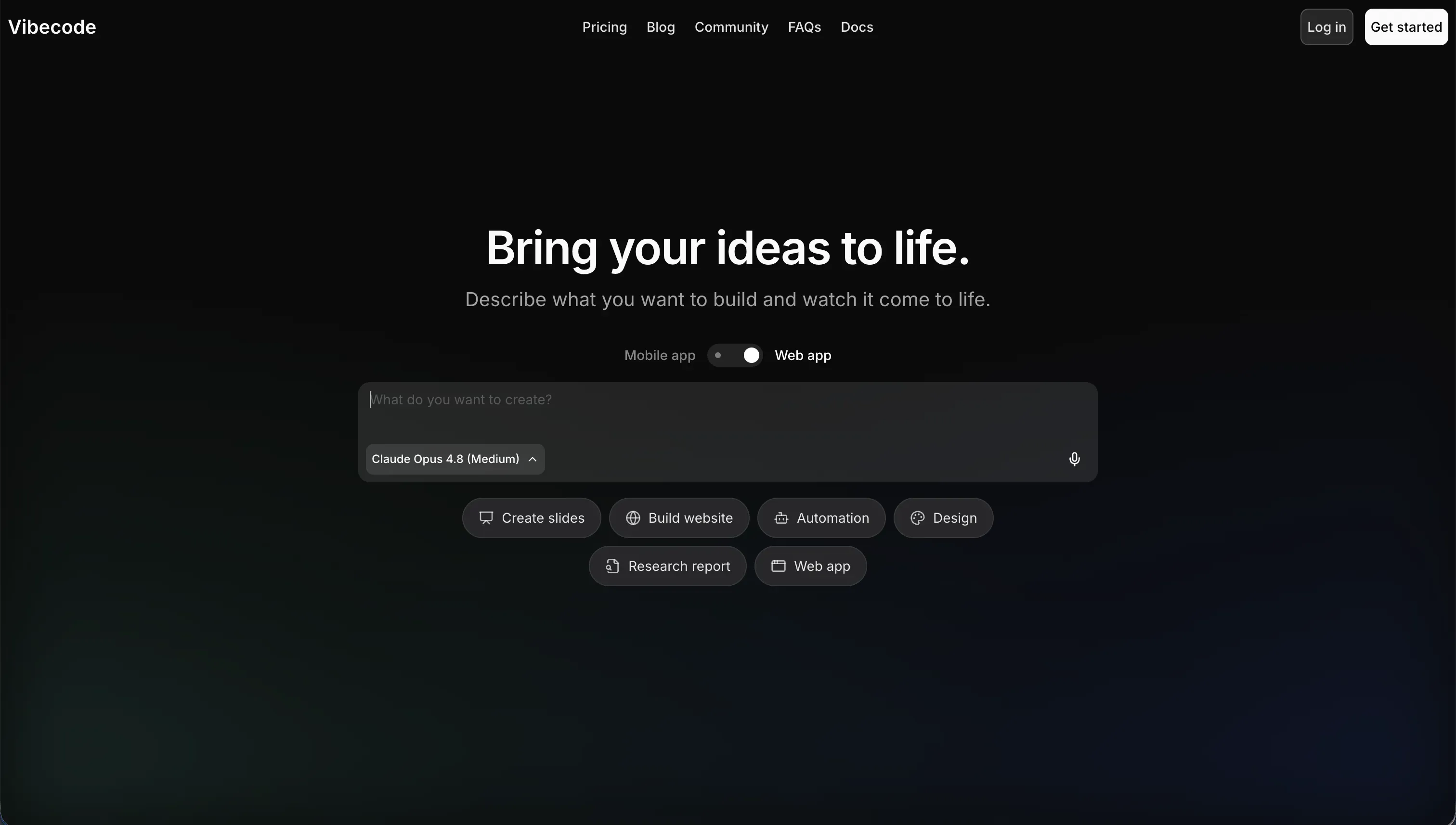
VibeCode is an AI-powered mobile-first builder for creating native iOS and Android apps from prompts. It sits squarely in the vibe-coding camp, but unlike most prompt builders, its center of gravity is mobile rather than web.
In practice, you describe features in natural language, and VibeCode provisions the app, backend database, authentication, cloud storage, and mobile UI flow. Paid plans add direct app-store deployment, while the Pro and Max tiers add full code export and SSH access so you can keep working in tools like VS Code or Cursor. It also supports API integrations using the same credit pool, which is convenient but means feature building and external calls compete for the same budget.
It is genuinely built for mobile MVP builders, indie app creators, and developers who want to spin up native prototypes fast without touching Swift, Kotlin, or React Native first. The people who get frustrated are the ones who assume prompt-based generation will keep scaling cleanly into complex app logic, because even VibeCode’s own weak spots are the usual vibe-coding ones: context loss, code mess, and a complexity wall once the app grows up.
| Spec | Details |
|---|---|
| Primary Stack | AI-generated native mobile app stack with built-in backend, auth, and cloud storage via VibeCode Cloud |
| Interface | Conversational prompt builder optimized for mobile app creation |
| Primary Deployment Target | Native iOS and Android apps, including direct app-store deployment on paid plans |
| Key Advantage | True mobile-first workflow with native publishing instead of web-only output |
What is Lovable?
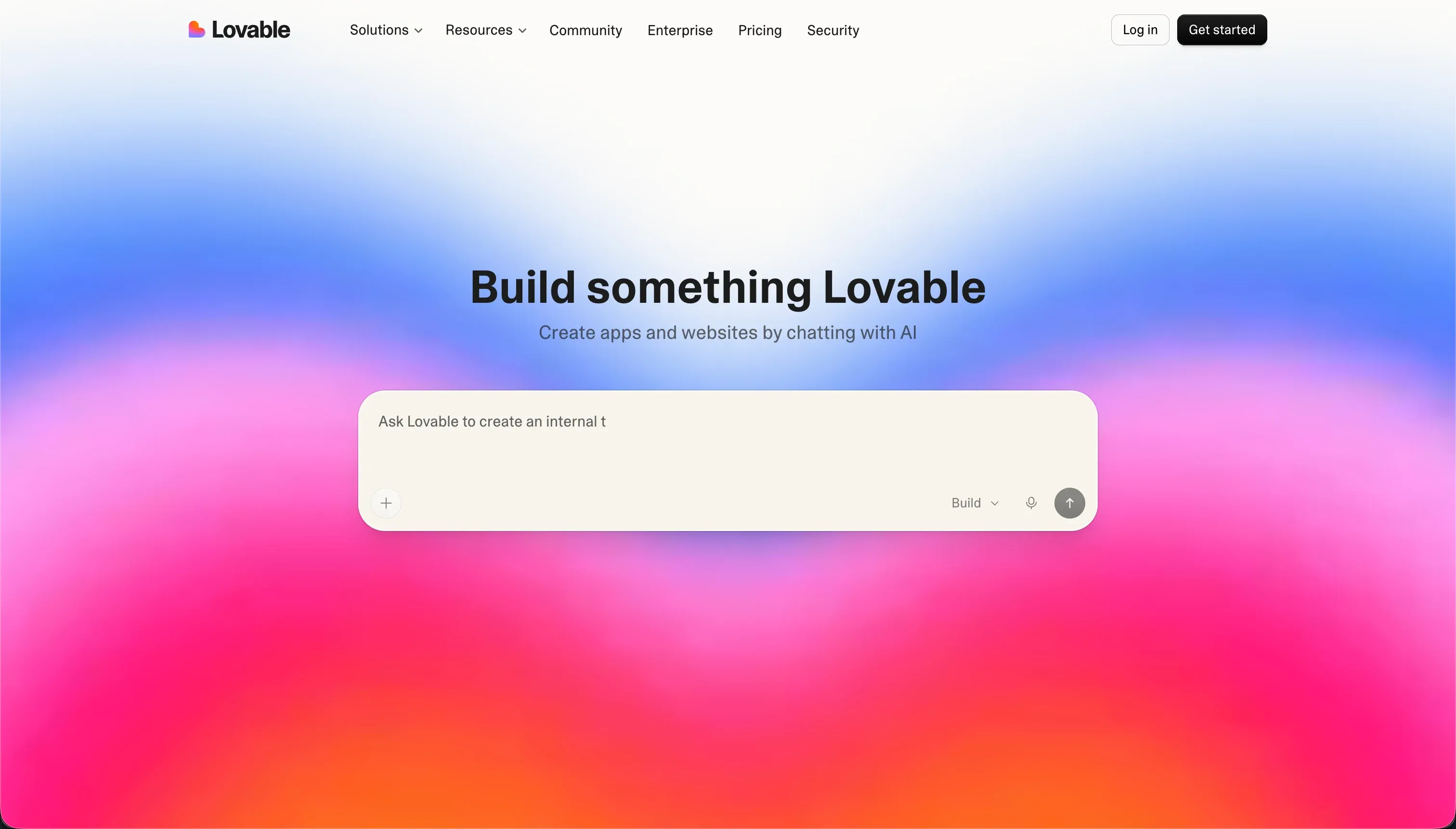
Lovable is an AI-powered full-stack web app builder that turns prompts into React frontends, Node.js backends, and Supabase databases. It is one of the clearer examples of AI code generation aimed at SaaS MVPs rather than no-code business software.
In practice, you chat with the builder, let it generate the stack, then keep iterating by conversation as it changes layout, code, database schema, and API integrations across multiple files. Lovable also leans hard into developer-adjacent features like GitHub sync, Figma import, context connectors for tools like Notion and Jira, and one-click deployment through Lovable Cloud. The tradeoff is that security and backend structure often still depend on what the model generated, especially around Supabase RLS and database setup.
It is genuinely built for founders, product teams, and developers who want a web app prototype online fast and may later hand the codebase to engineers. The people who get burned are non-technical users who mistake quick generation for production readiness, because user complaints keep circling back to credit-heavy debug loops, regression issues, and the final 30 percent of business logic being much harder than the first 70 percent.
| Spec | Details |
|---|---|
| Primary Stack | React frontend, Node.js backend, and Supabase database generated from prompts |
| Interface | Conversational AI builder with code-aware multi-file editing and visual theming tools |
| Primary Deployment Target | Hosted web applications via Lovable Cloud with staging URLs and custom domains on paid plans |
| Key Advantage | Fast full-stack web scaffolding with GitHub sync and developer-friendly output |
The Core Difference
The biggest gap is not model quality. It is deployment target and maintenance model: VibeCode is trying to get you to native mobile, while Lovable is trying to get you to a full-stack web app with exportable code.
- VibeCode runs as a mobile-first AI scaffolding tool that prioritizes native app generation, app-store deployment, and higher-tier escape hatches like code export and SSH.
- Lovable runs as a web-first full-stack code generator that moves fast on React and Supabase, but keeps you in prompt loops longer when the app needs careful fixes.

Head-to-Head Comparison
We evaluated both platforms across four core categories.
1. Developer Experience & Iteration Speed
VibeCode is straightforward in the first session because its scope is narrow: make a mobile app, preview it in a phone-shaped workflow, and keep prompting. That focus helps compared with broader AI builders, and features like built-in backend setup and direct deployment reduce the usual setup tax for mobile MVPs.
The catch is that prompt-driven iteration still inherits the classic vibe-coding failure mode. Once you push into custom logic, native device behavior, or more complicated authentication patterns, the research points to context loss and logic breaks. So yes, it is fast to start, but speed falls off when the mobile app stops being simple.
Lovable is also fast initially, and for many people it feels even faster because web feedback loops are simpler than mobile deployment loops. Prompt a feature, let Lovable make multi-file changes, deploy to a staging URL, repeat. For landing pages, dashboards, and early SaaS shells, that feels legitimately productive.
The problem is what users keep reporting after the honeymoon phase: regression loops, bug fixes that claim to be complete but are not, and repeated credit burn while patching the same issue. Several public complaints describe spending 3 to 4 credits per prompt where earlier usage was closer to 1.2, which turns iteration from fun into meter-watching.
Edge: VibeCode, because both rely on prompts, but VibeCode’s narrower mobile-first scope creates less day-one sprawl than Lovable’s broader full-stack web ambitions.
2. Code Quality & Portability
VibeCode’s portability story is decent, but only if you pay enough. Pro at $50 per month adds code export and SSH access, and Max at $200 per month keeps those escape hatches while raising deployment limits. That means a technical team can start with AI and later move into a real editor.
The downside is that lower tiers do not get that flexibility, so Free and Plus users are much more locked into the hosted workflow. There is also no claim here that exported code is magically elegant at scale. The known weakness is still AI-generated complexity and context drift in larger apps.
Lovable has the stronger portability story on paper for web apps because GitHub sync is available even on the free plan, and its whole pitch includes generating readable React and TypeScript rather than trapping you in proprietary blocks. If your plan is ‘prototype here, clean it up in-house later,’ Lovable clearly leans into that use case.
But portability is not the same as cleanliness. Public feedback repeatedly says the exported code is not always pleasant to scale, and some reviewers recommend treating the output as a visual starting point rather than a codebase you’d proudly keep forever. So Lovable wins the export argument, but not necessarily the maintainable-code argument.
Edge: Lovable, because GitHub sync and standard web code are a better exit path than VibeCode’s higher-tier-only export model.
3. Database & Backend Capabilities
VibeCode includes a built-in backend database, authentication, and cloud storage, which is exactly what a mobile MVP builder wants to hear. It removes the need to stitch together Firebase, auth, and deployment before you can even test a native flow.
Still, the backend story looks convenience-first rather than deeply controllable. The research flags problems once apps need custom data pipelines, more complex auth patterns, or heavy native integrations. That is fine for lightweight utilities, but it is not a reassuring answer for intricate production logic.
Lovable’s backend story is more powerful in theory because Supabase gives you PostgreSQL, auth, and real-time sync out of the box. For technical founders, that is attractive because you are at least working with a known stack instead of a fully opaque proprietary backend.
The weakness is the operational overhead. Supabase RLS, triggers, and schema security still require real understanding, and Lovable often expects the AI to draft that structure correctly. That is why so much user criticism centers on database lock-in fears, awkward migrations, and the sense that backend control becomes murky once Lovable Cloud gets involved.
Edge: Lovable, because Supabase is the more capable backend foundation, even if it also demands more technical supervision.
4. Hosting & Deployment Options
This is where VibeCode has its most obvious strategic advantage. Paid plans support direct publishing to the Apple App Store and Google Play, which is a completely different promise from the average web AI builder. Plus supports 1 active deployment, Pro supports 3, and Max supports 5.
The tradeoff is that app-store deployment raises the stakes for quality. Native apps have store review, mobile performance expectations, and device-specific edge cases. If the AI introduces brittle behavior, the fact that VibeCode can ship to stores is helpful, but it does not make the shipped app automatically durable.
Lovable keeps deployment easy in the web sense. You get one-click production deploys via Lovable Cloud, staging URLs, and custom domains on paid plans, which is perfect for getting a web MVP in front of users quickly.
But it is still a browser-app deployment story, not a native distribution story. If your requirement is app-store presence, mobile install funnels, or native mobile UX, Lovable simply is not the right category. It can make responsive web experiences, but that is not the same thing.
Edge: VibeCode, because native app-store deployment is a real capability gap that Lovable does not cover.
5. AI Quality & Reliability
VibeCode’s AI is attractive precisely because it narrows the task to mobile app generation. That helps it avoid some of the broader stack chaos you get in more open-ended tools, and the no-markup credit model is refreshingly honest compared with many AI builders.
But honest pricing does not remove reliability risk. The research still highlights code hallucinations, logic breaks, and context loss in larger codebases. So the AI quality story is solid for fast mobile prototyping, not for assuming you can prompt your way through every future complexity spike.
Lovable can feel more impressive in demos because it generates the whole web stack, handles layout tweaks conversationally, and includes pre-publish security scans. It also supports connectors like Linear, Notion, Jira, and Miro, which makes the workflow feel more agentic and context-aware.
Reliability is where the shine wears off. Public complaints describe failed regression handling, bug-fix loops that consume credits, and preview-to-production mismatches. Lovable may generate more ambitious apps than VibeCode, but that wider ambition also creates more ways for the AI to be confidently wrong.
Edge: VibeCode, because neither tool fully solves AI regression risk, but Lovable has a louder pattern of credit-draining bug loops and false-fix behavior.
6. Learning Curve & Onboarding
VibeCode is easier to explain to beginners: describe your mobile app and let the system build it. The pricing is also unusually transparent, with $1 in credits equaling $1 in raw AI usage, which makes experimentation feel less like hidden billing roulette.
That said, simple onboarding is not the same as simple long-term ownership. Once the app crosses into custom mobile logic, lower-tier users also hit lock-in because code export and SSH only appear on Pro and Max. Beginners can start easily, then discover that serious maintenance still wants developer judgment.
Lovable is easy to get started with if you already understand modern web app concepts like React, Supabase, and deployment. The free plan offers 5 daily credits up to 50 per month, plus GitHub sync, which is a generous way to test the product without paying first.
For non-technical users, though, the learning curve is sneakier. Lovable often feels simple until responsive layout issues, database policy questions, or broken prompts show up. At that point you are no longer just describing software, you are supervising generated code, which is a much higher-skill job than the landing page implies.
Edge: VibeCode, because its narrower mobile-first brief is easier for true beginners to grasp, while Lovable quietly assumes more web-stack literacy.

Pricing Comparison
VibeCode:
- Free - $0/month with $2.50 included credits and access to premium AI models.
- Plus - $20/month with $20 included credits and 1 active deployment.
- Pro - $50/month with $55 included credits, 3 active deployments, code export, and SSH access.
- Max - $200/month with $220 included credits and 5 active deployments.
Lovable:
- Free - $0 with 5 daily credits, up to 50 per month, and public projects.
- Pro - starts at 25€/month with 100 monthly credits.
- Business - starts at 50€/month with 100 monthly credits.
- Enterprise - custom pricing.
- Pro credit scaling examples - 200 credits for 50€/month, 400 for 100€/month, 800 for 200€/month, 1,200 for 294€/month, 2,000 for 480€/month, and 10,000 for 2,250€/month.
- Business credit scaling examples - 200 credits for 100€/month, 400 for 200€/month, 800 for 400€/month, with the 10,000-credit tier at 4,300€/month.
Use Case Fit: When to use which?
When to choose VibeCode
- Choose VibeCode when your actual deliverable is a native iOS or Android app, not just a mobile-friendly web app.
- Choose VibeCode when direct app-store deployment matters more than GitHub-first web development workflows.
- Choose VibeCode when you want a narrower, mobile-focused AI builder and are comfortable upgrading to Pro for code export and SSH.
When to choose Lovable
- Choose Lovable when you want to scaffold a web SaaS or internal prototype quickly with React, Node, and Supabase.
- Choose Lovable when GitHub sync and standard web code matter more than native mobile packaging.
- Choose Lovable when you have enough technical skill to supervise Supabase security, debug regressions, and possibly finish the app outside the builder.
When neither VibeCode nor Lovable is the right fit
For internal tools and client portals
Neither VibeCode nor Lovable is the tool I would trust first for a multi-user business app with sensitive records, role-based access, and long-term operational ownership. VibeCode is aimed at mobile utilities and app-store flows, while Lovable still pushes you toward prompt-managed code, Supabase policy work, and credit-heavy debugging when the app gets messy.
That is where Softr is the more honest fit. Softr starts with Softr Databases as the native option, then layers visual user groups, row-level permissions, authentication, hosting, workflows, and client-portal structure on top. It also has AI credits, but AI is not the only path, which matters because maintenance can continue visually without reopening a prompt loop every time the ops team needs a change.
For professional developer environments
If you actually want a serious coding setup with terminal access, direct architecture control, debugging, and the freedom to shape the entire stack yourself, both of these tools will eventually feel too mediated. VibeCode gives you SSH only on higher tiers, and Lovable gives you exportable web code, but both still begin from AI scaffolding assumptions that are not ideal when engineering control is the whole point.
In that case, look at Cursor or Replit. Cursor is better if you already work locally and want AI inside a real IDE, while Replit is better if you want a browser-based development environment with more direct control than either VibeCode or Lovable provides.
For complex visual programming and highly custom web apps
Some teams do not want native mobile and also do not want to babysit AI-generated code. They need complex frontend behavior, custom workflows, and more explicit control than either VibeCode’s mobile prompt flow or Lovable’s React-plus-chat workflow provides.
That is where Bubble or WeWeb make more sense. Bubble is stronger when you need deep visual logic and are willing to accept a steeper learning curve, while WeWeb is the cleaner option if you want a more frontend-oriented builder without tying every meaningful edit to prompt credits.

Verdict
Pick VibeCode if the thing you are actually trying to ship is a native mobile app and you want one tool that can get you from prompt to app-store deployment. The tradeoff is that you are still buying into vibe-coded complexity risk, and the best escape hatches only appear on the Pro plan at $50 per month and above.
Pick Lovable if you want to scaffold a web product quickly with React, Node, Supabase, and GitHub sync, and you already have enough technical judgment to inspect what the AI produced. The tradeoff is that Lovable’s credit economics and regression complaints are not just internet nitpicking. They are a warning that code ownership is useful only if you are willing to do the cleanup work.
The day-two reality is that both tools are strongest in prototype mode, just in different categories. VibeCode is the better fit for native mobile, Lovable is the better fit for web code export, and neither is the clean answer for long-lived business software with roles, workflows, and non-technical owners. For internal tools, CRMs, and client portals, Softr usually ages better because it starts with Softr Databases, visual permissions, and a hybrid AI model instead of making every future change a prompt-and-pray exercise.

Summary Comparison Table
| Criterion | VibeCode | Lovable |
|---|---|---|
| Best for | Native mobile MVPs and app-store launches | Web SaaS MVPs and full-stack prototypes |
| Build paradigm | Mobile-first conversational AI scaffolding | Web-first conversational full-stack code generation |
| Output type | Native iOS and Android apps | Hosted web apps with React and Node |
| Database | Built-in backend database and cloud storage | Supabase PostgreSQL with generated schema and auth |
| Pricing metric | Dollar-based AI credit usage with deployment limits | Monthly subscription plus credit tiers that scale sharply |
| Code export | Available on Pro and Max only | GitHub sync and standard web code workflow |
| Maintenance burden | Medium to high once mobile logic gets complex | High once prompt loops, RLS, and regressions pile up |